Secret Found...
Color Mason The Moose!

CLOSE
CLOSE

GAME SETTINGS game settings icon

Find It! Building a Colony

All the resources that appear in this unit are gathered here for you—the photographs, maps, objects, audiovisuals, documents, videos, biographies, and vocabulary words. Click on the image below to see a larger view of each resource with more information about each one. On some of the resources you can even zoom in and get a closer look. So go ahead, dive in, and explore. Before you know it, you’ll be thinking like a historian.

Mason looking though binoculars

Find It! Scavenger Hunt

Can you help Mason find these items on the page and answer the questions?

Biographies in this Unit:

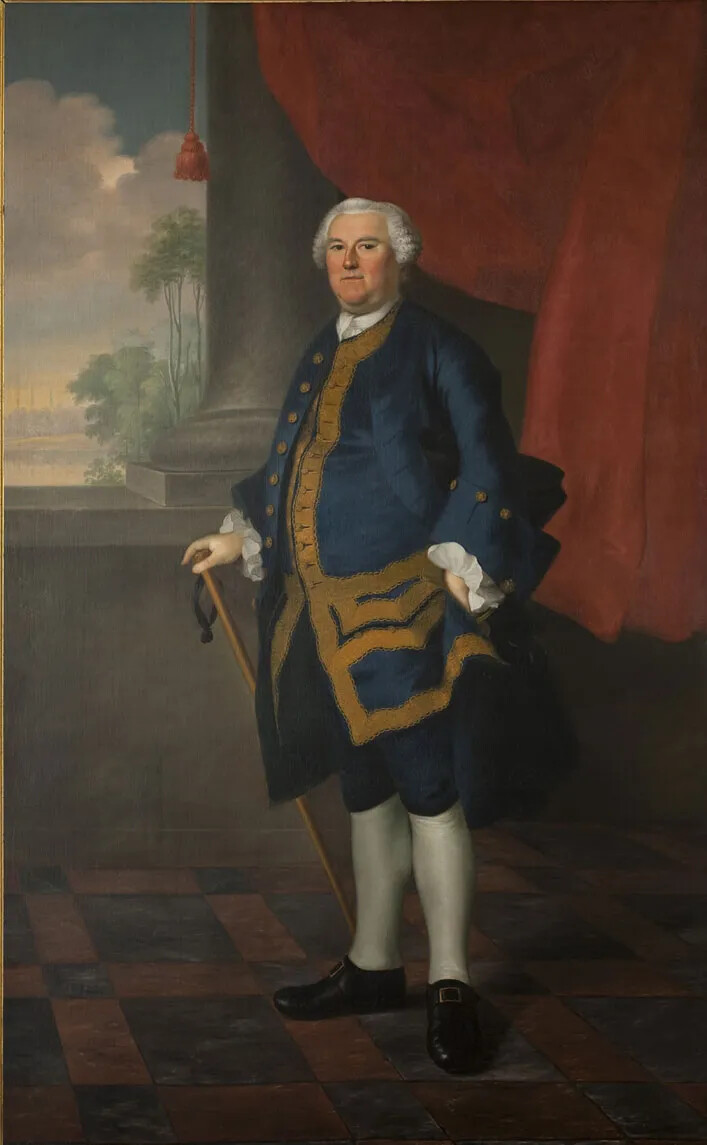
Benning Wentworth
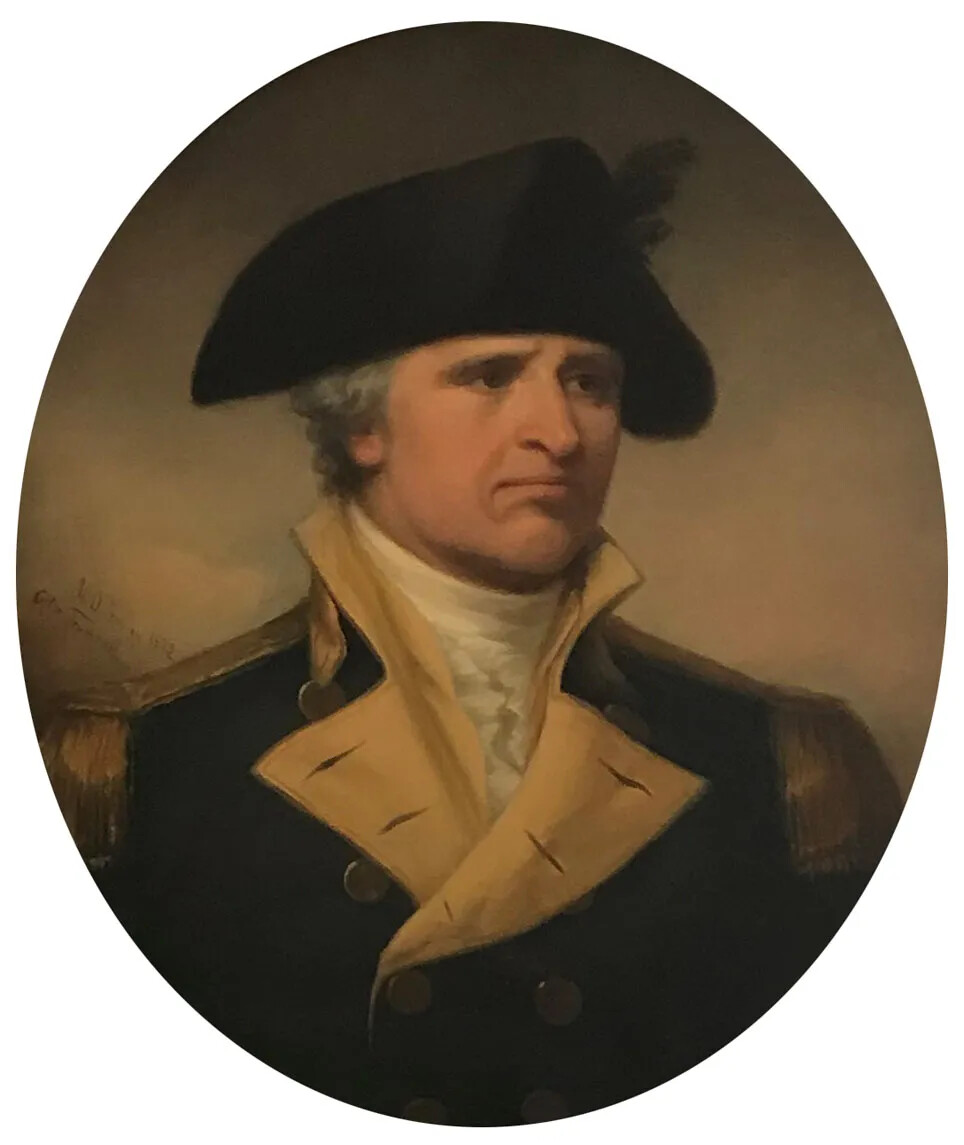
A circular, colored portrait of a white man looking off to the right. He wears a blue coat with a yellow collar and a black tri-cornered hat.
John Stark
A solid black image of a moose, with white capital letters inside reading "SORRY, NO PICTURE AVAILABLE."
Nero Brewster
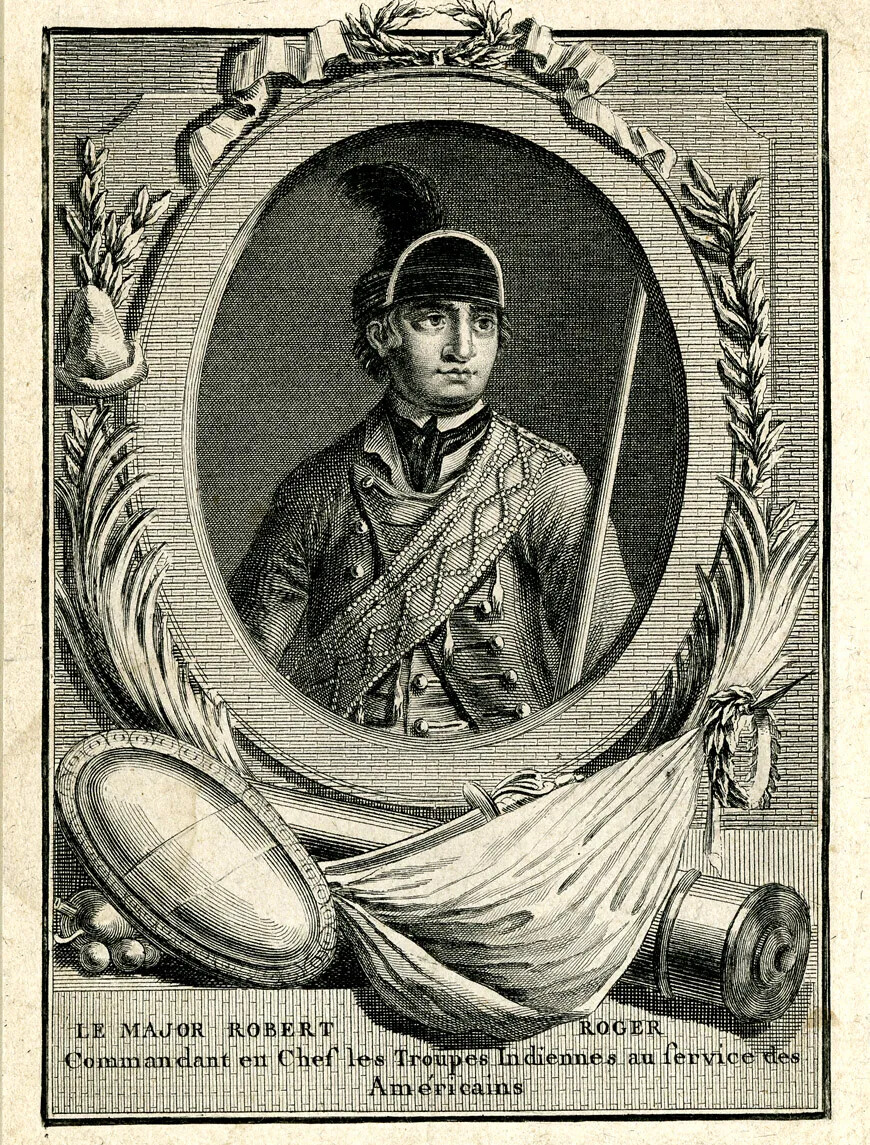
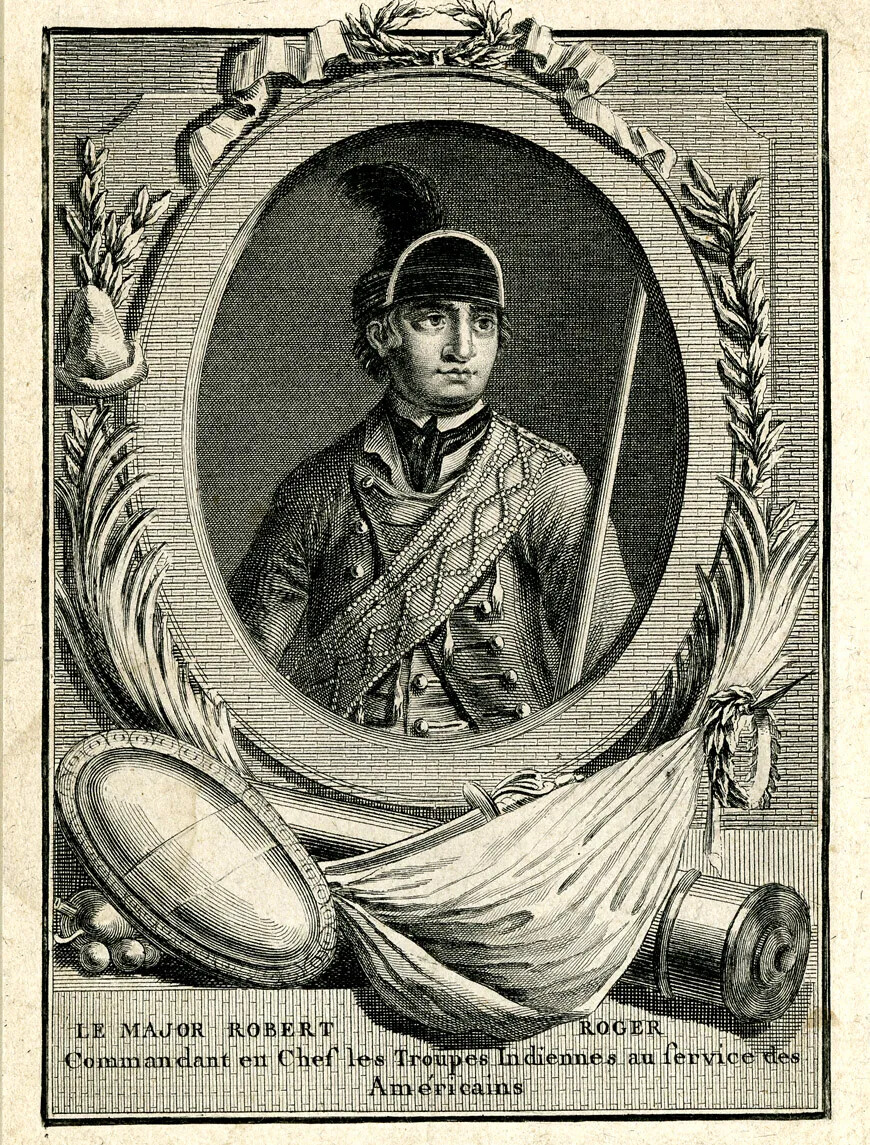
A black and white drawing of a man in a jacket with large buttons, wearing a hat with a large feather on his head. He also wears a sash with a diamond pattern on it across his chest. The man's portrait is framed in an oval, surrounded by vines and ribbons. Underneath the oval are three lines of text written in French.
Robert Rogers

Documents in this Unit:

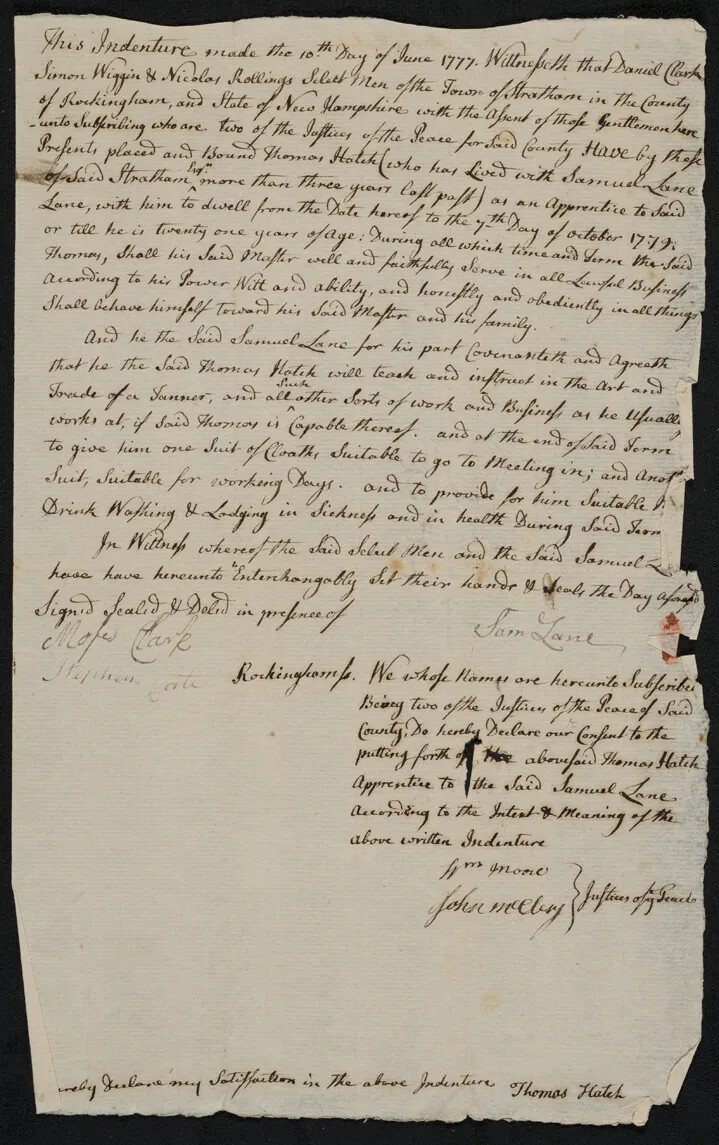
A vertical handwritten document in black ink on white paper with three paragraphs of text. The paper are several small tears and folds along the right-side border.
Apprenticeship Papers of Thomas Hatch
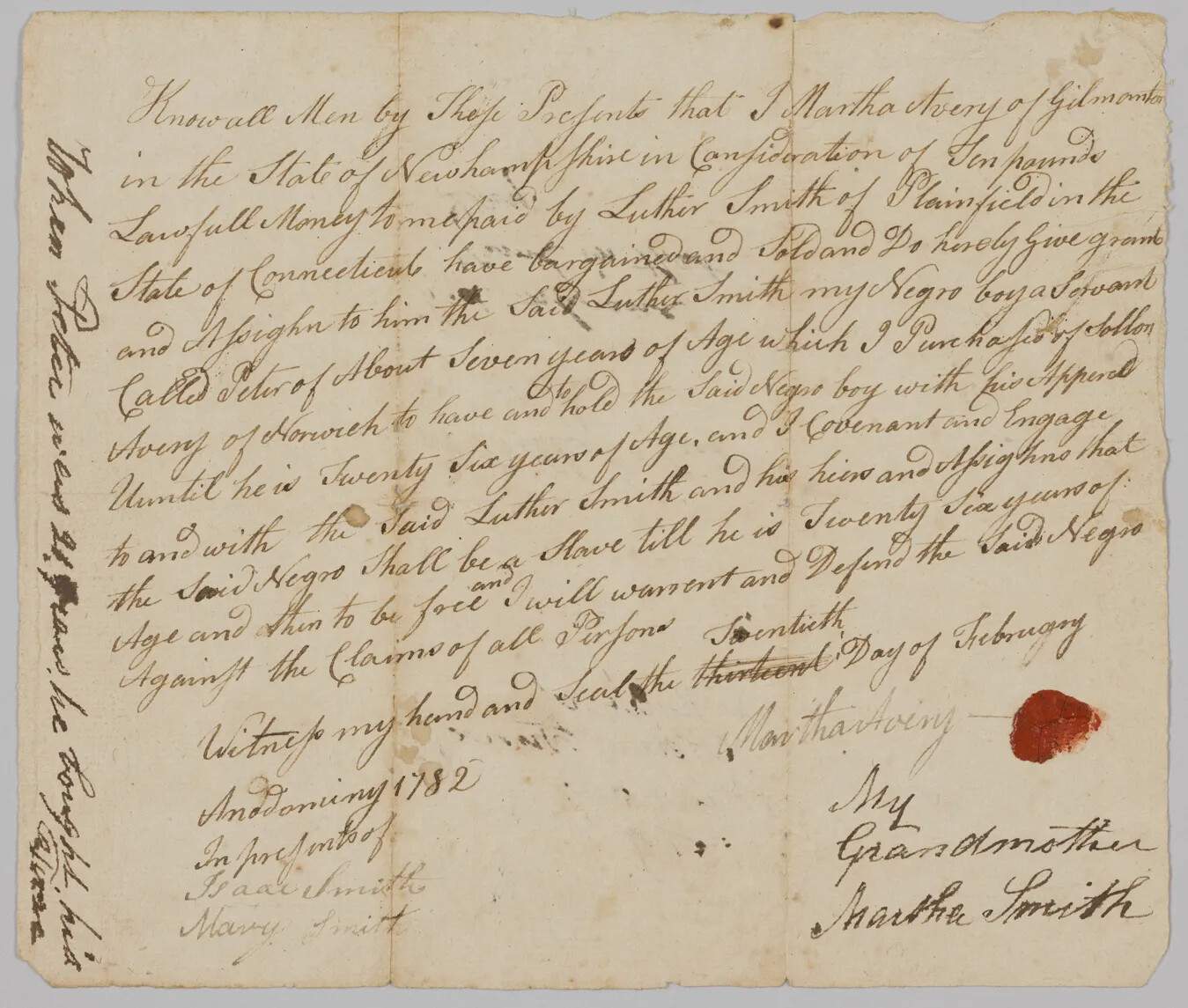
A square-sized, handwritten document in black ink on white paper, with one paragraph of text. The paper has several small tears along its borders. A red wax mark is seen towards the bottom of the right-hand side.
Bill of Sale for Peter
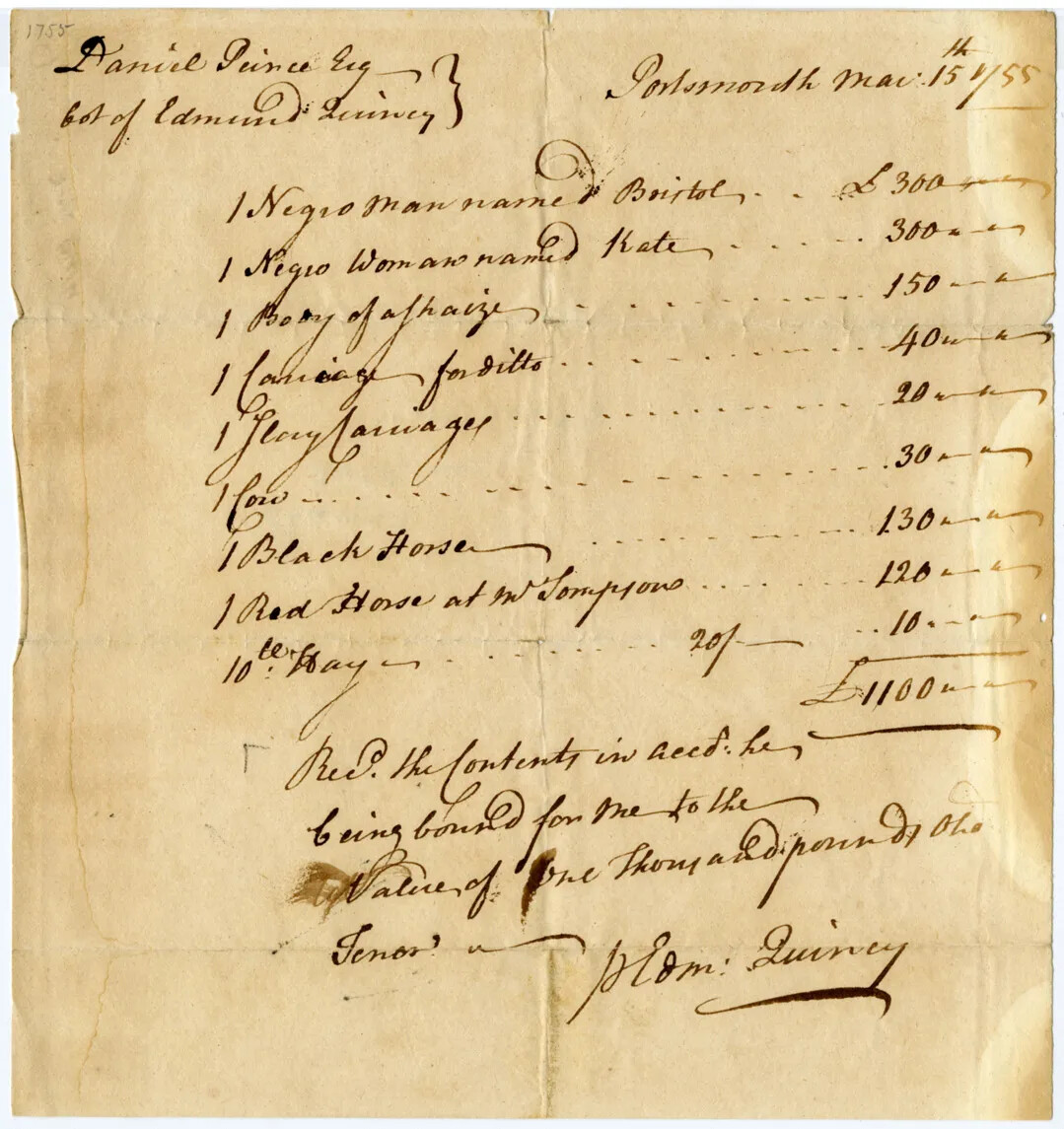
A vertical handwritten document in black ink on yellowing paper. Several lines of text are placed next to numbers.
Edmund Quincy Bill of Sale
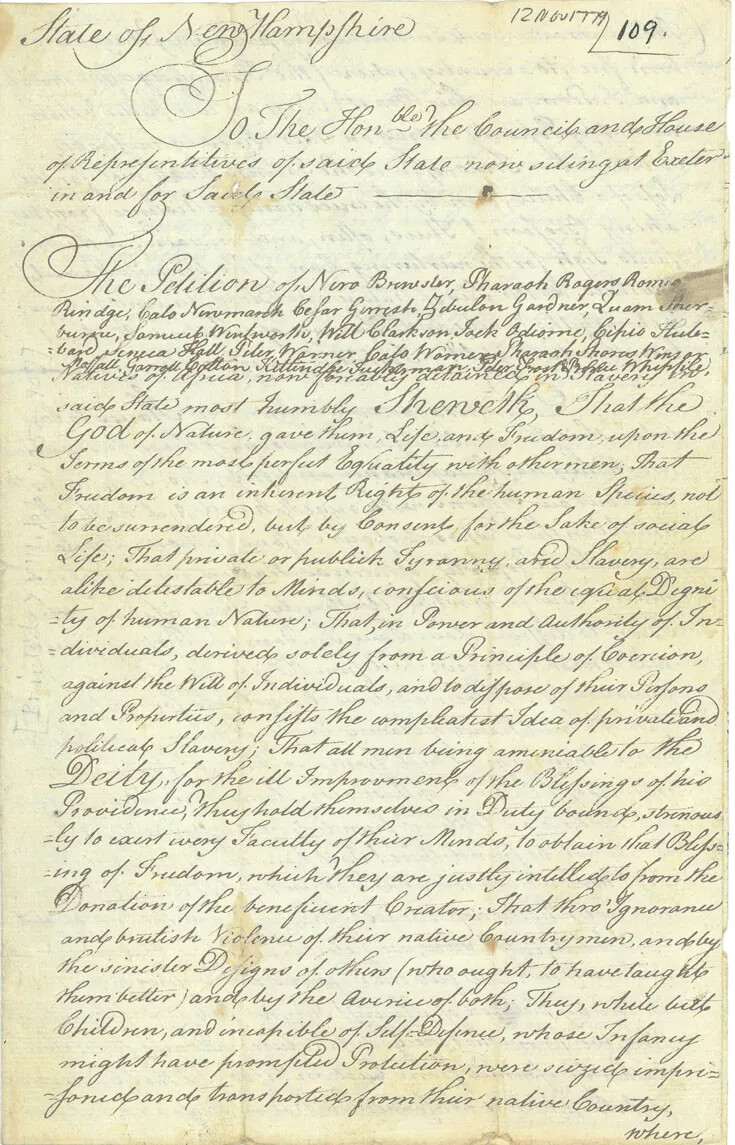
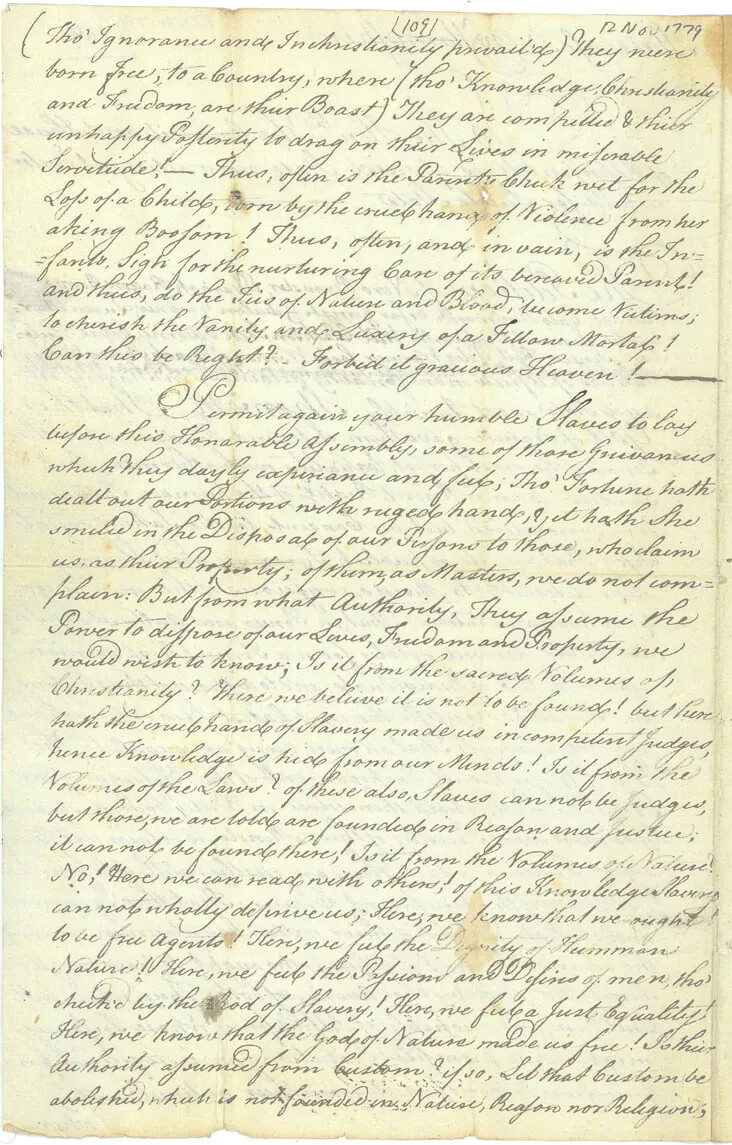
A large handwritten document on white paper. The text of the document is written in small and large cursive handwriting, in black ink.
Freedom Petition Submitted by Enslaved People to the New Hampshire State Legislature page 1 of 4
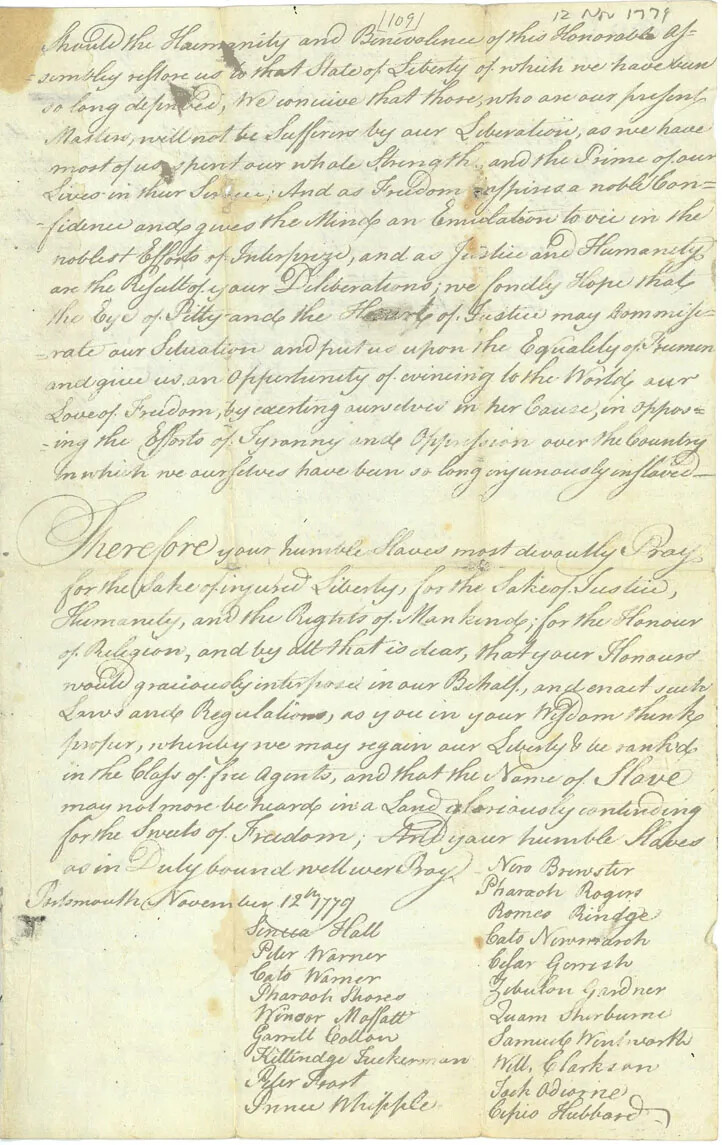
A large handwritten document on white paper. The text of the document is written in small and large cursive handwriting, in black ink.
Freedom Petition Submitted by Enslaved People to the New Hampshire State Legislature page 2 of 4
A large handwritten document on white paper. The text of the document is written in small and large cursive handwriting, in black ink. At the end of the document are several signatures.
Freedom Petition Submitted by Enslaved People to the New Hampshire State Legislature page 3 of 4
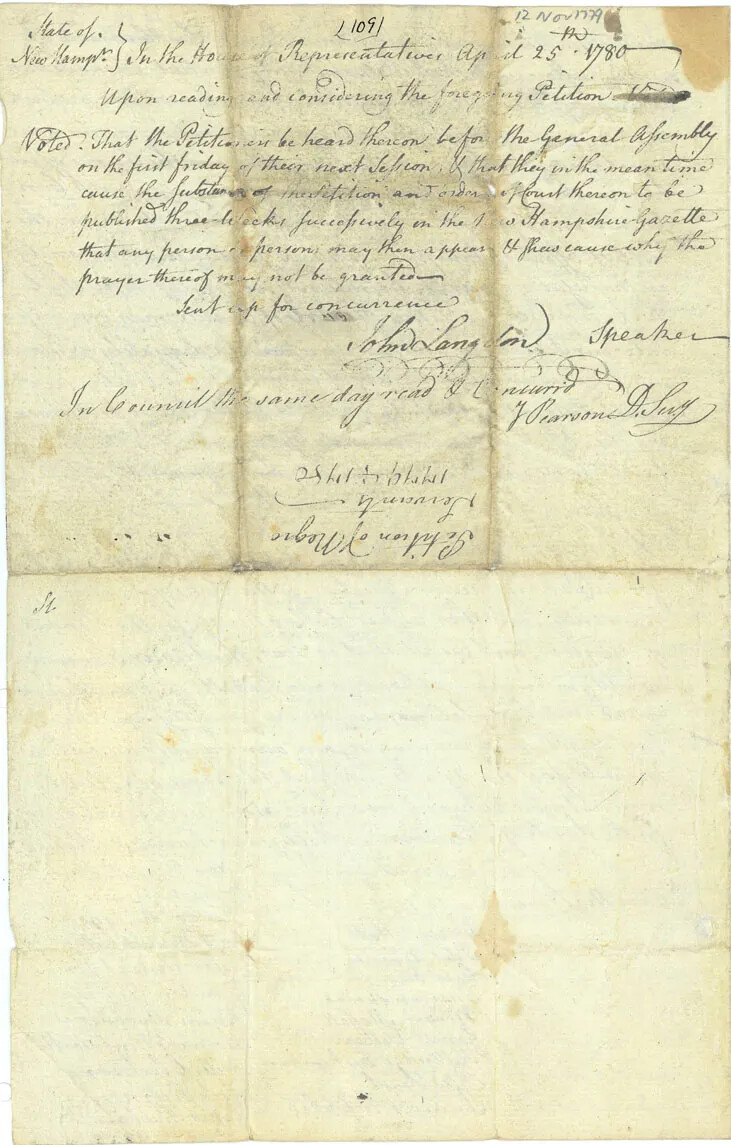
A large handwritten document on half a piece of white paper. The text of the document is written in small and large cursive handwriting, in black ink.
Freedom Petition Submitted by Enslaved People to the New Hampshire State Legislature page 4 of 4
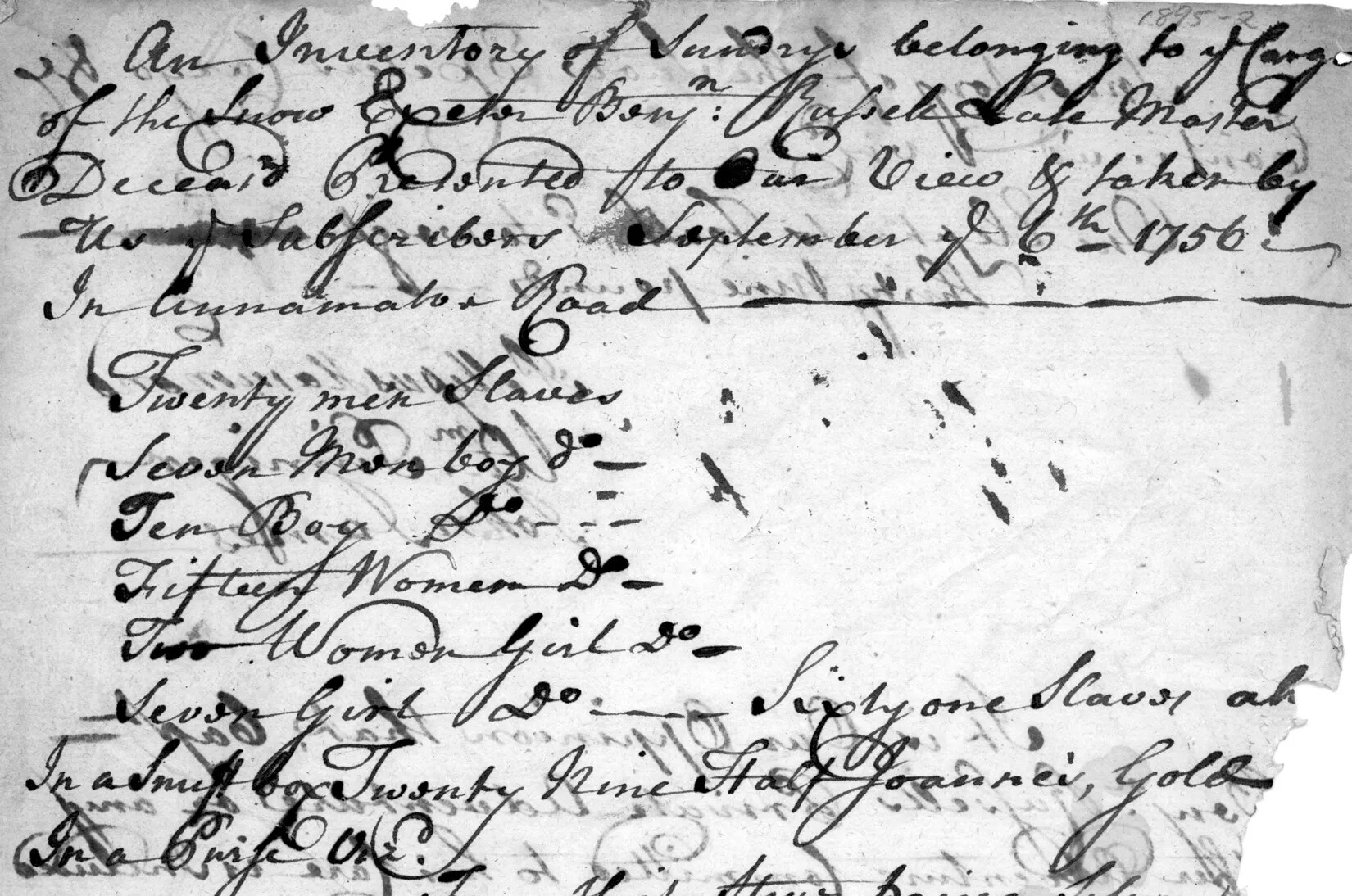
A horizontal document of three paragraphs of text. Each paragraph is written in cursive handwriting. There are several ink splotches on the document, and there is a small tear along the upper border of the paper.
Inventory of the Ship Exeter
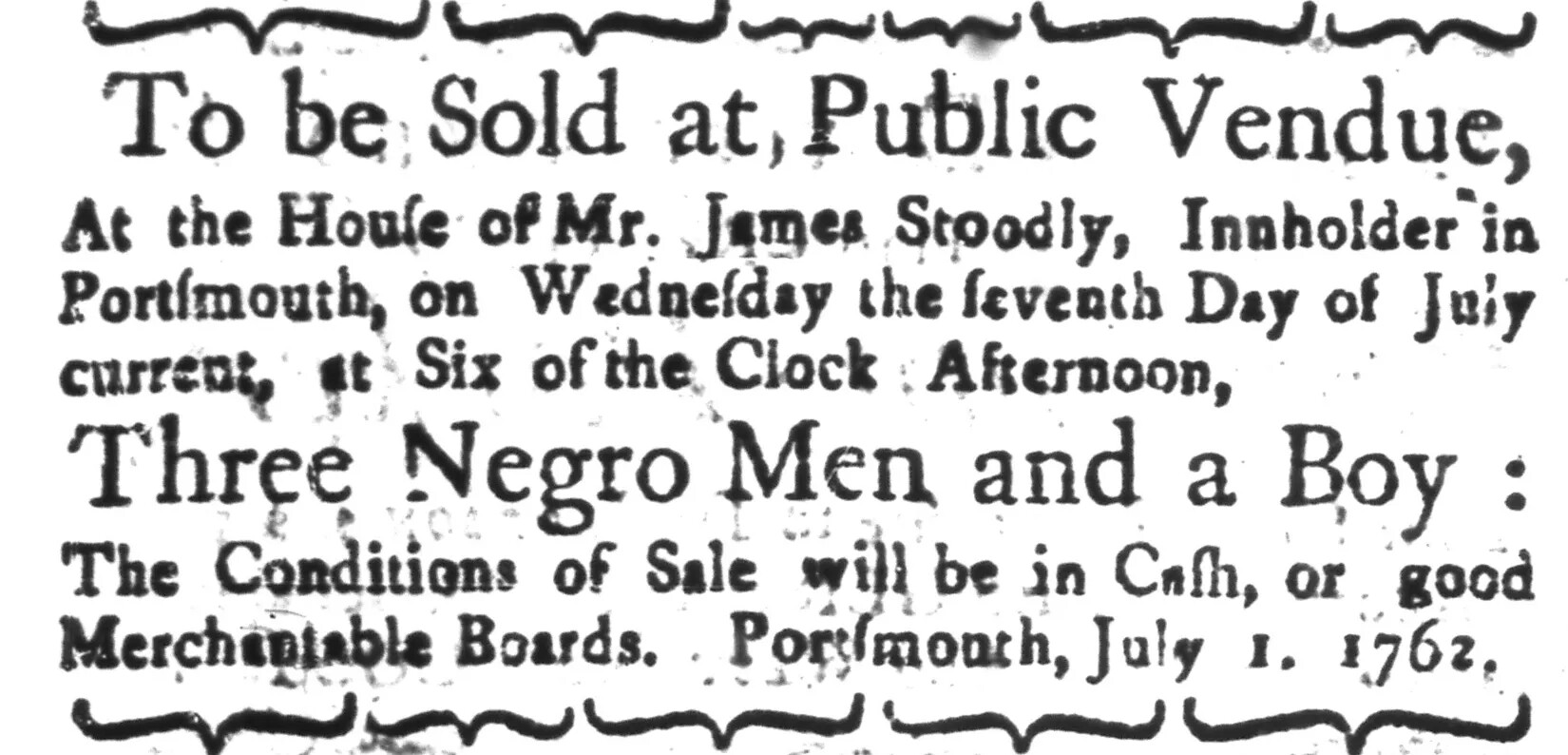
A close-up image of a typed document with several lines of text from a newspaper column. The edges of the document are bordered by black lines.
James Stoodly's Sale
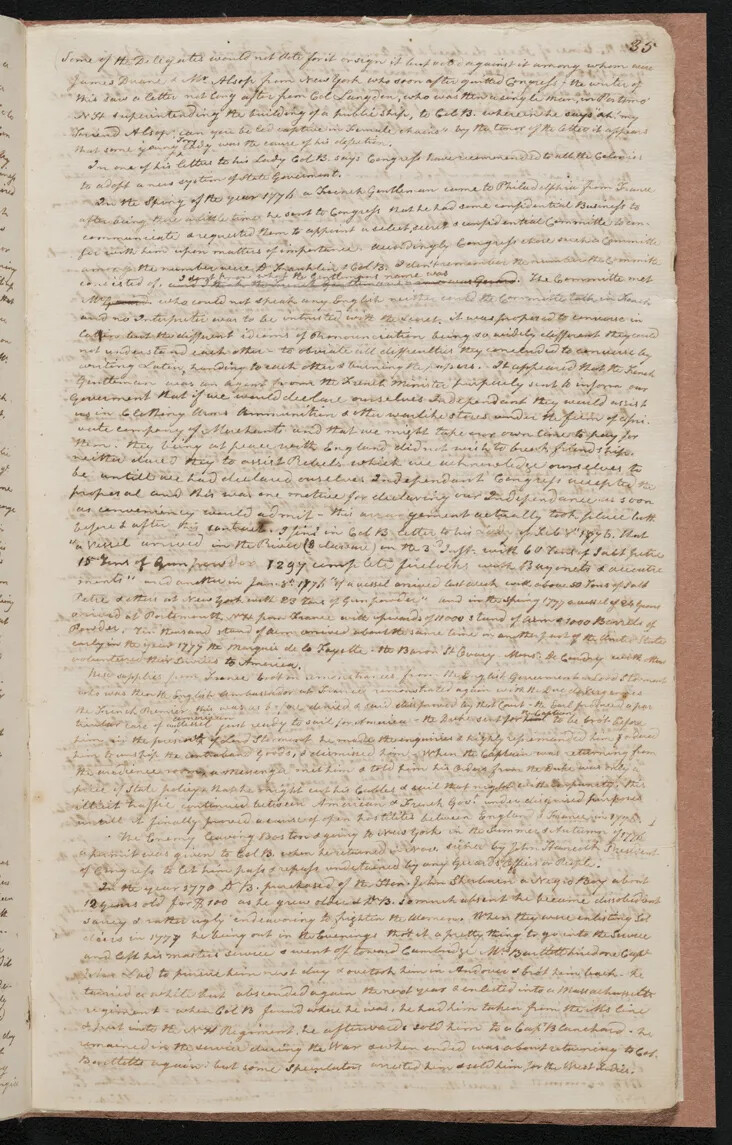
A vertical handwritten document on white paper that is covered in black cursive handwriting.
Josiah Bartlett's Memoirs
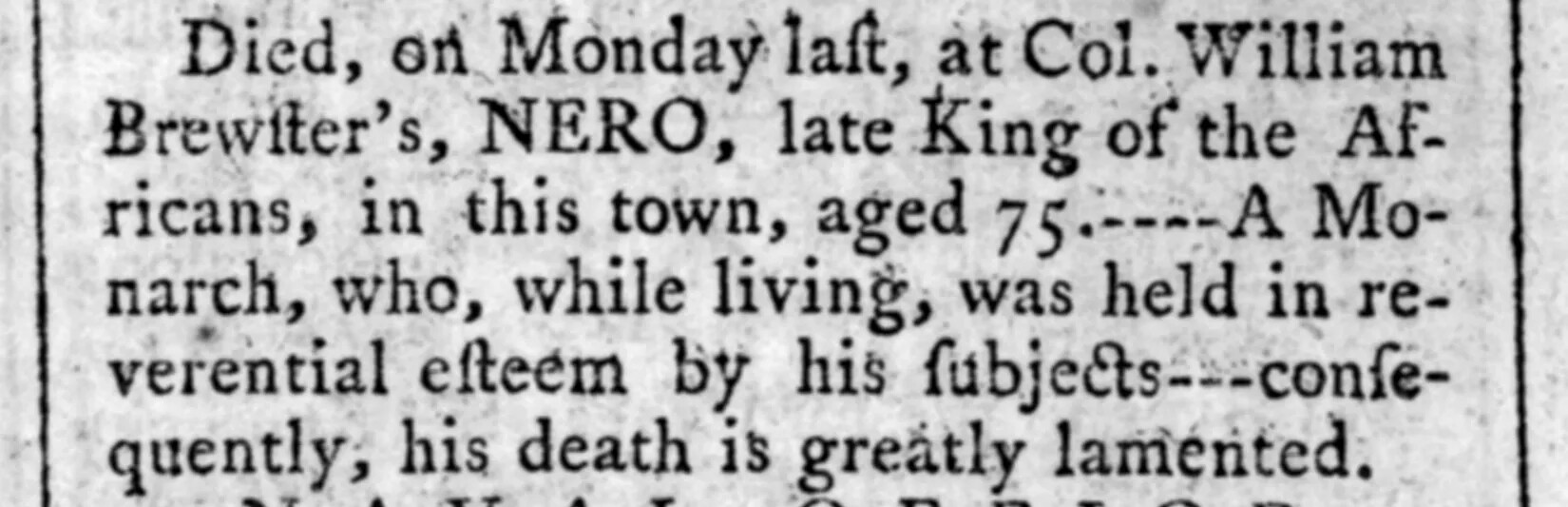
A close-up image of a typed document with six lines of text. The text reads "Died, on Monday last, at Col. William/Brewster's, NERO, late King of the Af-/ricans, in this town, aged 75.----A Mo-/narch, who, while living, was held in re-/verential esteem by his subjects---conse-/quently, his death is greatly lamented."
King Nero's Death Notice
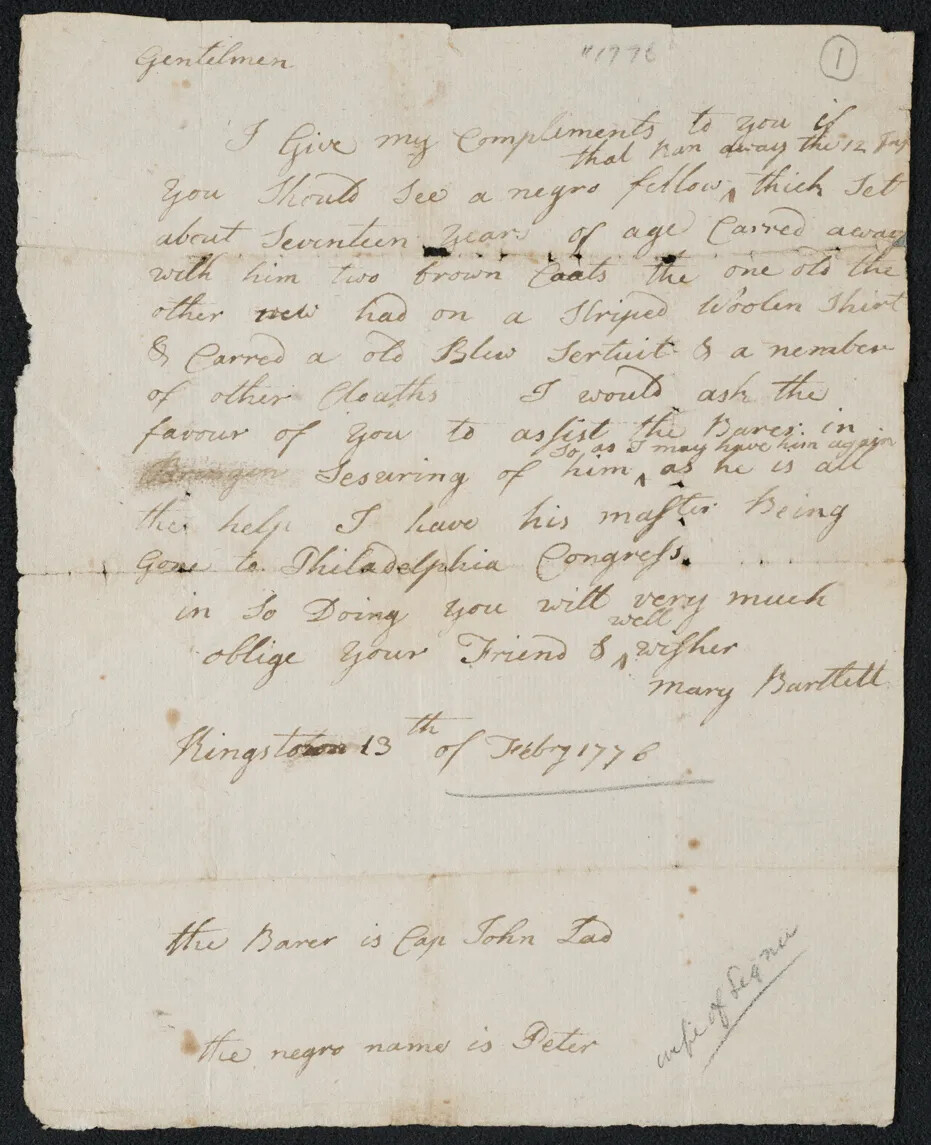
A vertical handwritten document on a small piece of white paper. The text is organized into one paragraph, and there is a date and signature on the bottom.
Mary Bartlett Letter
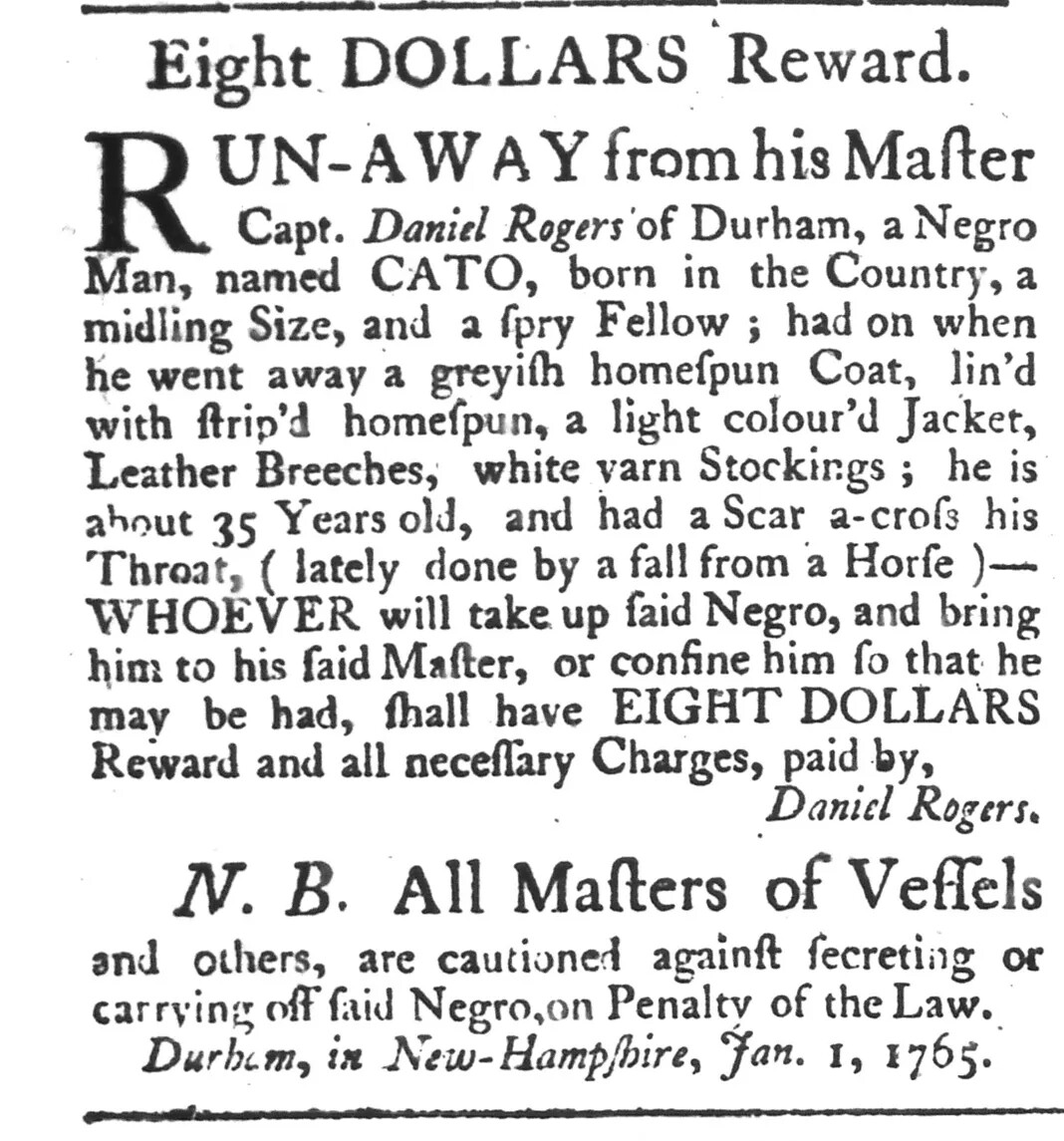
A close-up image of a typed document with several lines of text from a newspaper column. The edges of the document are bordered by black lines.
Runaway Notice for Cato
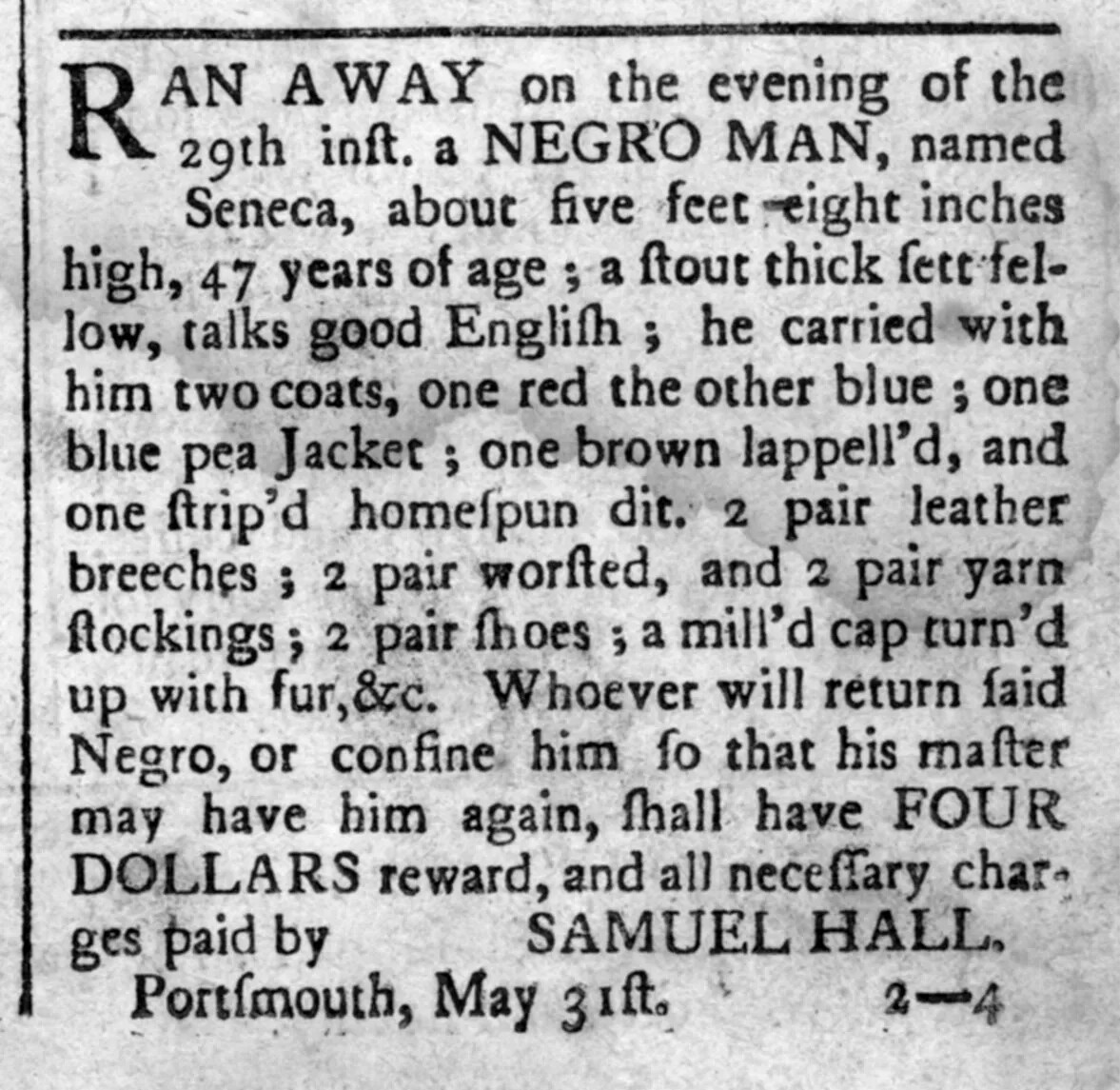
A newspaper clipping of a short article written in black text. The article reads "RAN AWAY on the evening of the/29th inst. A NEGRO MAN, named/Seneca, about five feet eight inches/high, 47 years of age; a stout thick fett fel-/low, talks good English; he carried with/him two coats, one red the other blue; one/blue pea Jacket; one brown lappell'd, and/one strip'd homspun dit. 2 pair leather/breeches; 2 pair worsted, and 2 pair yarn/stockings; 2 pair shoes; a mill'd cap turn'd/up with fur, &c. Whoever will return said/ Negro, or confine him so that his master/may have him again, shall have FOUR/DOLLARS reward, and all necessary char-/ges paid by SAMUEL HALL./Portsmouth, May 31st. 2-4."
Runaway Notice for Seneca Hall
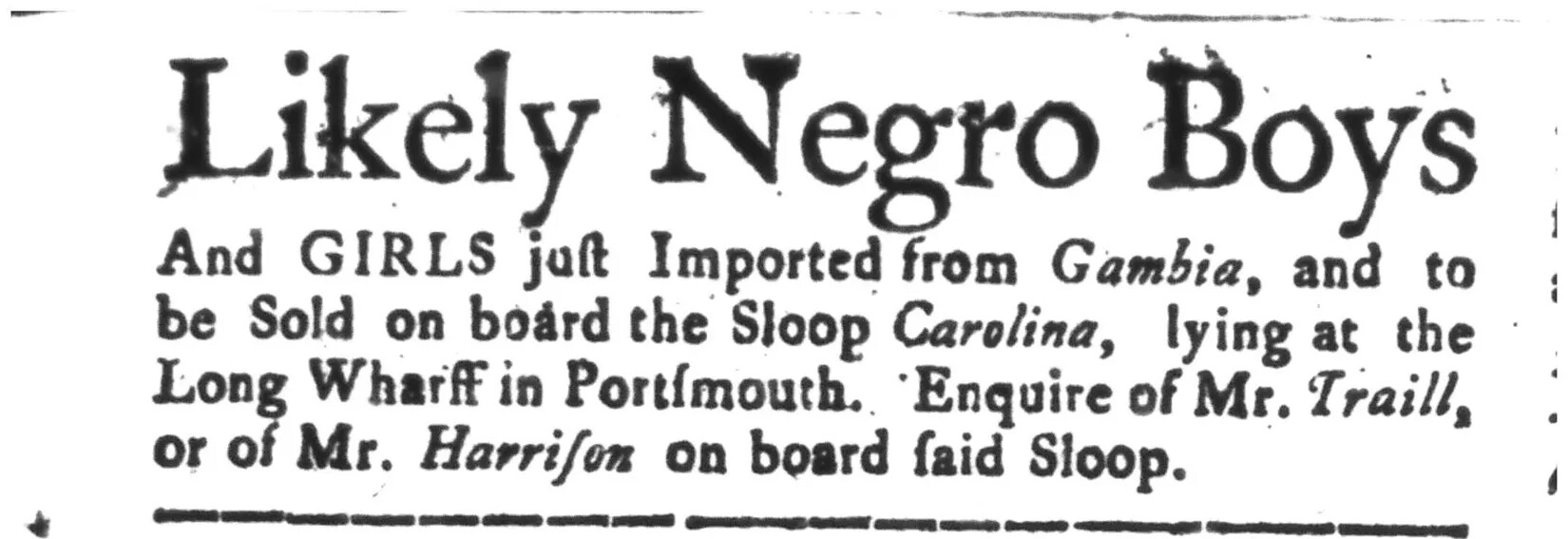
A close-up image of a typed document with five lines of text from a newspaper column. The text reads "Likley Negro Boys/And GIRLS just Imported from Gambia, and to/be Sold on board the Sloop Carolina, lying at the/Long Wharff in Portsmouth, Enquire of Mr. Traill,/ or of Mr. Harrison on board said Sloop."
Sloop Carolina from Gambia
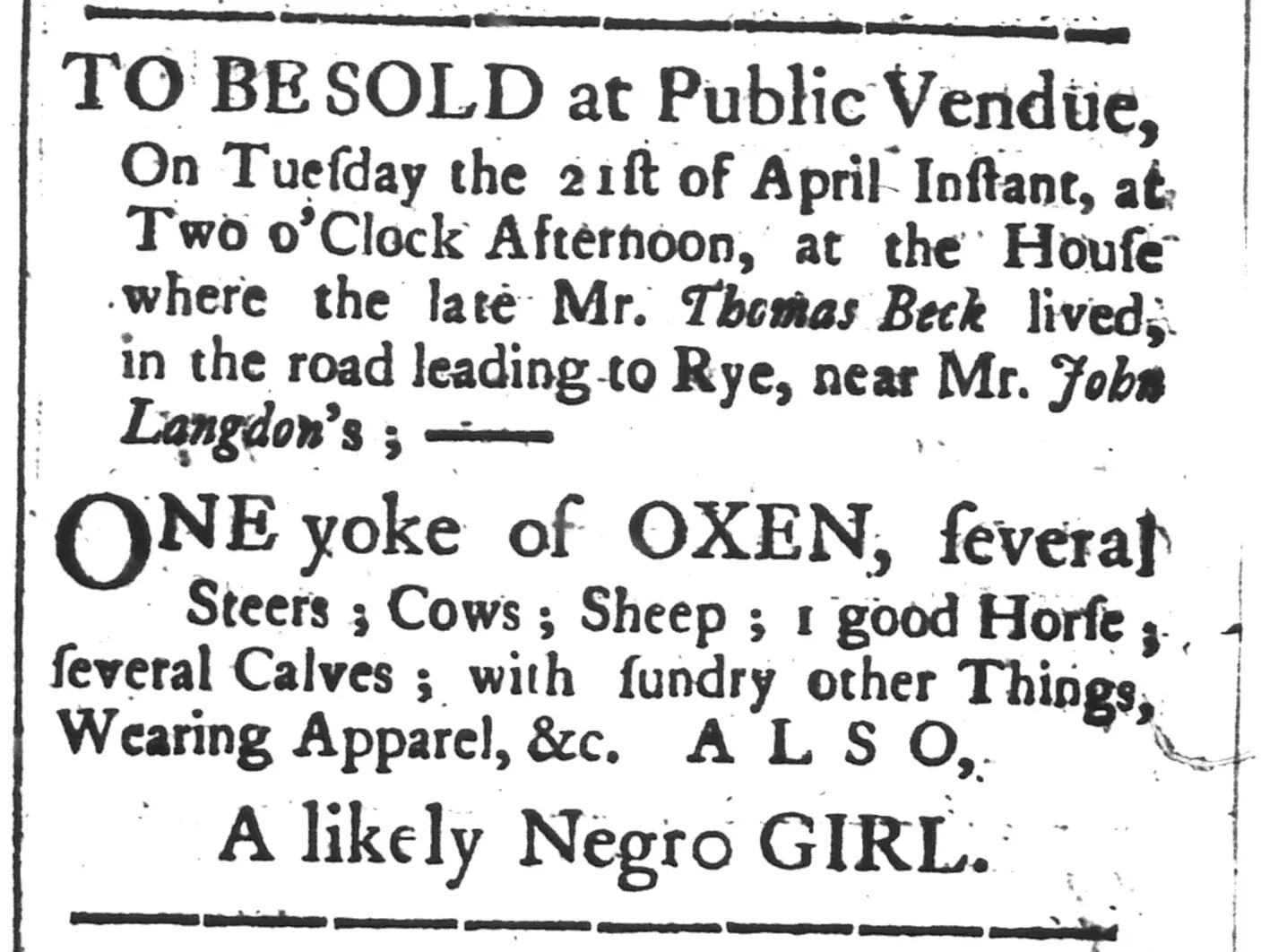
A close-up image of a typed document with several lines of text from a newspaper column. The edges of the document are bordered by black lines.
Thomas Beck's Sale

Explainer Videos and Virtual Field Trips in this Unit:

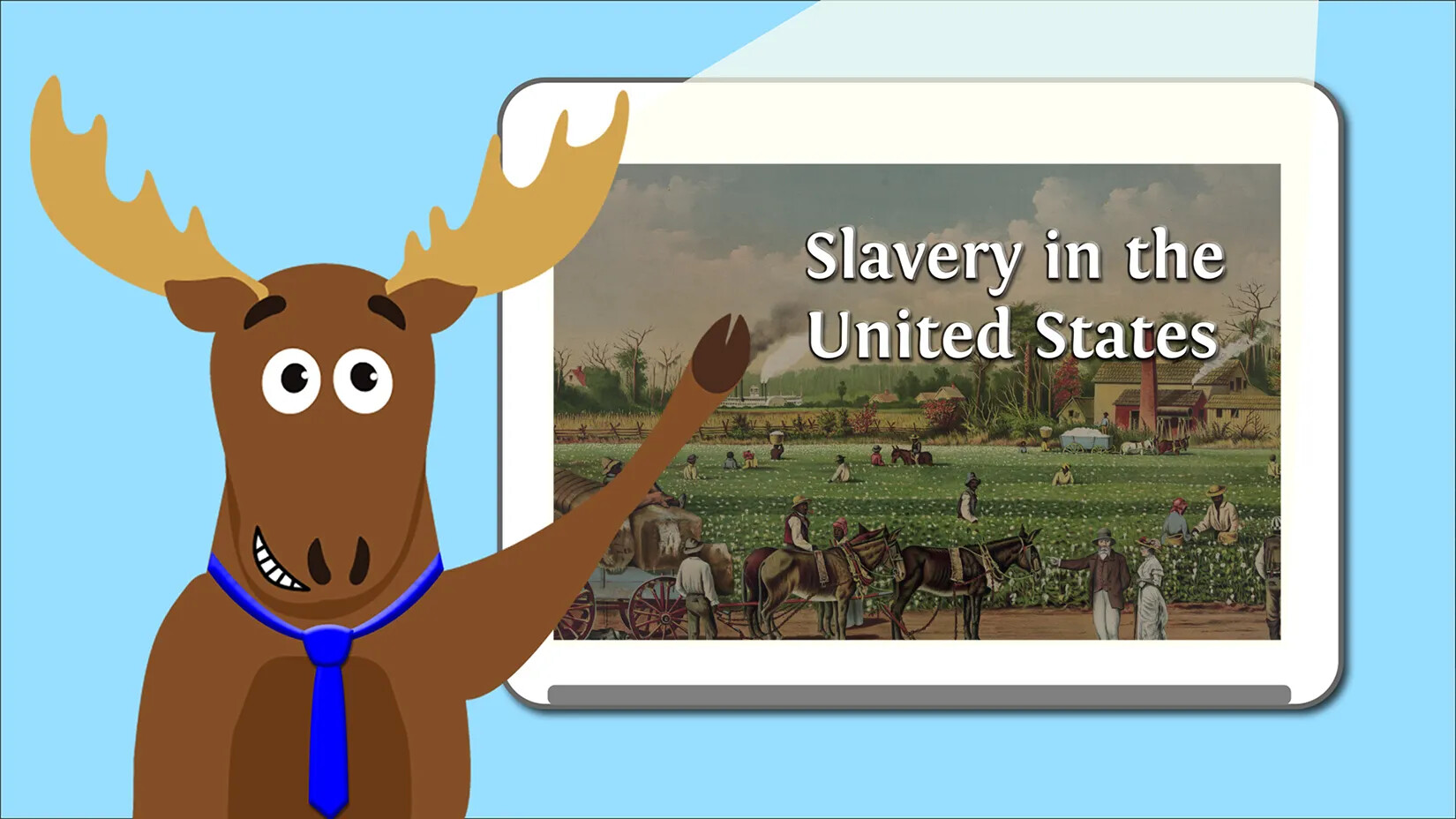
Mason Explains: Slavery in the United States
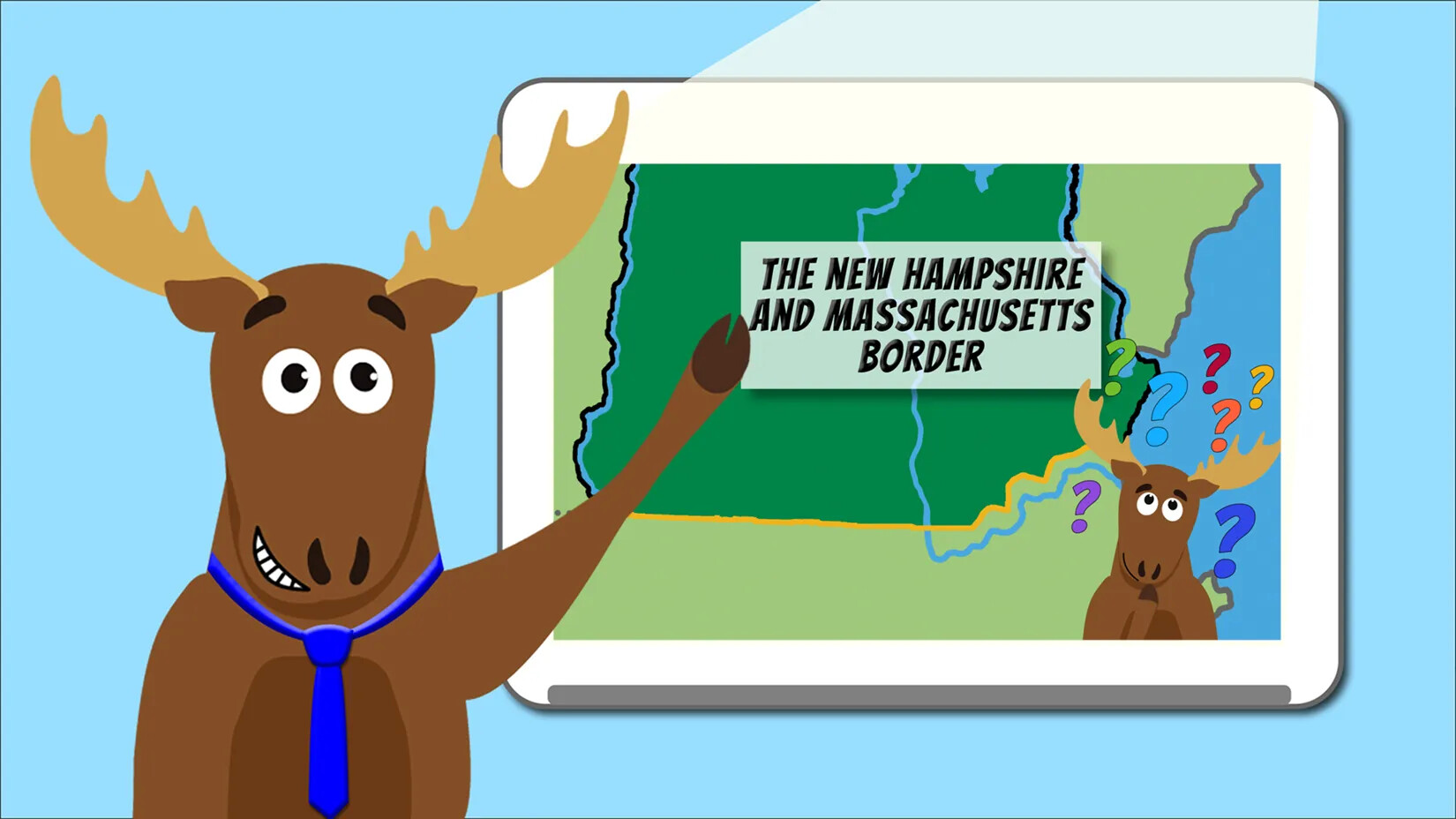
Mason Explains: The New Hampshire and Massachusetts Border
Virtual Field Trip: Fort at No. 4

Maps & Charts in this Unit:

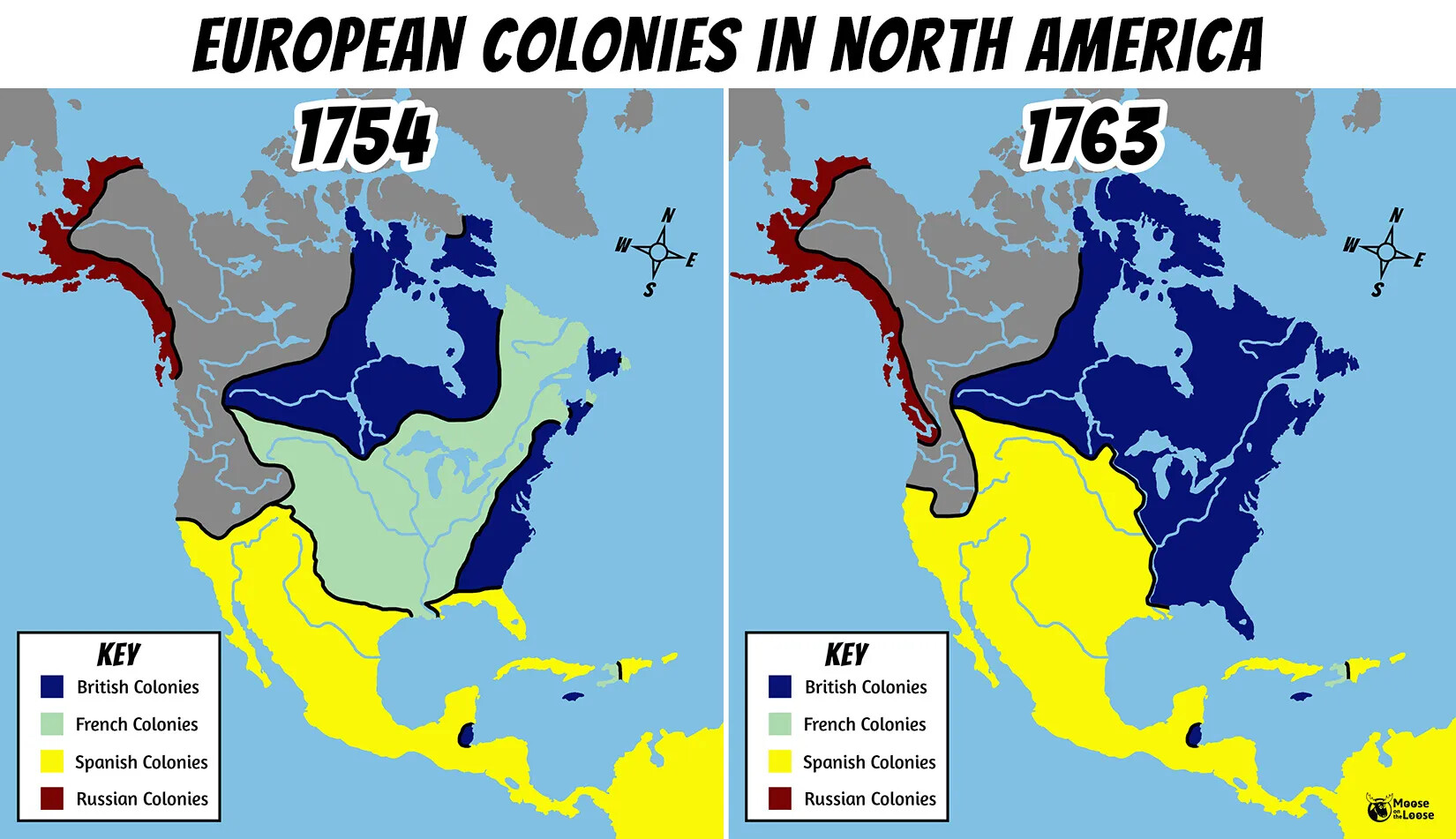
A colored horizontal map showing two maps of North America, resting side by side. The map on the left is labeled "1754" and the map on the right is labeled "1763." Both maps have sections of land colored in red, gray, yellow, and dark blue, but only the "1754" map has pieces of land colored in green. Both maps have the same map key, located in the lower left-hand corner, which labels the land in dark blue as "British Colonies," the land in green as "French Colonies," land in yellow as "Spanish Colonies," and land in red as "Russian Colonies." The map's title, located along the upper border, reads "EUROPEAN COLONIES IN NORTH AMERICA."
European Colonies in North America Before and After the French and Indian War
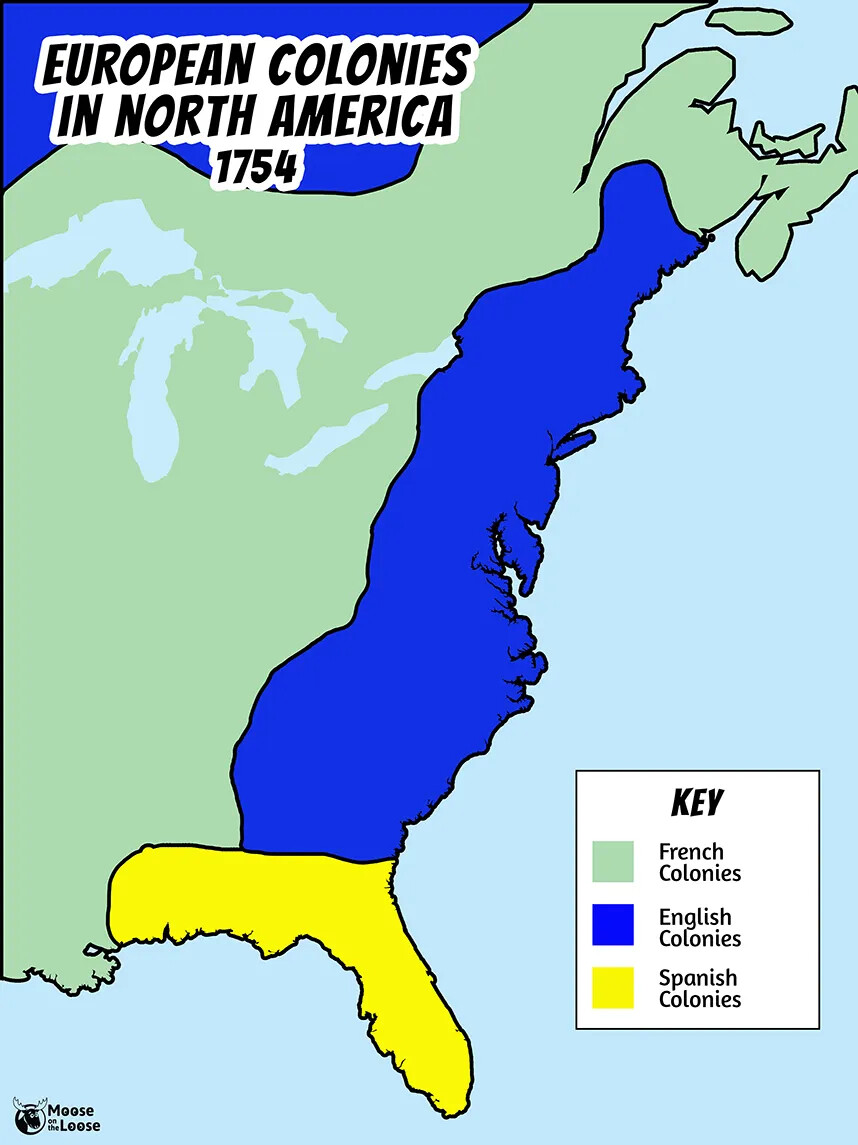
A colored vertical map of the eastern border of the United States. Parts of the map are colored in dark blue, yellow, or green. The map's key, located in the lower right-hand corner, marks the green land as "French/Colonies," the dark blue land as "English/Colonies," and the yellow land as "Spanish/Colonies." The title of the map, located in the upper left-hand corner, reads "EUROPEAN COLONIES/IN NORTH AMERICA/1754."
European Colonies in North America, 1754
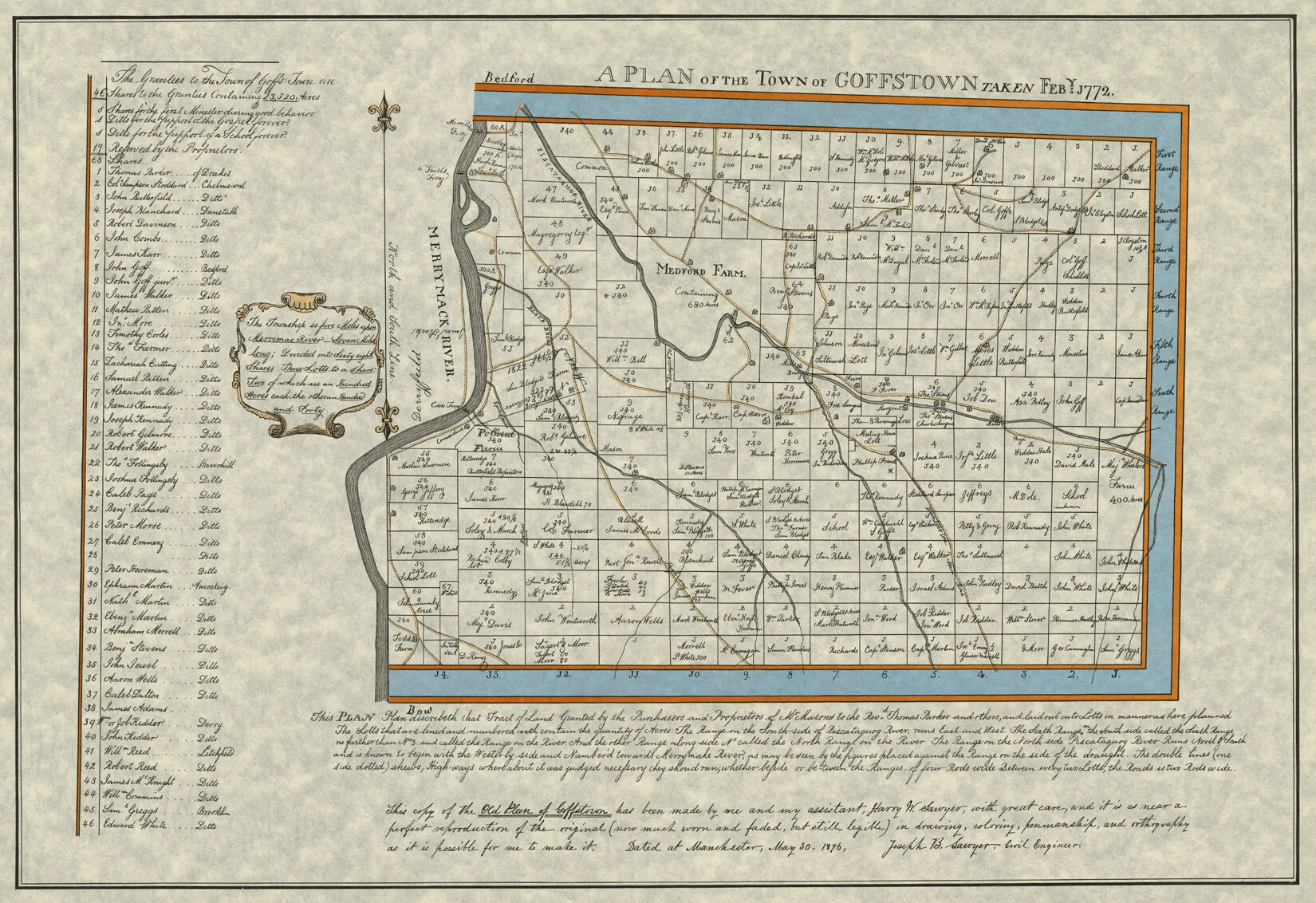
A colored horizontal map of a hand-drawn piece of land that has been sectioned into square and rectangular plots. The map is framed by a blue border, outlined in orange. To the left of the map is a long list of names written in cursive handwriting. The title of the map, located along the upper border, reads "A PLAN OF THE TOWN OF GOFFSTOWN TAKEN FEBY 1772."
Goffstown Map, 1772
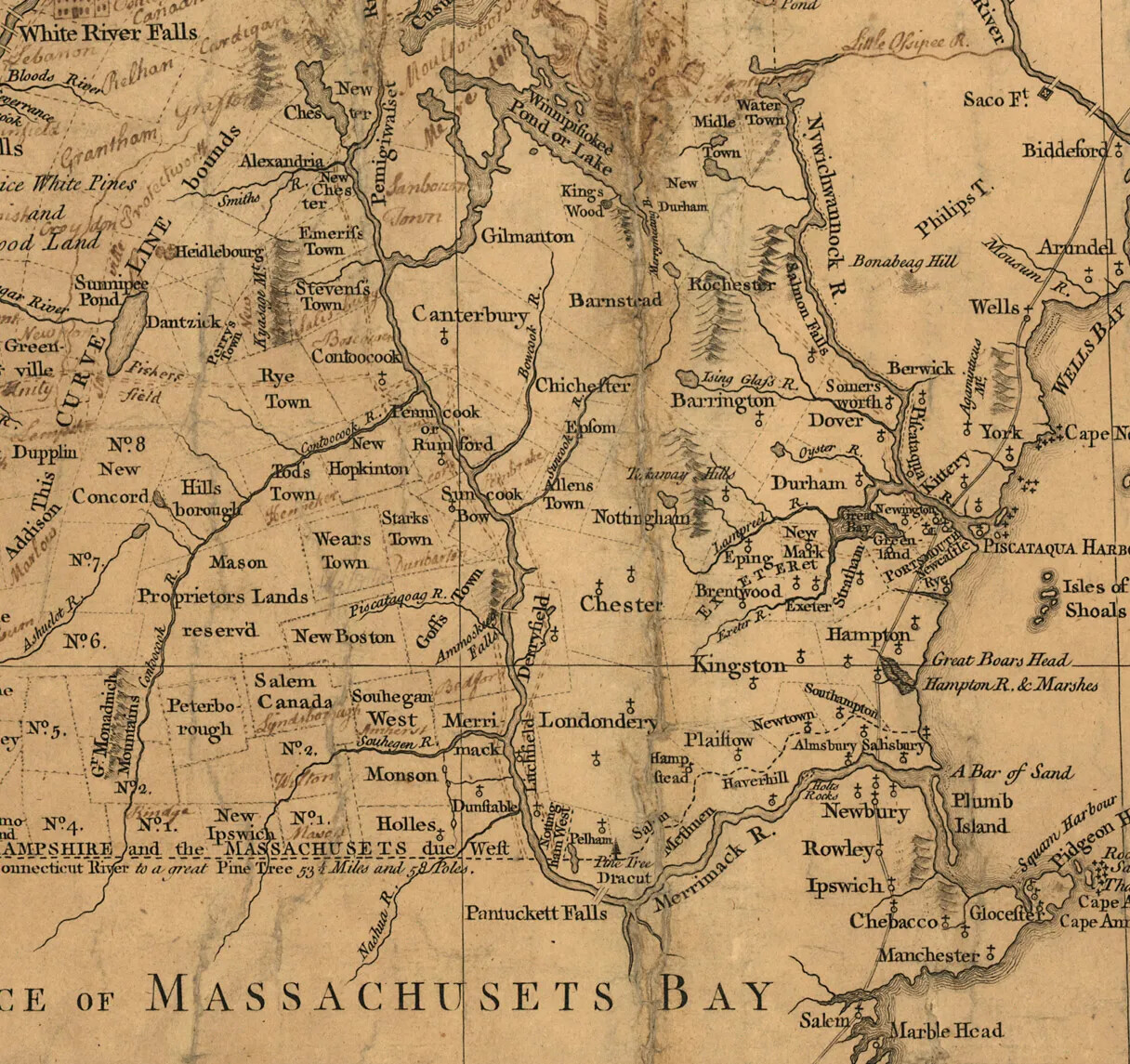
A close-up image of a map showing the border of New Hampshire and Massachusetts. Several towns in southern New Hampshire are labeled in typed black text.
Map of New Hampshire, 1761 (Merrimack Valley detail)
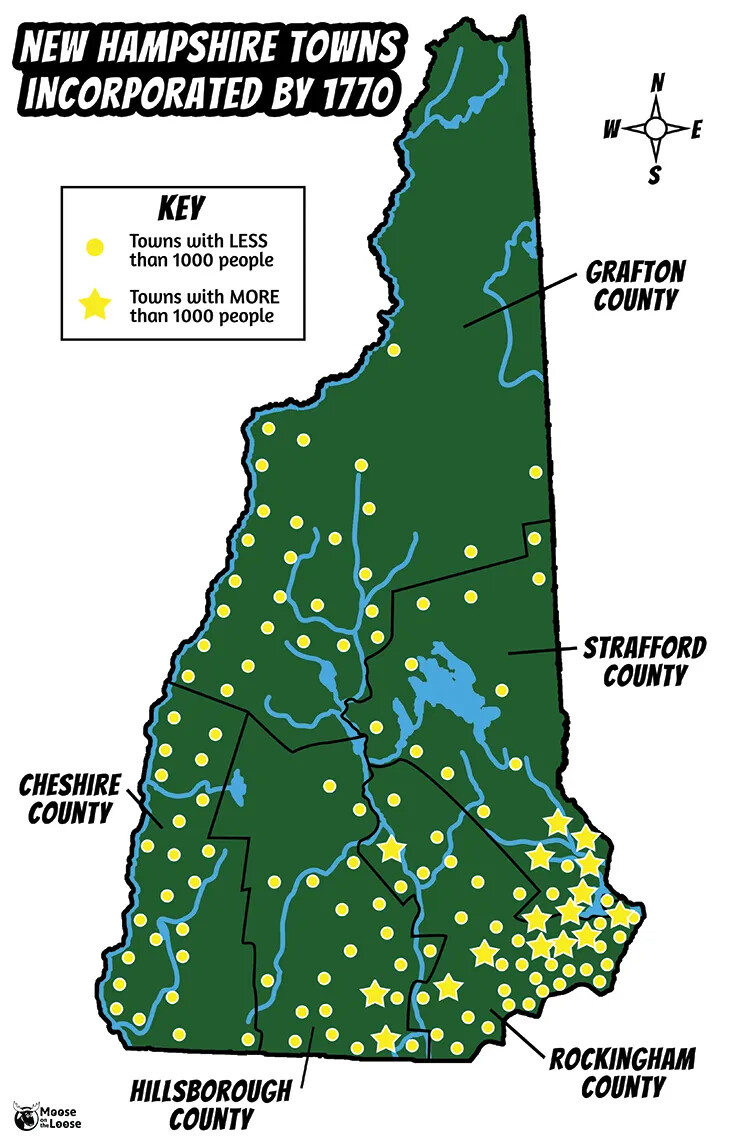
A colored vertical map of the state of New Hampshire, colored in green. The state's rivers and lakes are outlined in blue. All around the state are yellow dots and stars. The map is divided into irregular-shaped sections, bordered by a black line. The sections are labeled in black text, with a black line pointing to each section. Those labels read, from left to right: "CHESHIRE/COUNTY," "HILLSBOROUGH/COUNTY," "ROCKINGHAM/COUNTY," STRAFFORD/COUNTY," and "GRAFTON/COUNTY." The title of the map, located in the upper left-hand corner, reads "NEW HAMPSHIRE TOWNS/INCORPORATED BY 1770." The map's key, located directly beneath the map's title, labels the yellow dots as "Towns with LESS/than 1000 people" and the stars are "Towns with MORE/than 1000 people."
New Hampshire Towns Incorporated by 1770
A black and white hand-drawn map of a piece of land divided up into small rectangular plots. Some of the rectangular plots are drawn at a diagonal on the right side of the map. A name or a number is written in each of the plots. The title of the map, located centered along the upper border reads "[benjamin Adam's Copy of Plan.]."
Plan of New Ipswich
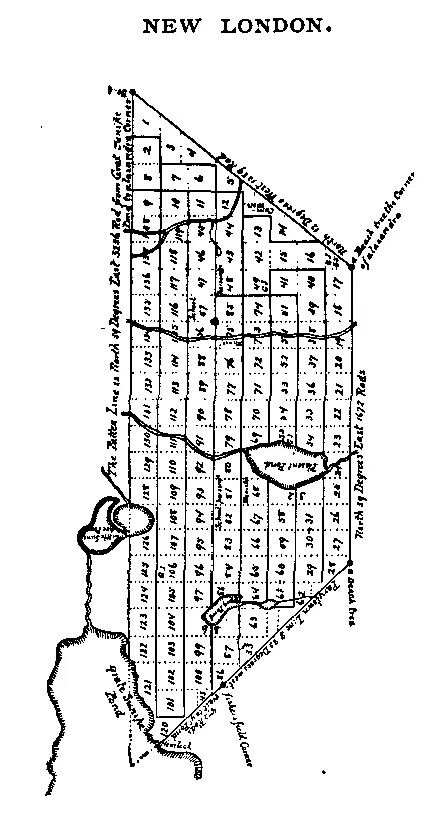
A black and white hand-drawn map of a trapezoid-sized piece of land divided up into small square plots. There is a number written in each of the plots. Overlapping some of the plots are markings for rivers and ponds. The title of the map, located centered along the upper border, reads "NEW LONDON."
Plan of New London
A black and white hand-drawn map of a piece of land divided up into small square plots. A name is written in each of the square plots, and there is a marked body of water in the upper left-hand corner of the map. There is also a wide road drawn on a diagonal through the middle of the map. The title of the map, located centered along the upper border, reads "[Plan of Oss/ee, 1774]."
Plan of Ossipee, 1774
A black and white hand-drawn map of a piece of land divided up into small rectangular plots. There is a number written in each of the plots. Overlapping some of the plots are markings for rivers and ponds. The title of the map, located centered along the upper border, reads "[Plan of Ossipee, 1782]."
Plan of Ossipee, 1782
A black and white hand-drawn map of a piece of land divided up into small square plots. A name is written in each of the square plots, and there is a marked body of water in the upper left-hand corner of the map. There is also a wide road drawn on a diagonal through the middle of the map. The title of the map, located sideways along the right side border, reads "[Plan of Ossipee]."
Plan of Ossipee, circa 1775
A black and white hand-drawn map of a piece of land divided up into small rectangular plots. A name or a number is written in each of the plots. The title of the map, located centered along the upper border reads "[Plan of Peterborough]."
Plan of Peterborough
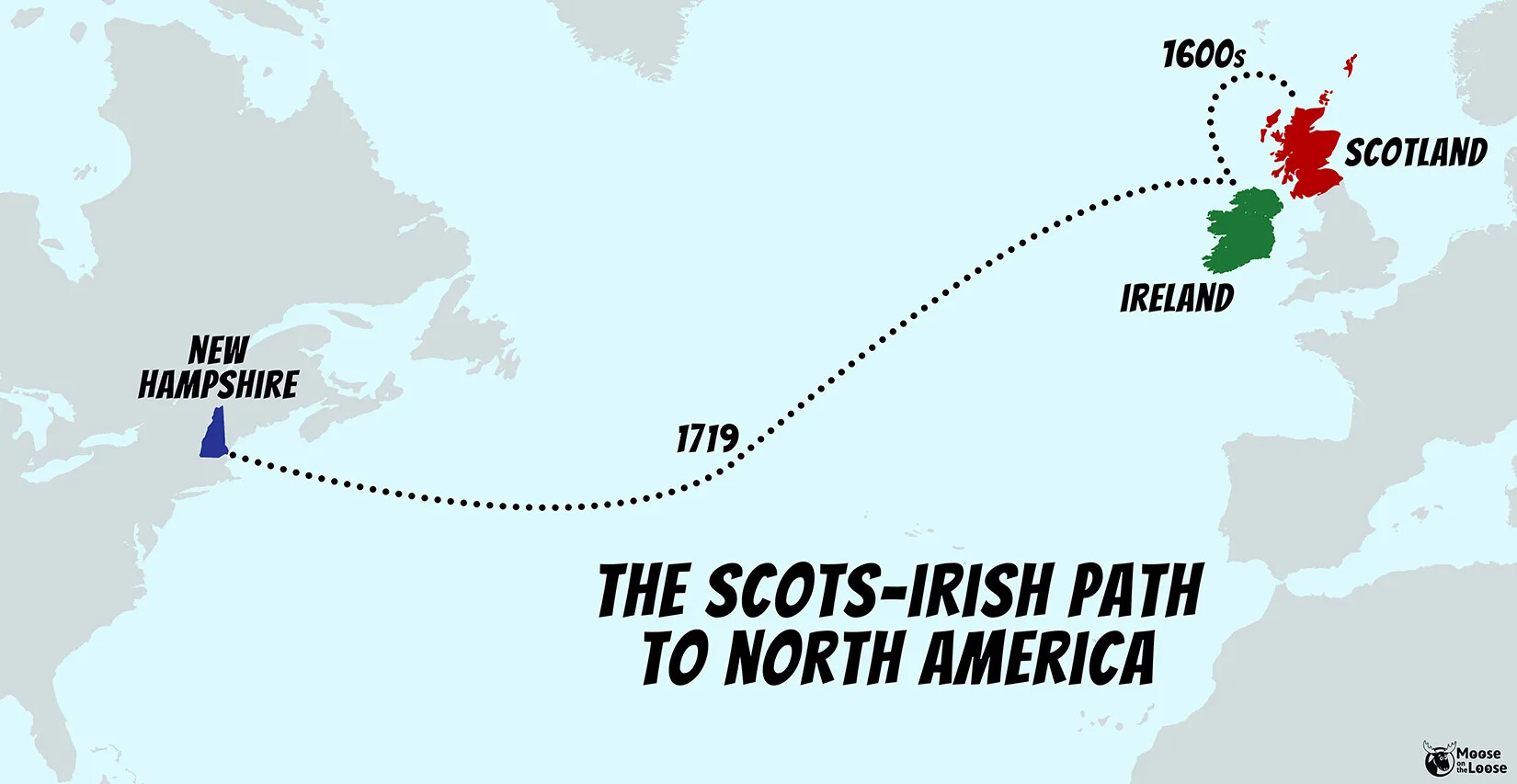
A colored horizontal map of North America and the countries of Europe. While most of the countries are marked in gray, the country of Ireland is colored in green and the country of Scotland is colored in red. The state of New Hampshire, on the continent of North America, is colored in blue. Two dotted lines connect the countries together: one dotted line, labeled "1600s," connects Scotland to Ireland; the other dotted line, labeled "1719," connects Ireland with New Hampshire. The title of the map, located along the bottom border, reads "THE SCOTS-IRISH PATH/TO NORTH AMERICA."
The Scots-Irish Path to North America
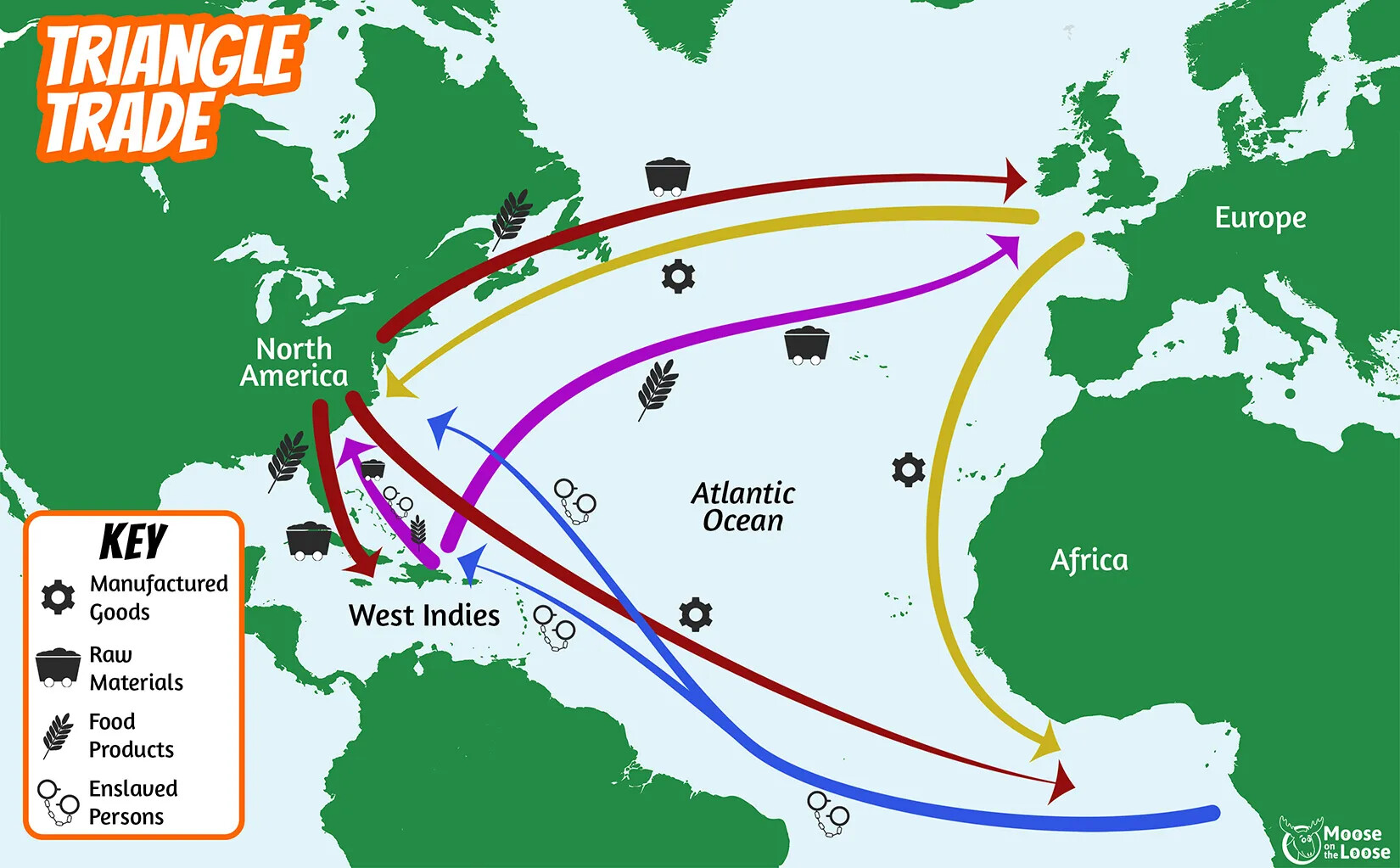
A colored horizontal map of the continents that border the Atlantic Ocean. Those continents are colored in green and are labeled with white text as folllows, from left to right: "North America," "West Indies," "Europe," and "Africa." There are several arrows in purple, red, yellow, and blue that go between the continents. Resting on top of the arrows are either an image of wheat, barrels, cogs, or handcuffs. The map's title, located in the upper left-hand corner, reads "TRIANGLE TRADE" in white text with an orange border. The map's key marking all of the images used on the map is located in the lower left-hand corner.
Triangle Trade

Objects in this Unit:

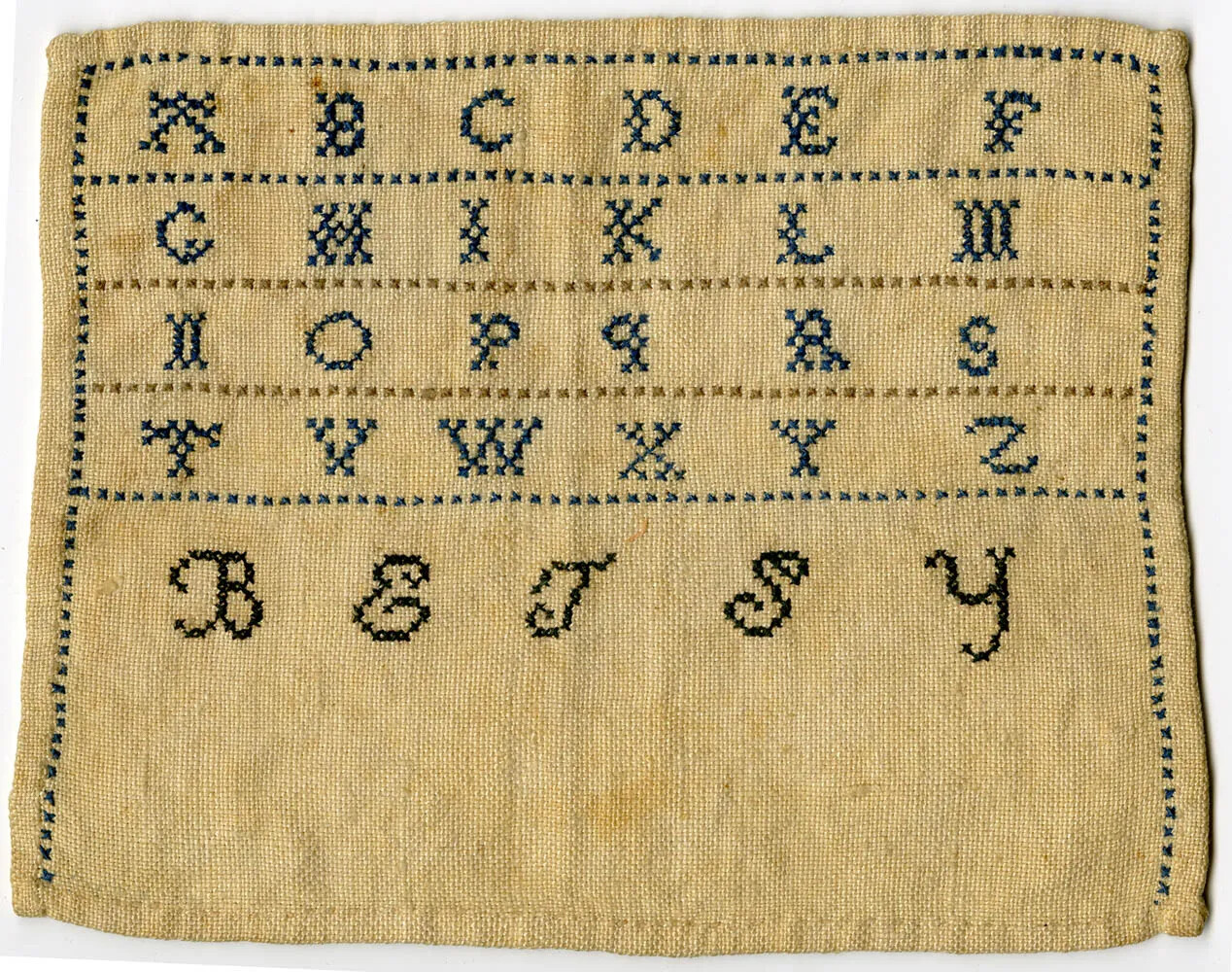
A horizontal piece of cloth decorated with embroidery made from blue and black strings. Blue stitched dots border the upper border and the two sides of the cloth. The stitched dots are also used to separate five lines of embroidered letters, which list out the alphabet in uppercase letters, minus the letter "J." The letters are stitched in blue string. Beneath the letters is the name "BETSY" stitched in black string.
Betsy Philbrick's Sampler
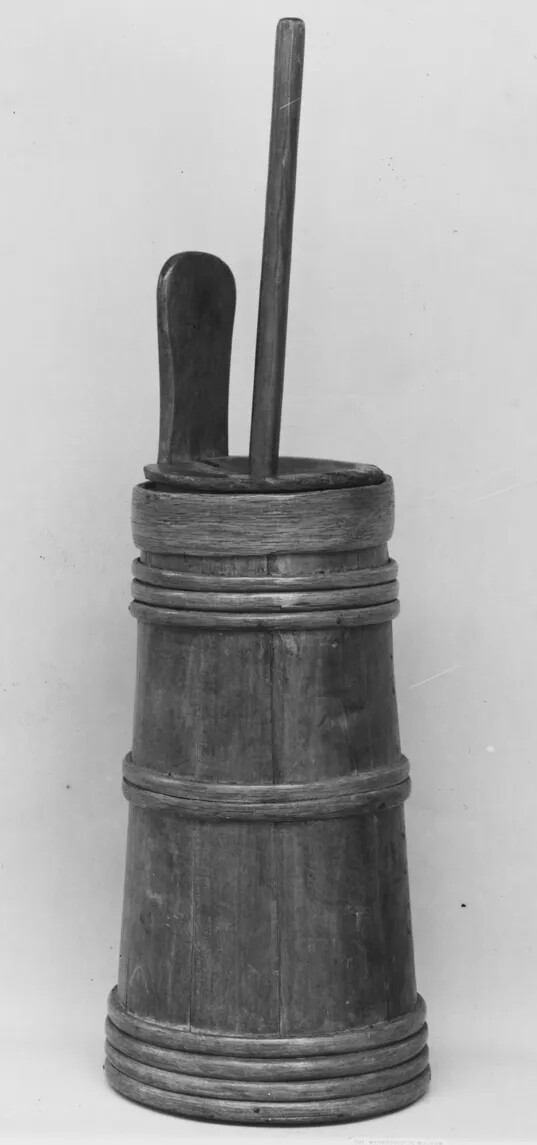
A tall wooden cylinder, that is wider at the bottom than at the top. There is a wooden stick sticking out of the top of the cylinder.
Butter Churn
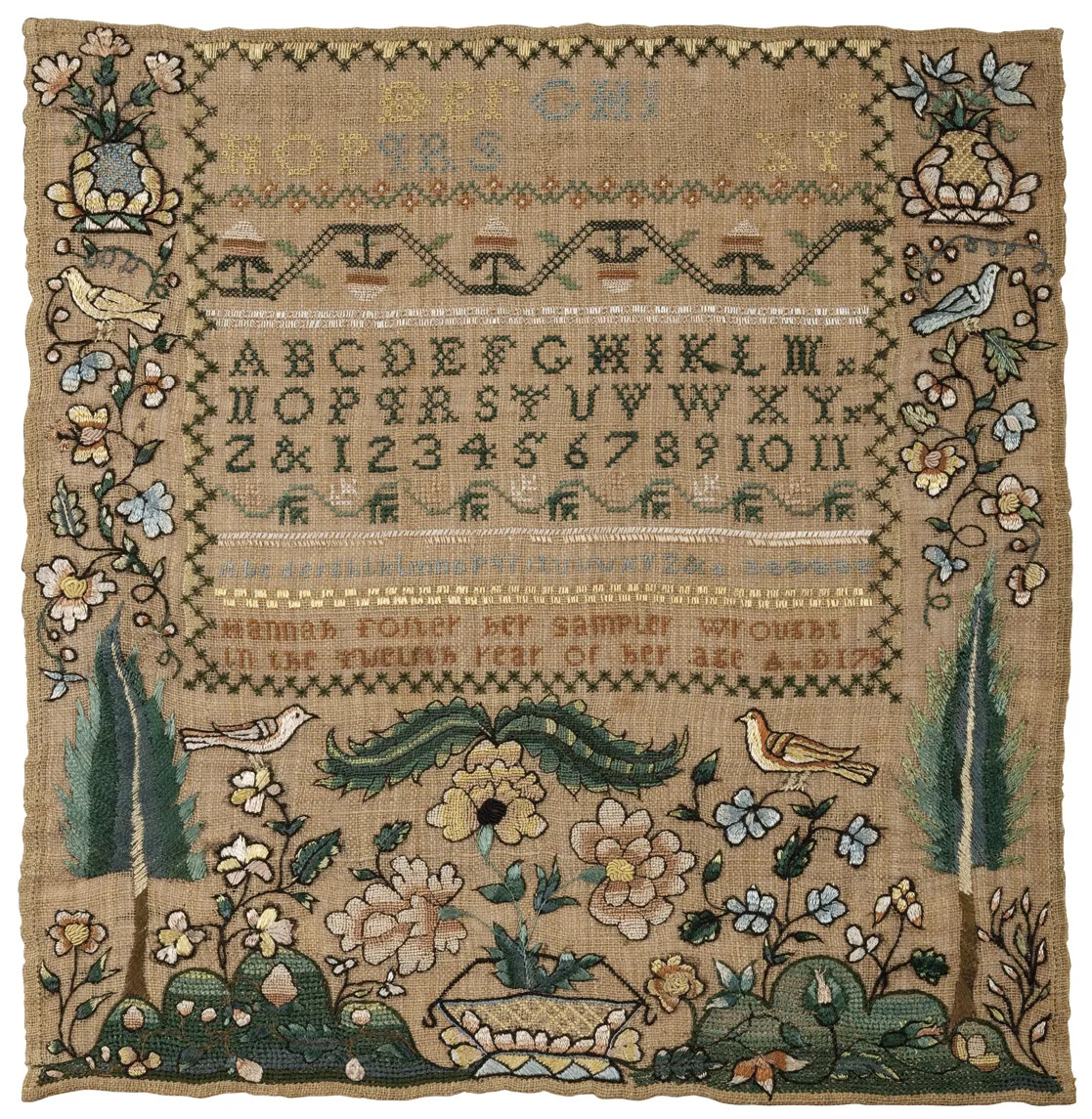
A vertical piece of light brown fabric with letters, birds, trees, urns, and flowers on it. All of the images are sown on to the fabric in different colored pieces of string. Towards the bottom of the piece of fabric is the sentence: "Hannah Foster her sampler wrought/in the twelfth year of her age A.D 178."
Hannah Foster's Sampler
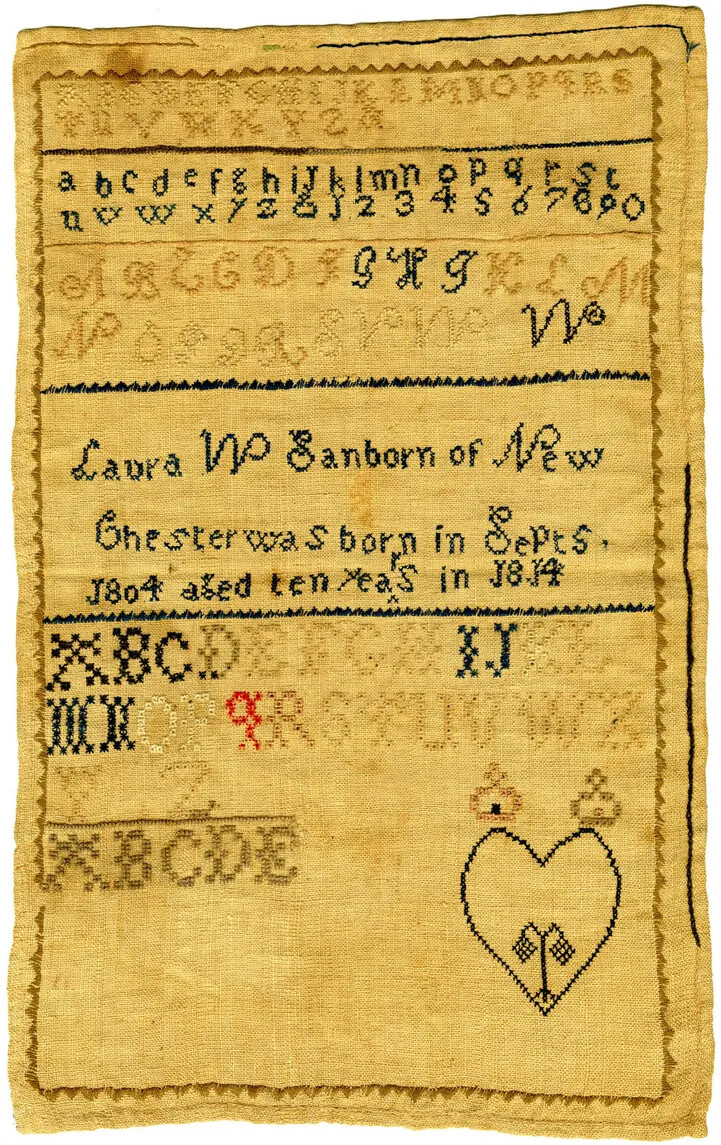
A vertical piece of cloth decorated with embroidery made from colored strings. There are three bordered rows of stitched letters from the alphabet at the top of the cloth, each completed in different stitching styles and in either upper or lowercase font. At the center of the cloth is the stiched sentence "Laura W Sanborn of New/Chester was born in Sept 5,/1804 aged ten years in 1814." Beneath this are two additional bordered rows of the alphabet. The last row is incomplete, only listing the letters "A" through "E." To the right of the incomplete row of letters is a heart with a crown over each of the humps. Inside the heart is a small tree.
Laura Sanborn's Sampler
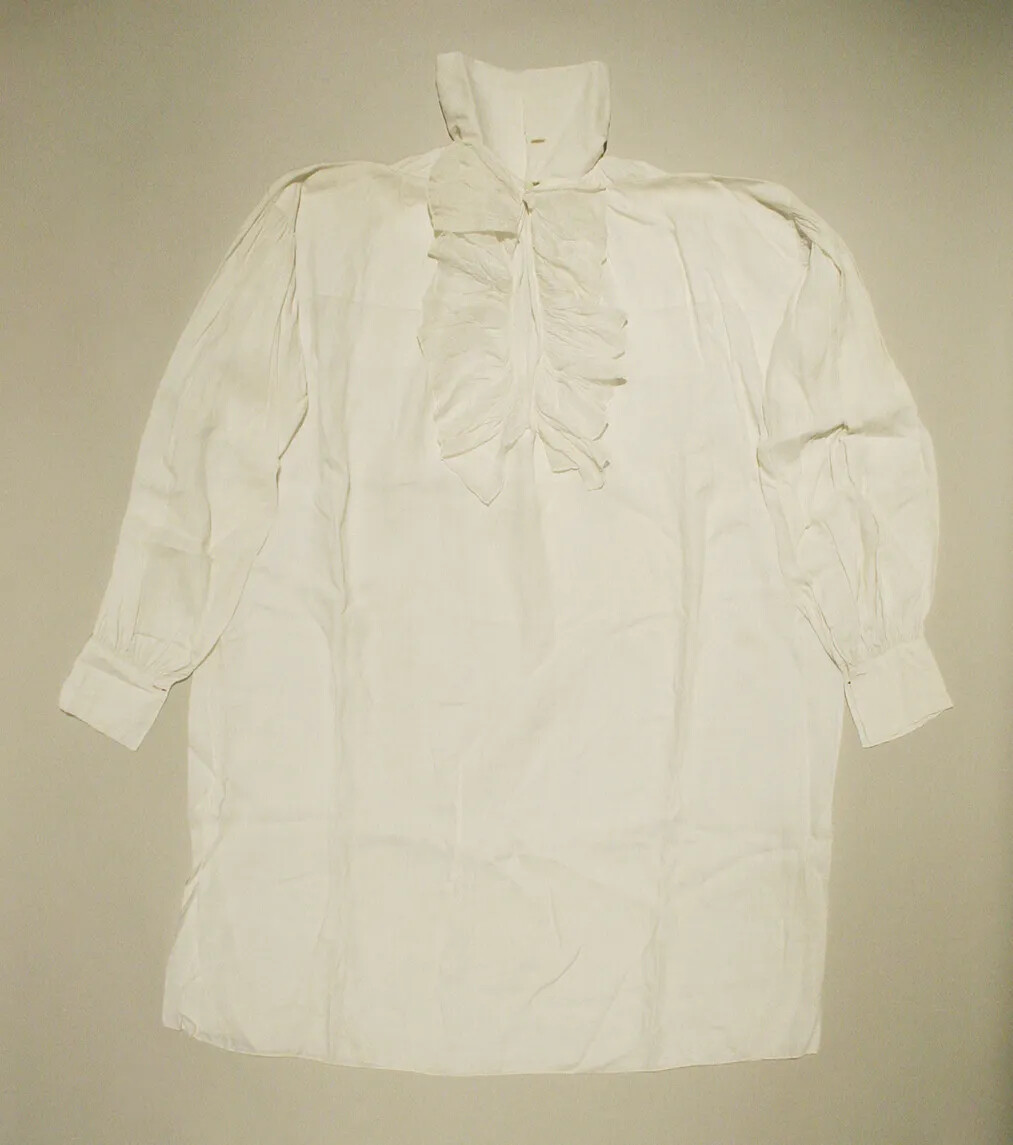
Linen Shirt
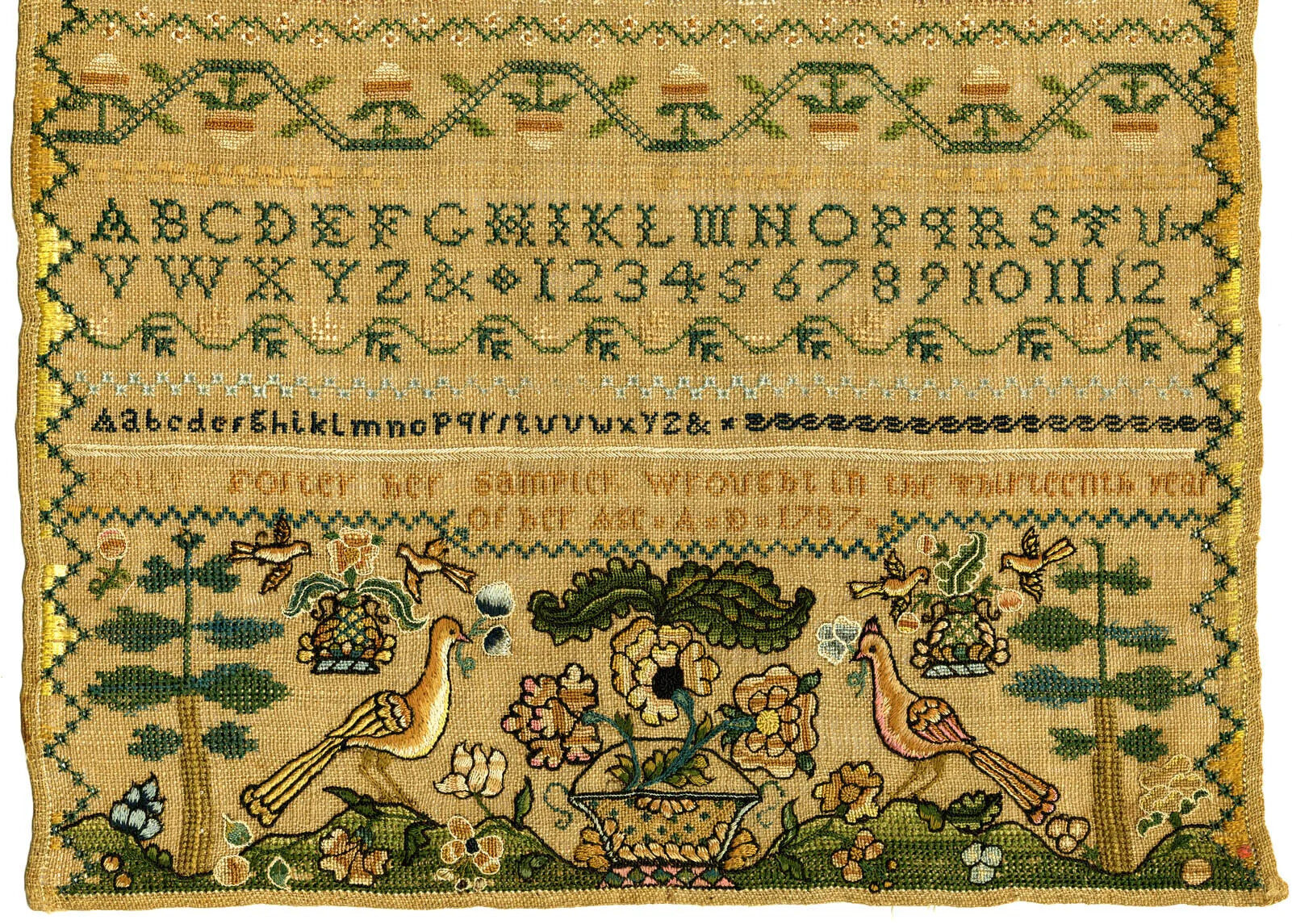
A horizontal piece of cloth decorated with embroidery made from colored strings. From top to bottom, there is a border of flowers and vines along the upper border of the cloth; a listing of the alphabet in uppercase letters, minus the letter "J;"  a listing of the numbers one through twelve; a listing of the alphabet in lowercase letters, minus the letter "J;" and the following sentence: "POLLY FOSTER her sample wrought in the thirteenth year/of her Age*A*D*1787*." Beneath all of this are two large birds with long tails standing on either side of an urn with flowers in it. Surrounding this scene are several other small birds, flowers, and trees.
Mary Foster's Sampler

Photographs & Prints in this Unit:

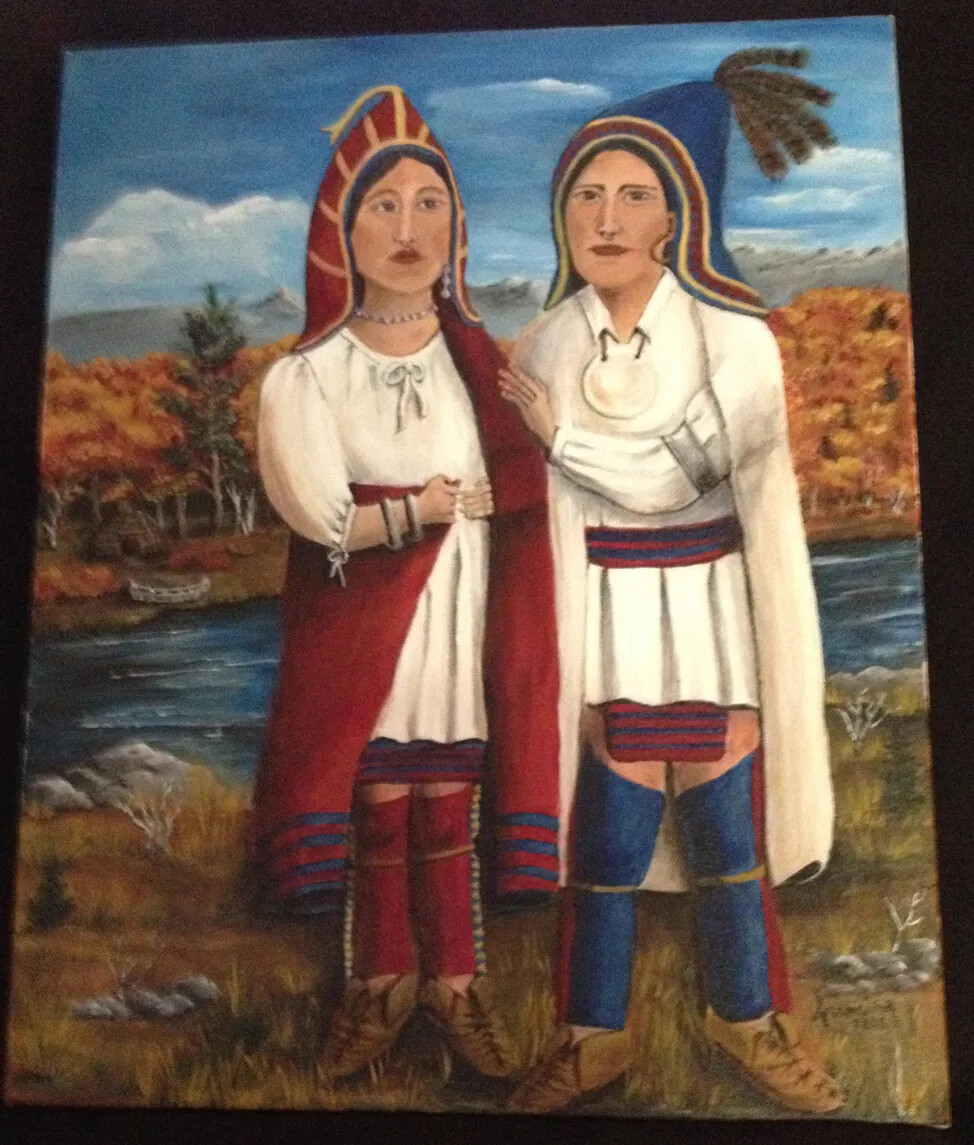
18th Century Abenaki Couple
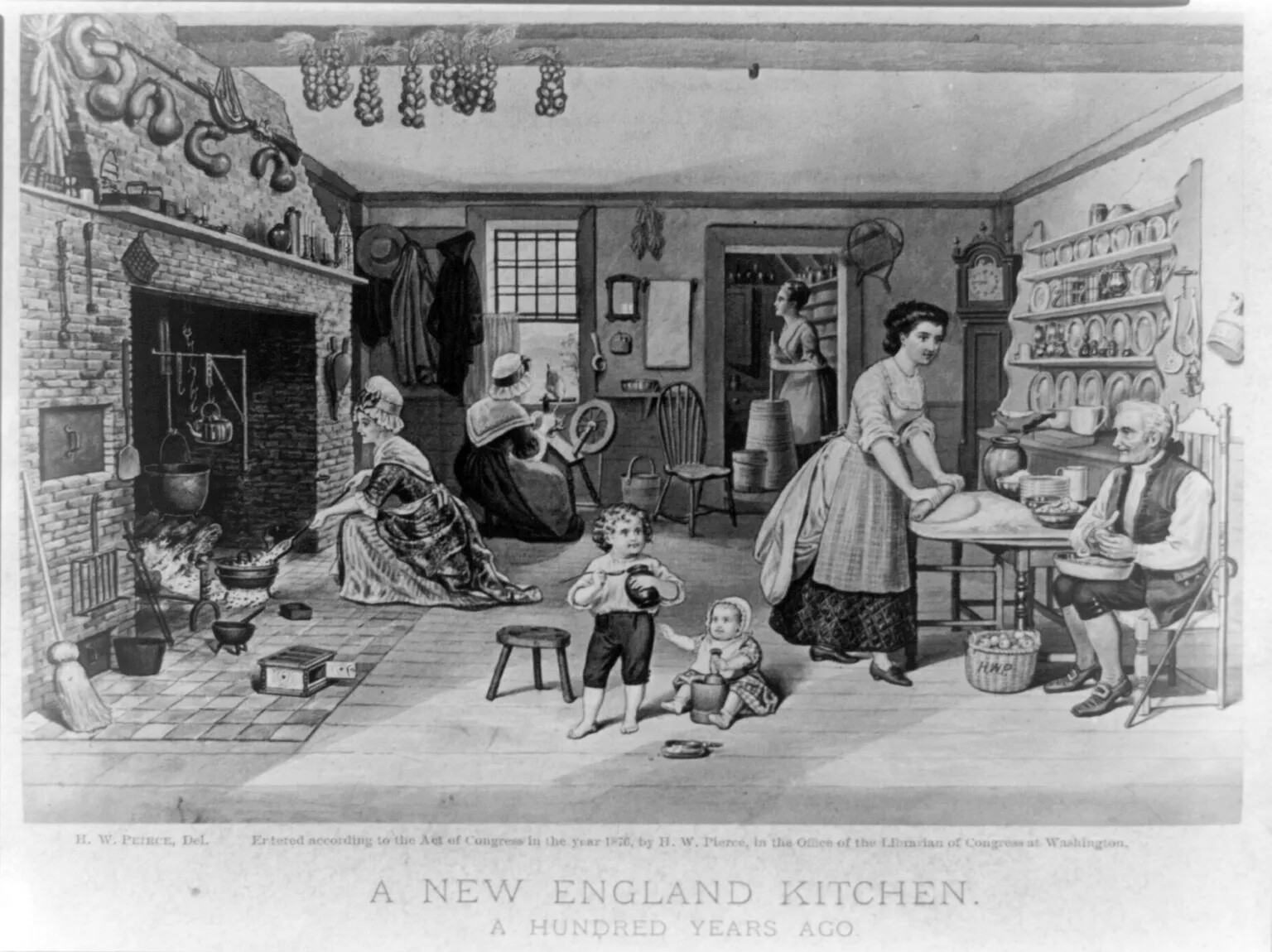
A black and white drawing of the interior of a house, with a large fireplace on the left side of the room. A group of men, women, and children are all working at various chores around the room. One woman places coals on top of a pot in the fireplace; one woman works at a spinning wheel; another woman stands next to a cylinder barrel; another woman rolls out dough with a rolling pin; a man peels apples over a bowl; and two children play on the floor in the center of the room. Various herbs and vegetables hang from the ceiling. The title of the drawing, located along the bottom border, reads "A NEW ENGLAND KITCHEN,/A HUNDRED YEARS AGO."
A New England Kitchen
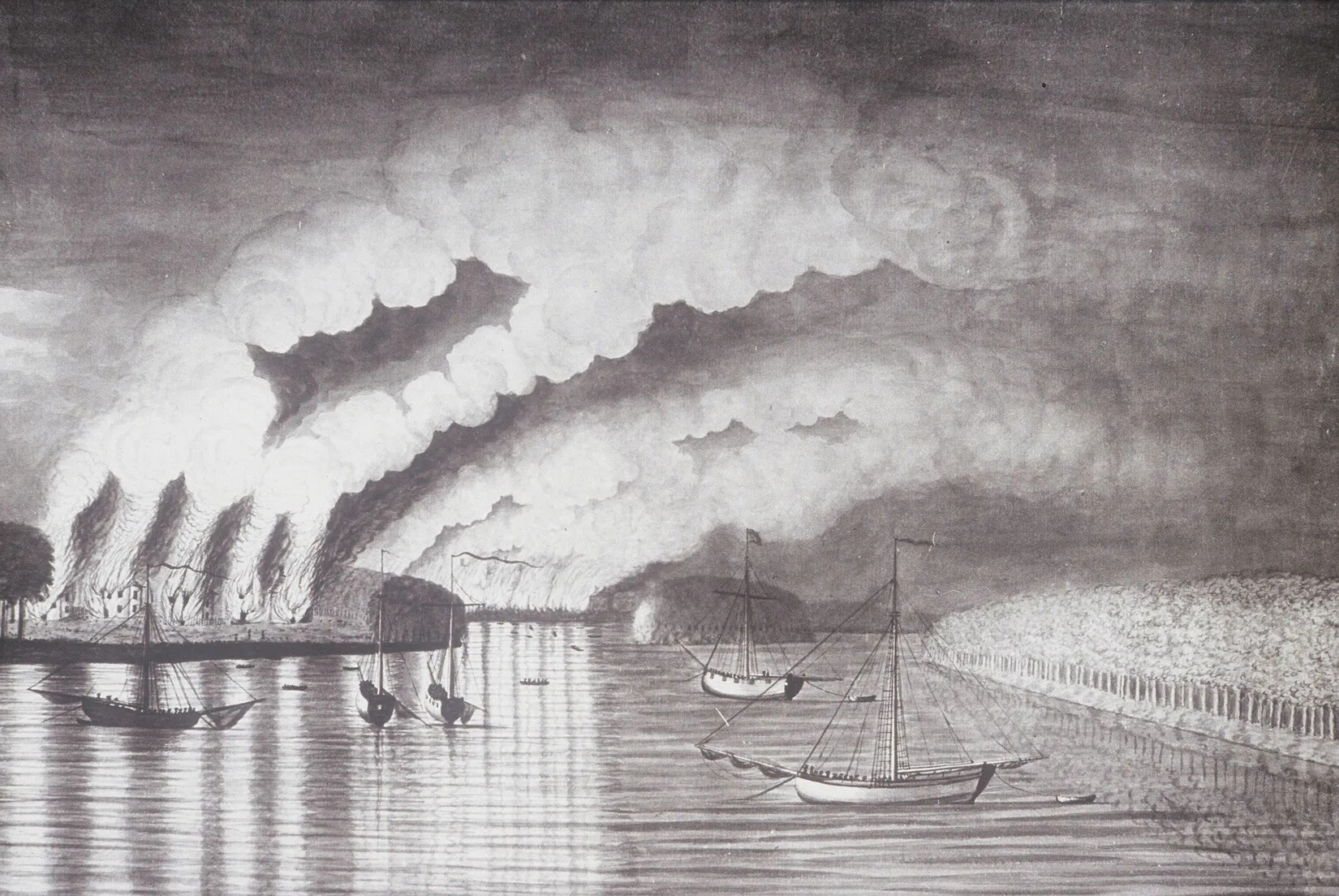
A black and white drawing of several ships floating in a body of water. The body of water is bordered by two pieces of land. The piece of land on the left has large clouds of smoke coming up from the ground.
A View of the Plundering and Burning of the City of Grymross
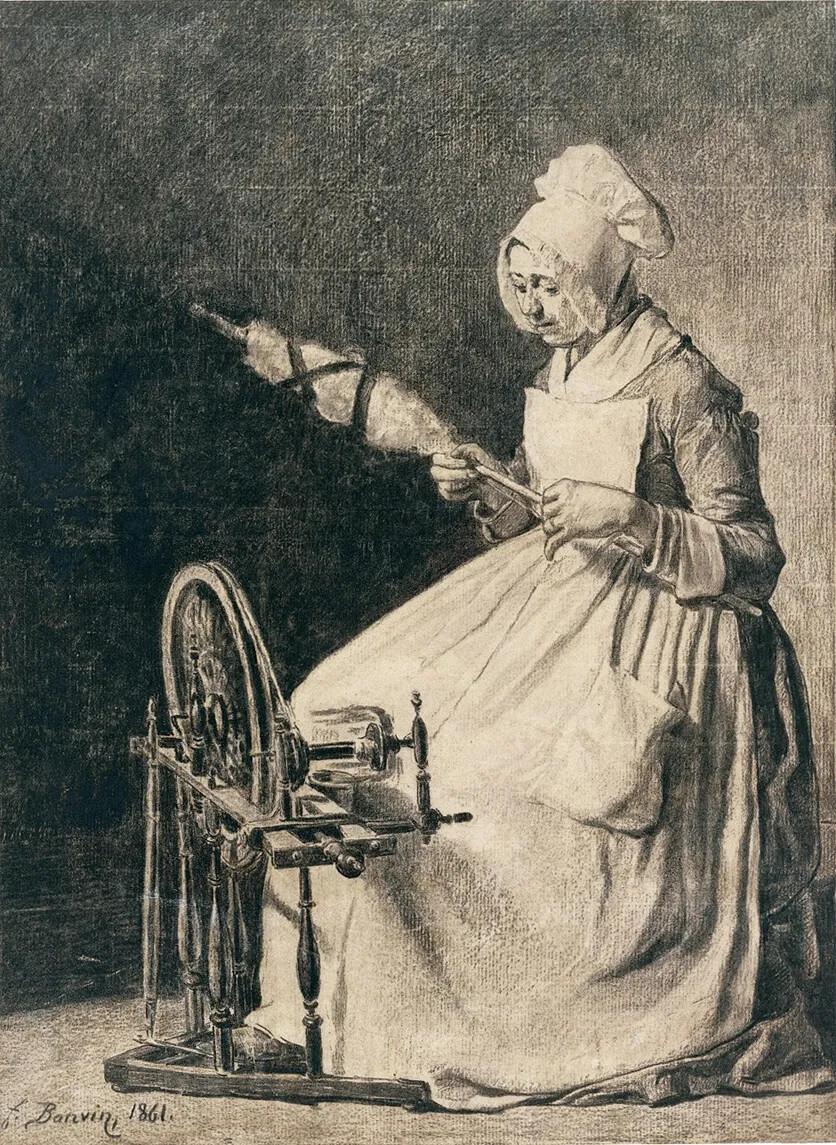
A black and white drawing of a woman seated in front of a spinning wheel. She wears a long-sleeved dress with an apron and a large bonnet on her head. She holds a wooden rod with fluffy materials wrapped around the end of it in her hands.
A Woman Spinning Flax
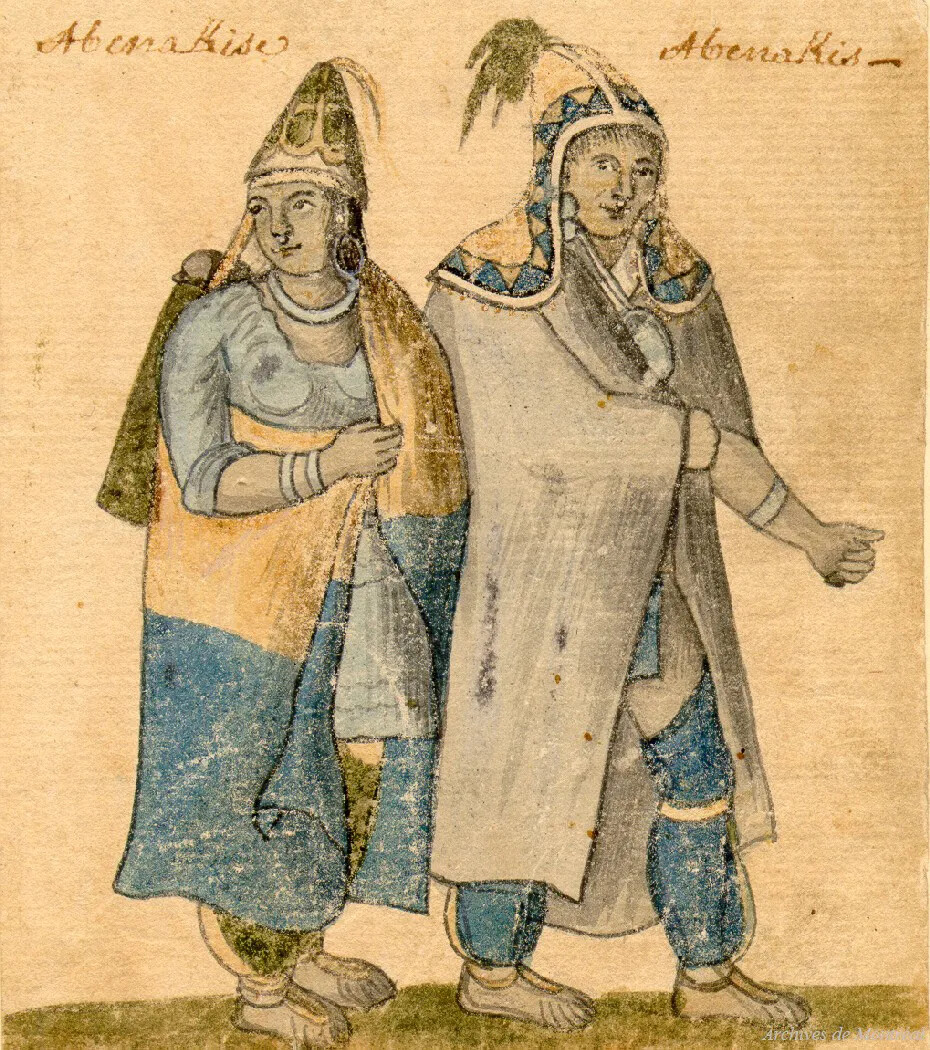
A colored drawing of two people standing next to each other. The person on the left wears a blue shirt, green pants, a yellow and blue cape, and a brown cone-shaped hat. The person on the right wears a large gray cape and blue pants, with a cone-shaped hat that has yellow and blue geometric designs on it.
Abenaki Couple
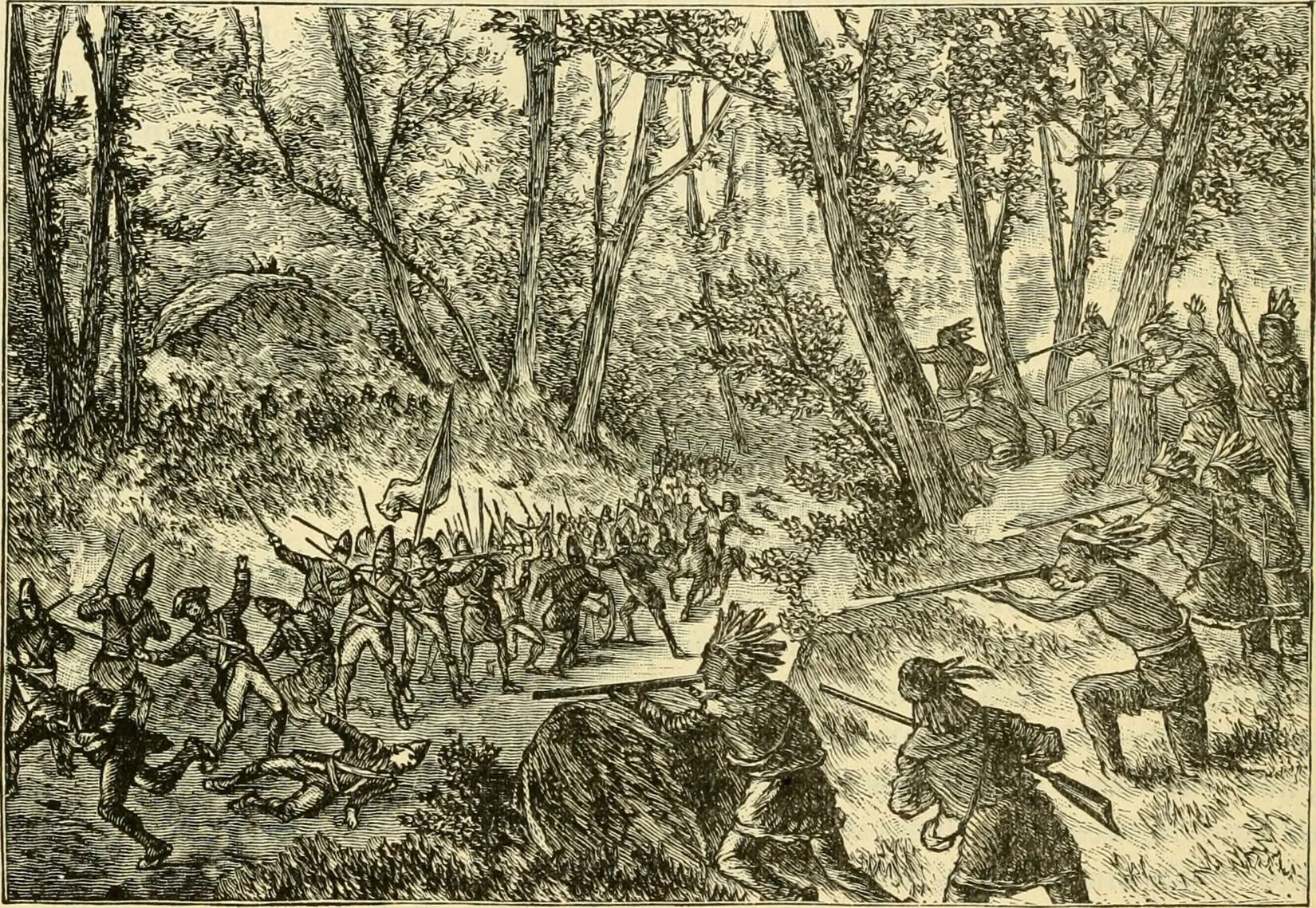
A black and white drawing of two groups of peole fighting with muskets in a forest. The group on the right side of the drawing wears feathered headresses and loose-fitting shirts and pants. The group on the left wears jackets with an X-design on the front, pointed hats, knee-length pants, and boots.
Battle of the Monongahela
A colored photograph of a beaver. The beaver has wirey and brown fur, small black ears and hands, and large black feet. It also has a large, flat tail.
Beaver
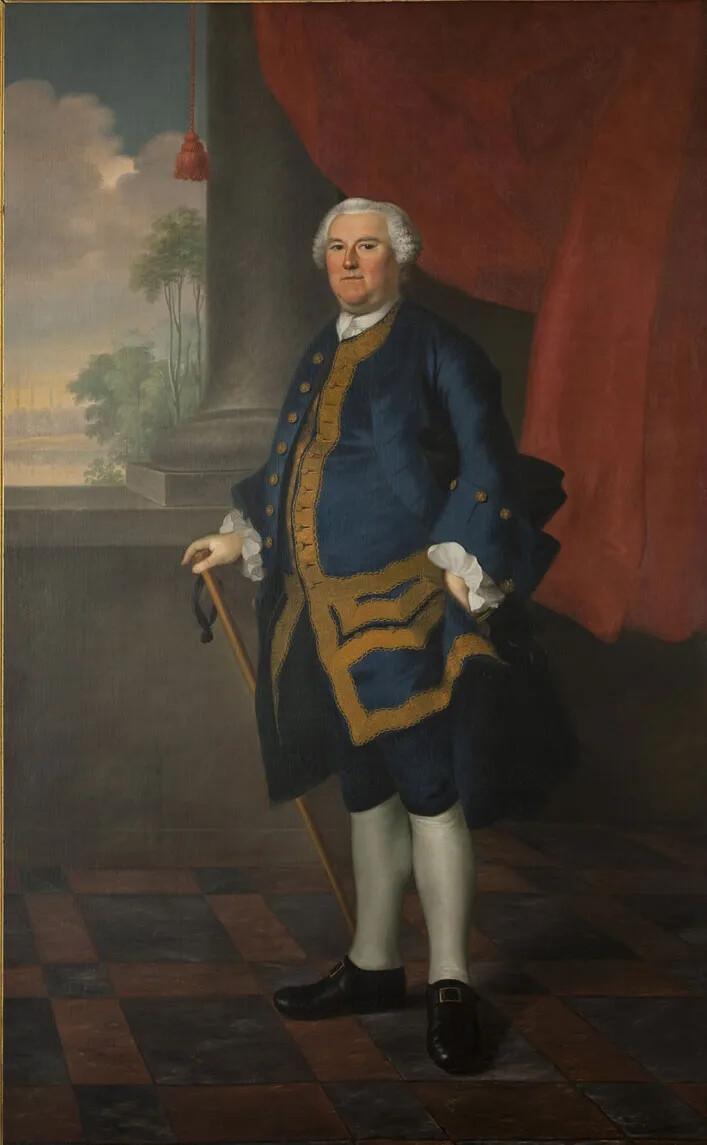
A colored painting of a man standing in a blue coat with gold edges and buttons, blue breeches, knee-high white stockings, and black shoes with large buckles. His left hand rests on a long wooden cane and his right hand rests in his right pocket. Behind the man is an exterior landscape of tall trees to his left and a large red curtain to his right.
Benning Wentworth
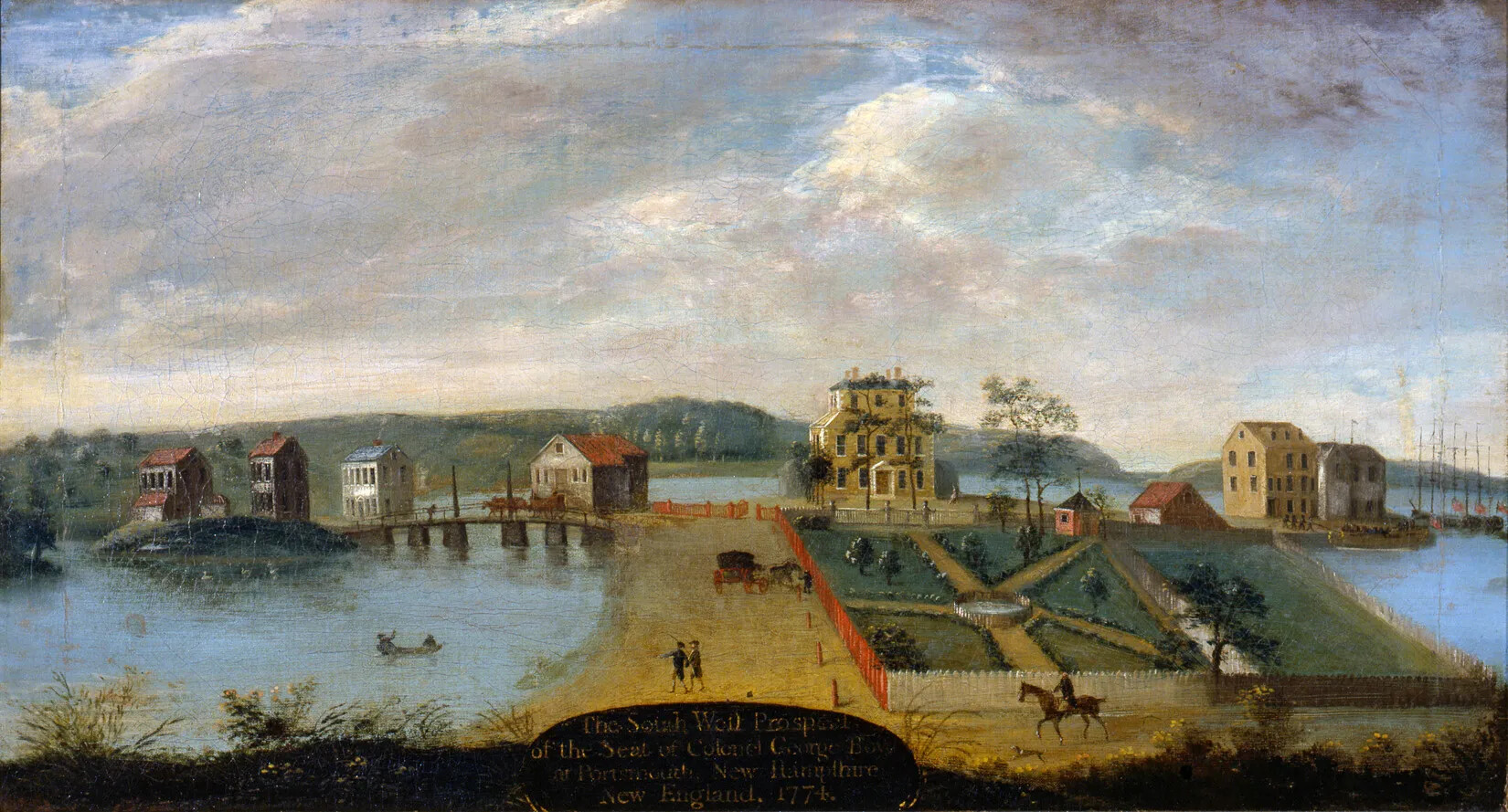
A colored painting of a piece of green land and a row of multi-storied houses bordered on three sides by a body of water. Several people are seen either riding on horseback, in a horse-drawn carriage, or walking on land. There is a small group of people rowing in a row boat in the water.
Colonel George Boyd's Estate
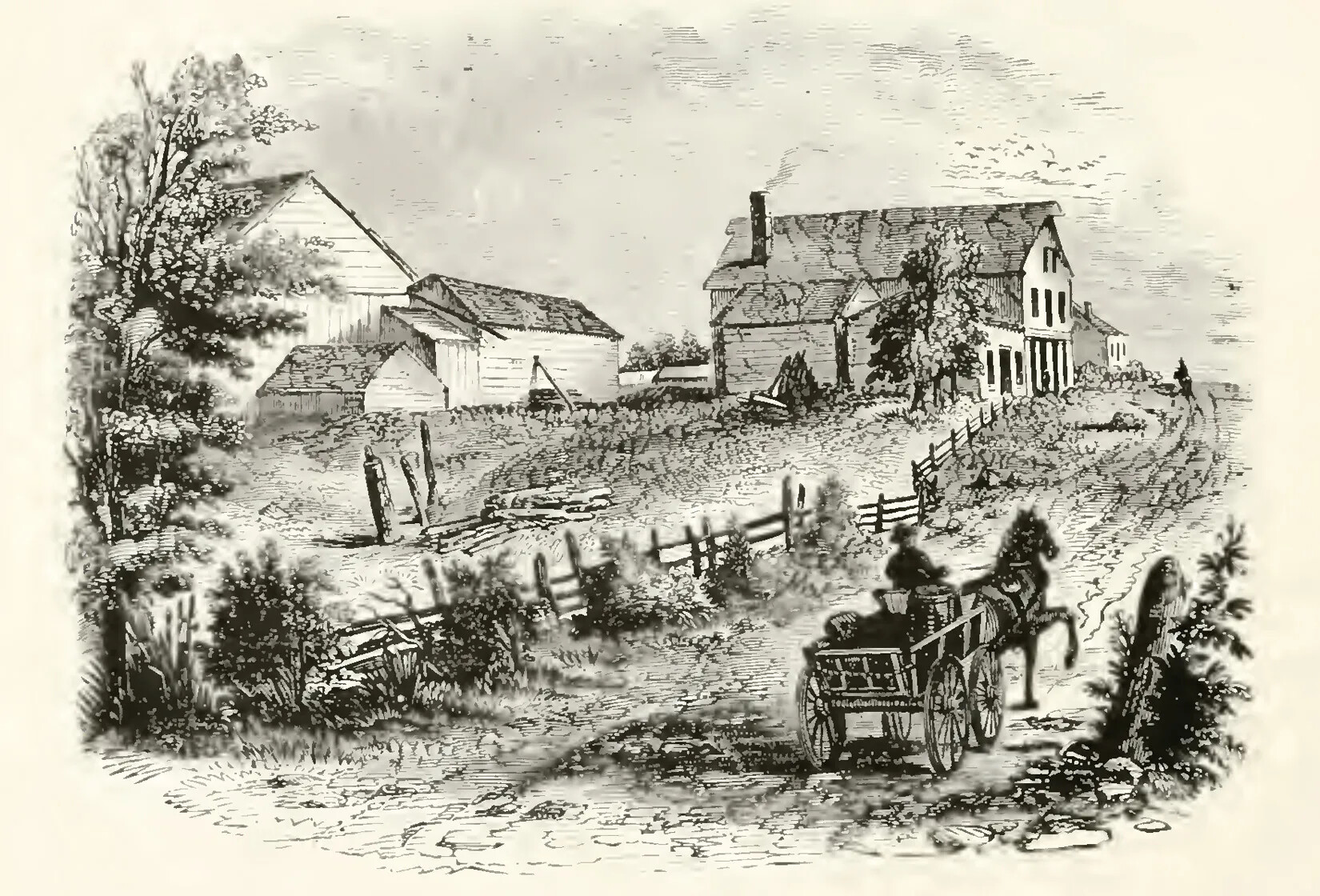
A black and white drawing of a horse-drawn wagon driving up a dirt road with a slight incline to a multi-storied house and several farm buildings. The wagon has various bundles in it and the horse is directed by a person sitting at the front of the wagon. To the left of the road is a fenced-in piece of land, scattered with grass and trees.
Colonial Farm
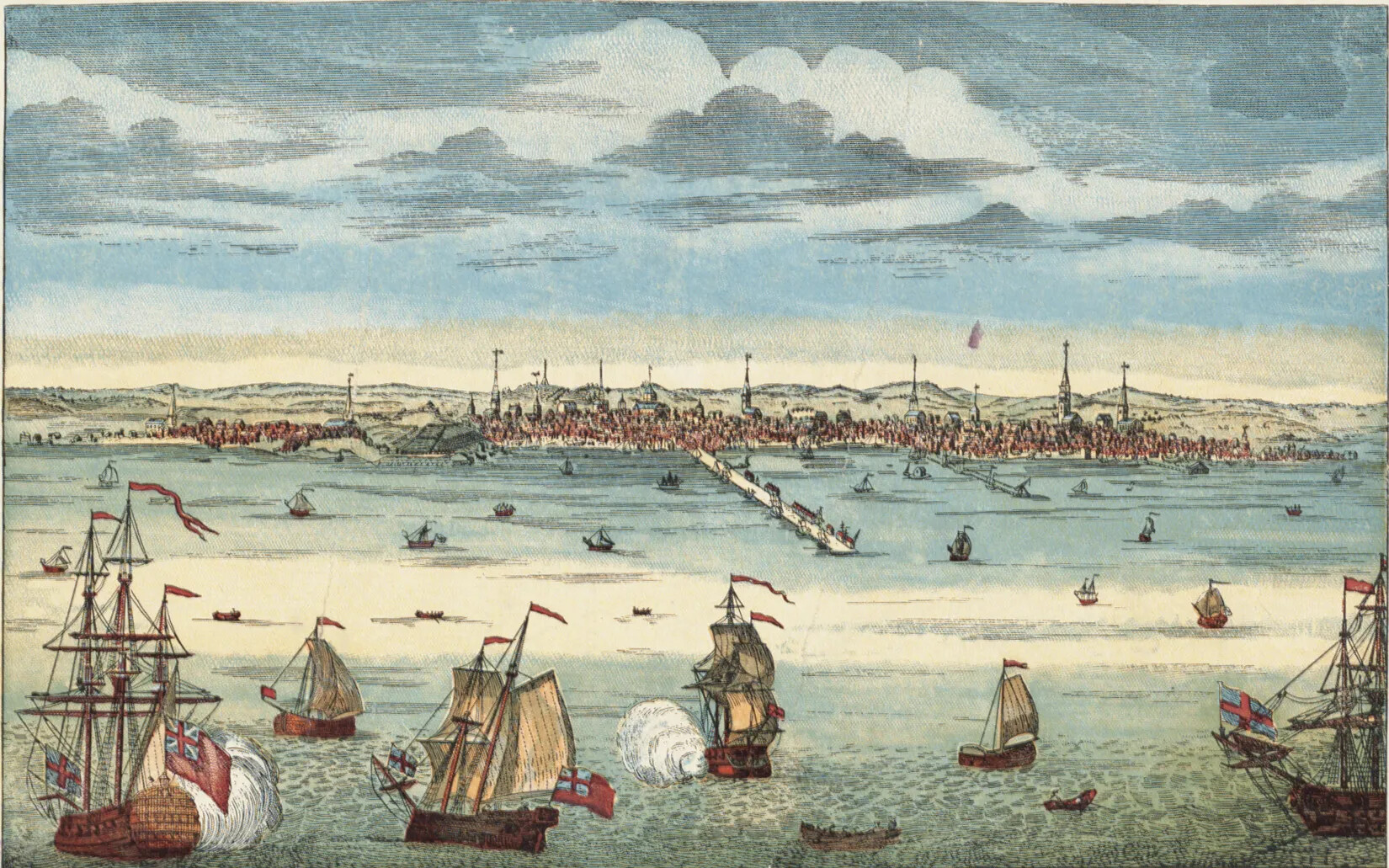
A colored painting of several large ships sailing on a body of water. All of the ships fly a red flag with a blue and red cross pattern on it. In the distance, there is a piece of land with a town overlooking the water. The town has many houses and tall church steeples. In the distance are several green hills.
Colonial Harbor
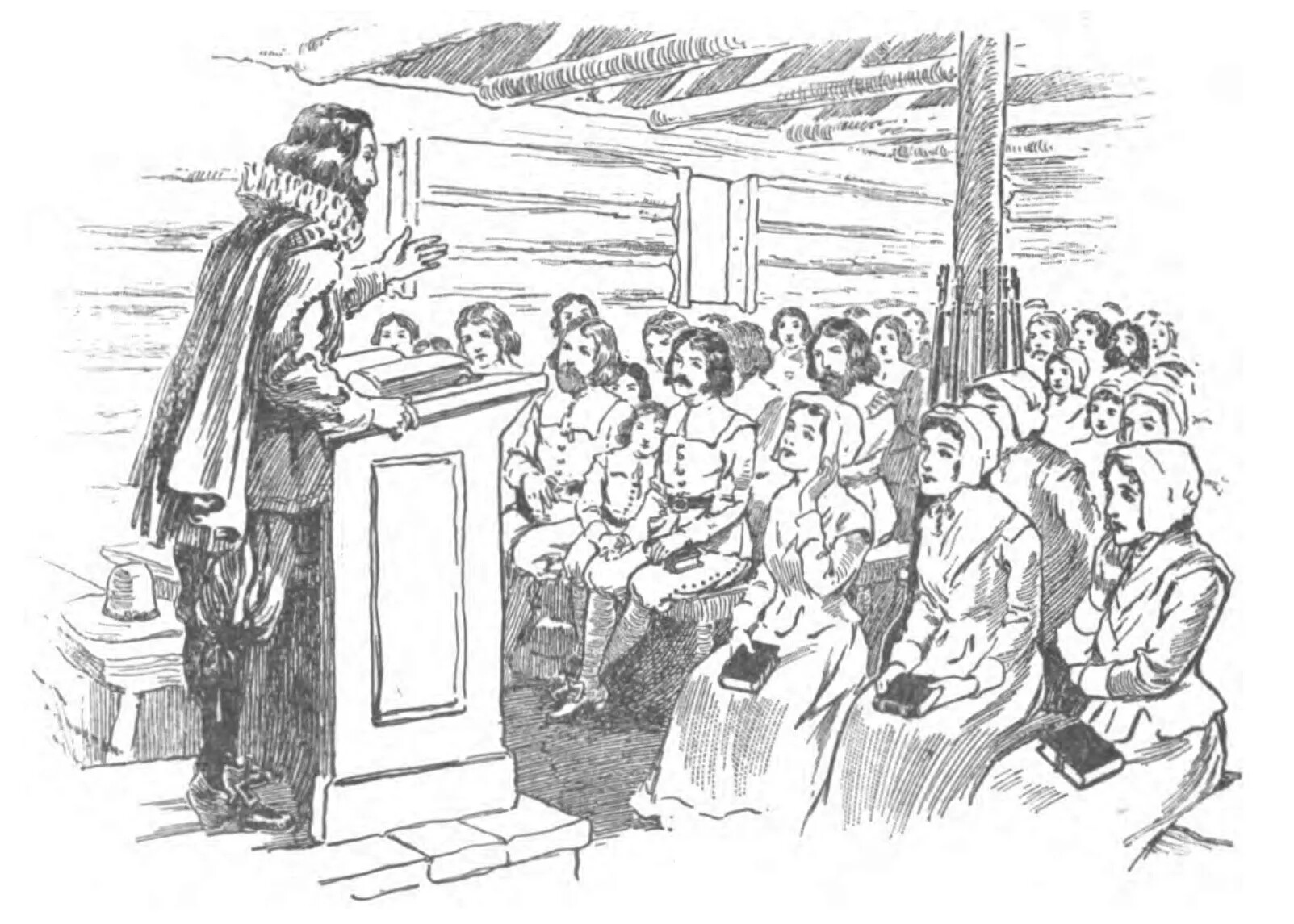
A black and white drawing of a group of men, women, and children sitting in a wood-panelled room. The men wear long coats and shirts with wide collars, knee-length pants, long stockings, and buckled shoes. The women wear long dresses and bonnets. The men all sit on one side of the room and the women all sit on the other side. All of the people sit looking forward at a man with a puffed and ruffled collar and cape, who stands behind a podium with an open book on it.
Colonial New England Church
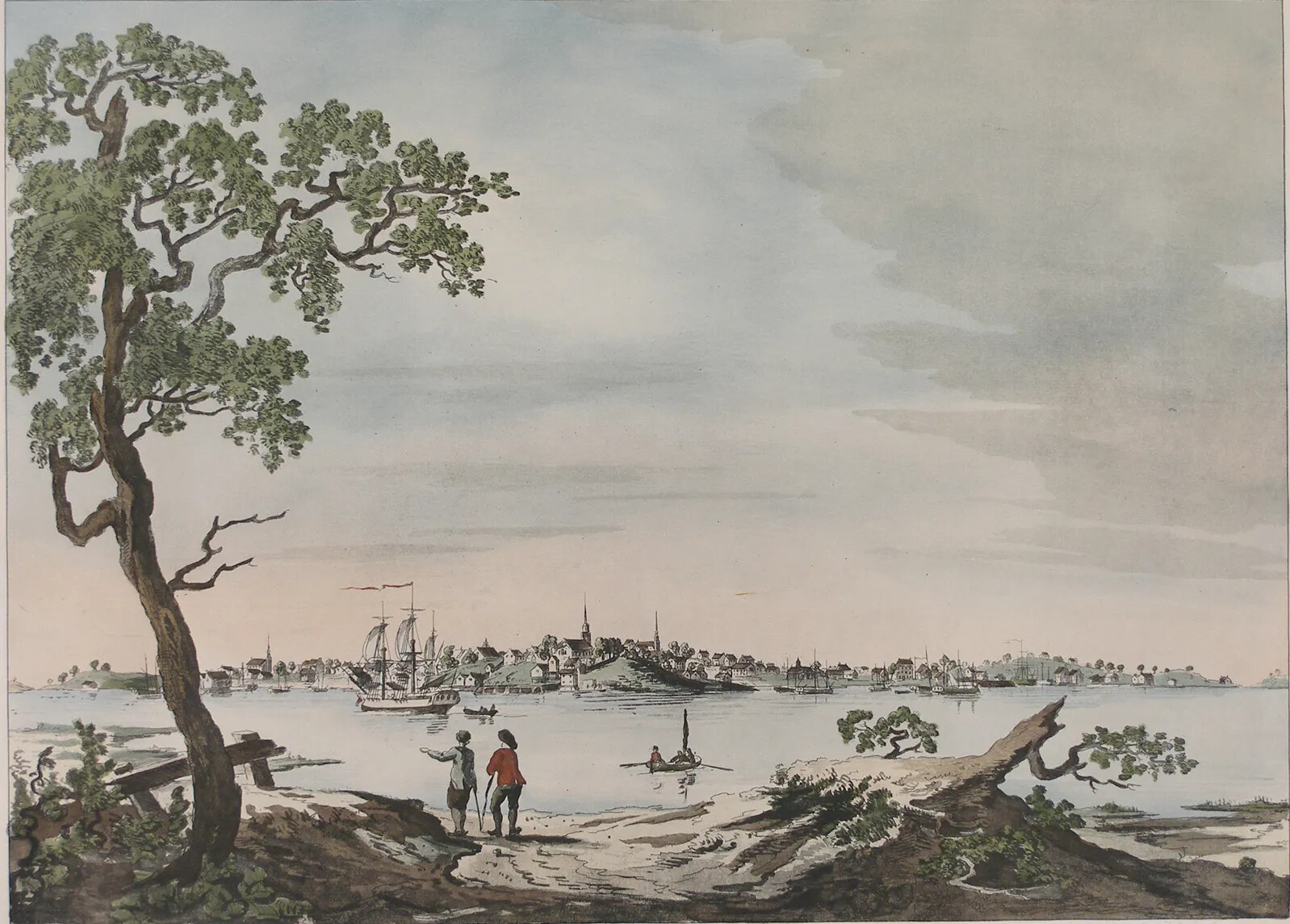
A colored painting of two men with their backs to the viewer, standing along the shore of a body of water. Across the water is an elevated piece of land, with several churches and houses. A tall ship and two rowboats float in the water.
Colonial Portsmouth
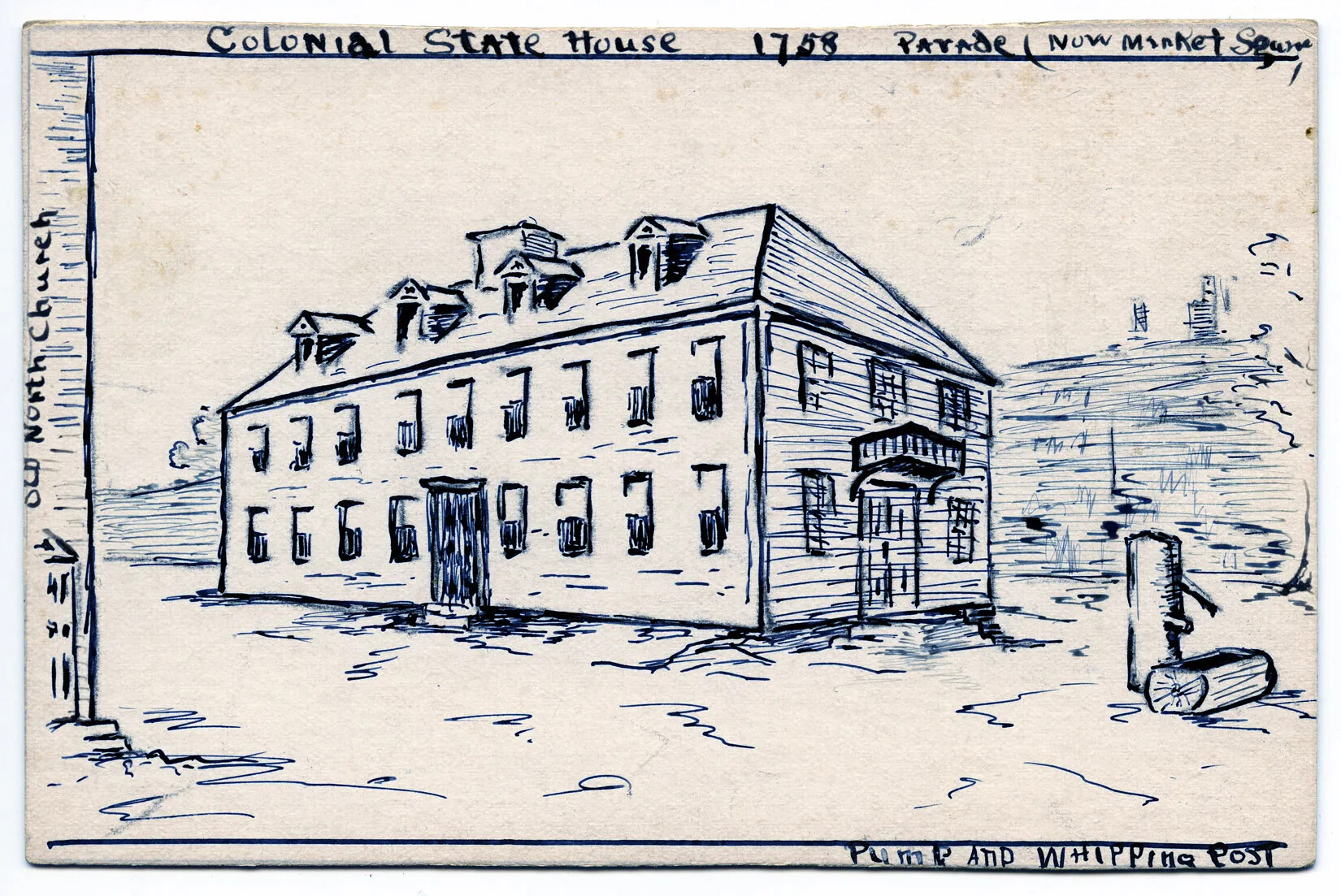
A black and white drawing of a three-storied house. The title of the drawing, located along the upper border, reads "Colonial State House 1758 Parade (Now Market Square."
Colonial State House
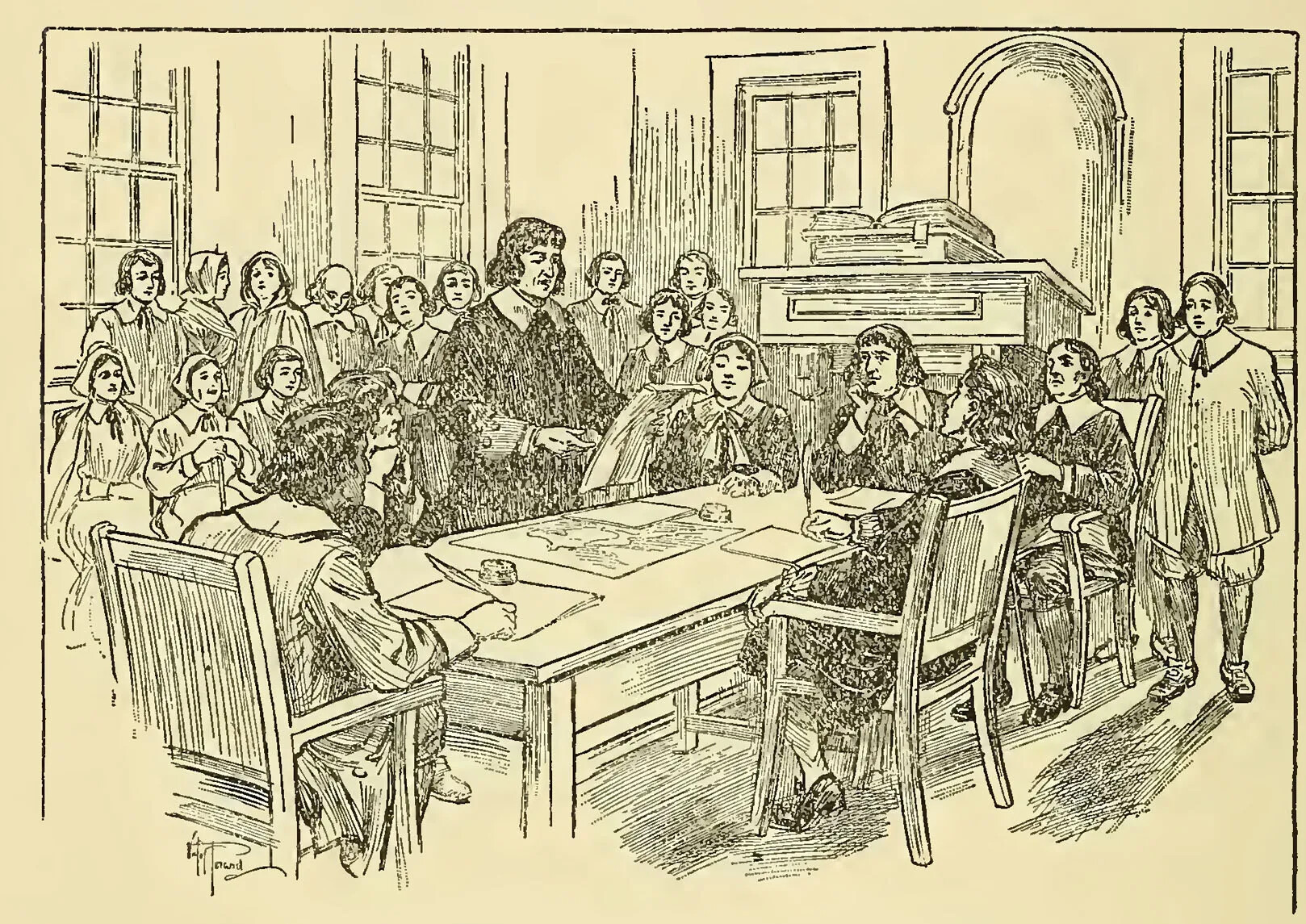
A black and white drawing of a group of men and women gathered around a table, which has maps and various pieces of paper scattered on top of it. The men wear long dark-colored coats with wide white collars, knee-length pants, long stockings, and buckled shoes. The women wear long dark-colored dresses and bonnets. They all look towards a man at the center of the table, who stands and reads from a document.
Colonial Town Meeting
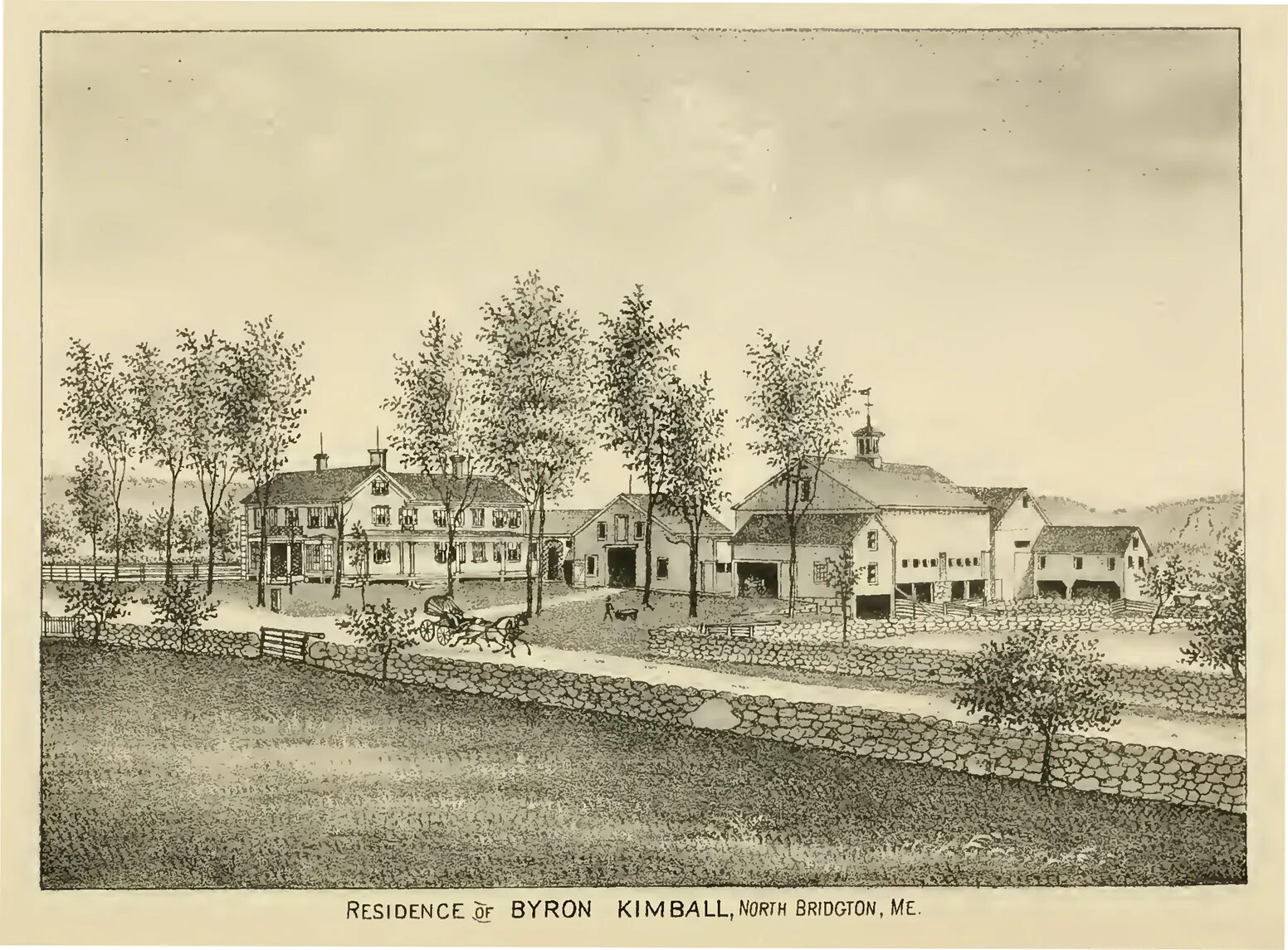
A black and white drawing of a two-storied house, with several barns and out buildings attached to the back of it. The house faces a tree-lined road and a field bordered by a stone wall. The title of the drawing, located along the bottom border, reads "RESIDENCE OF BYRON KIMBALL, NORTH BRIDGTON, ME."
Connected Farm
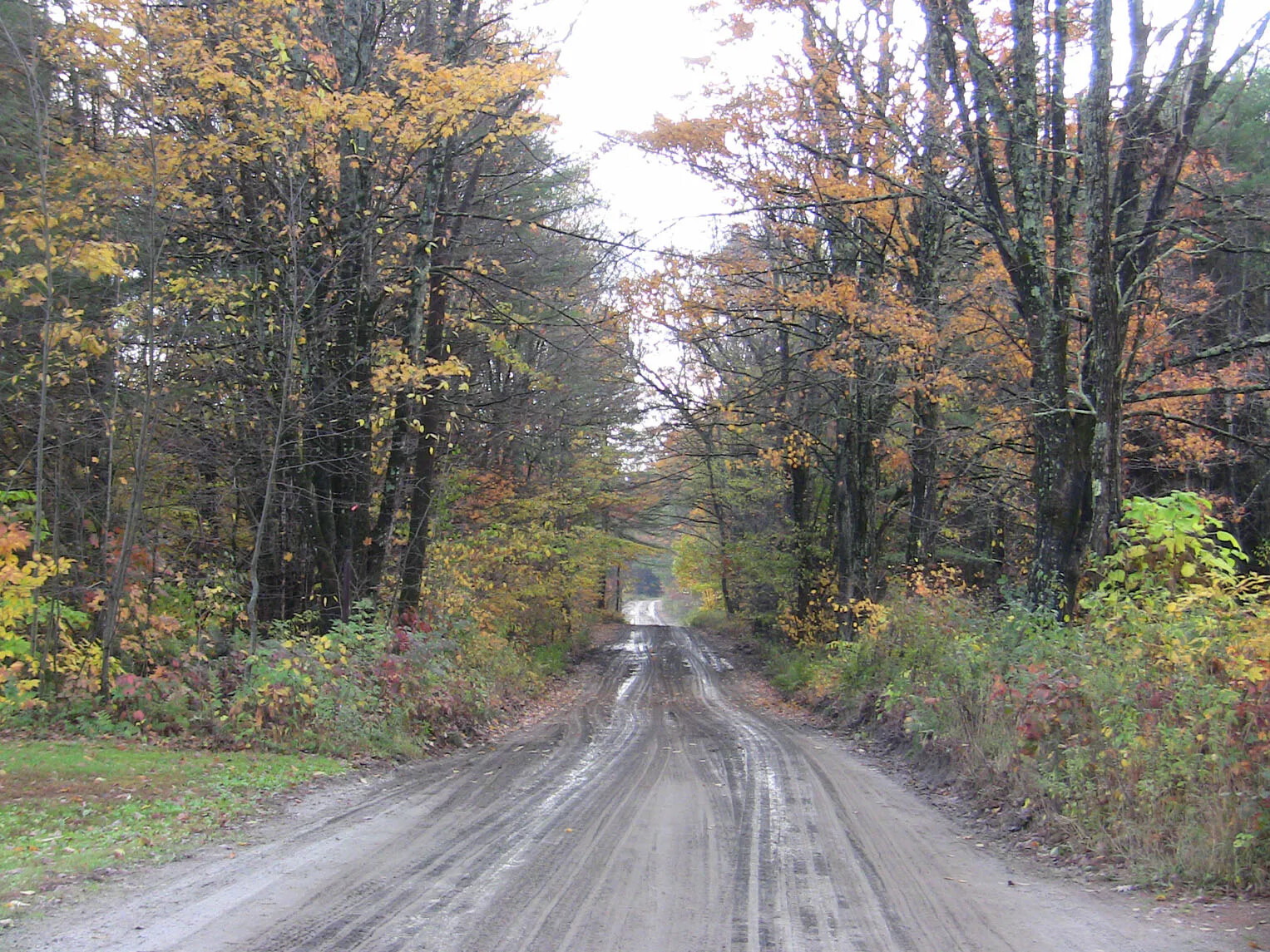
A colored photograph of a dirt road bordered by forested land. The trees in the forest have orange and yellow leaves. Tires marks and puddles of water can be seen in the road.
Crown Point Road Today
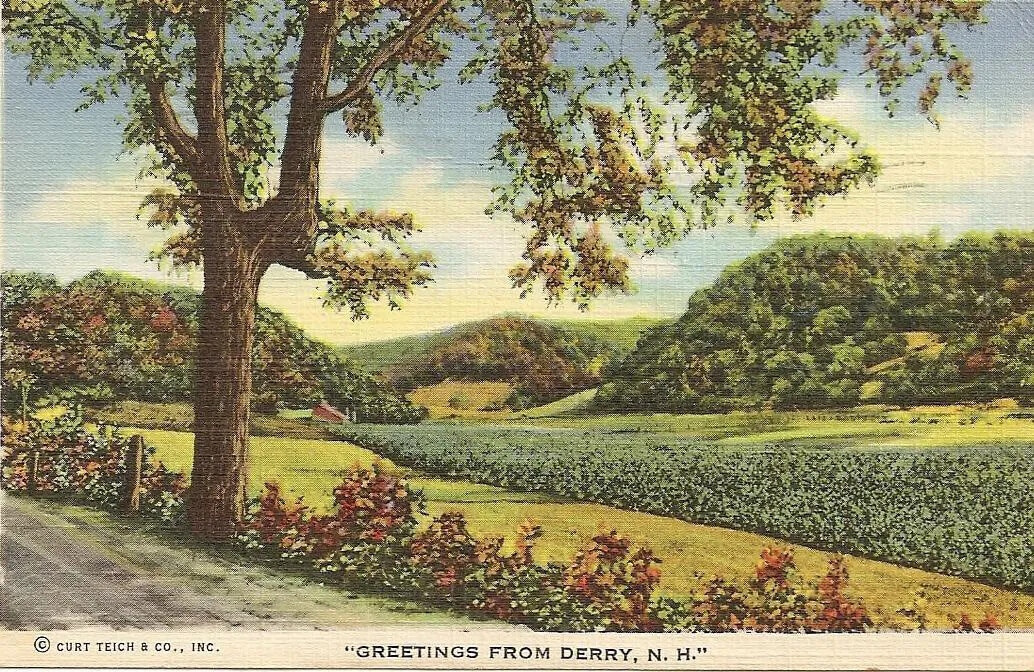
A colored postcard of a green valley set between three tree-covered hills. To the left of the valley is a large tree and a shrub lined road. The title of the postcard, located along the bottom border, reads "GREETINGS FROM DERRY. N.H."
Derry Farm Scene
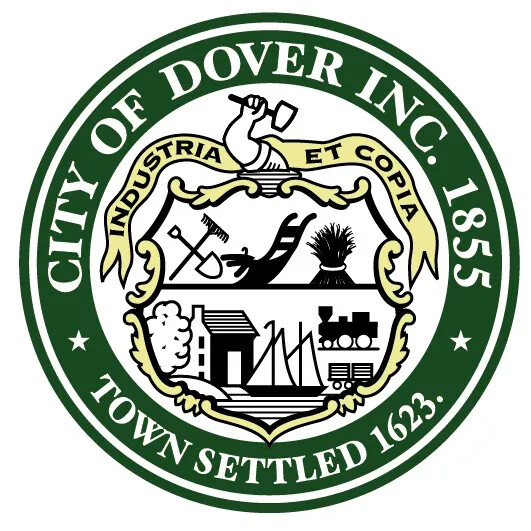
A colored print of a green-bordered circle with the words "*CITY OF DOVER INC. 1855/TOWN SETTLED 1623." typed in white text. Inside the circle, on a white background, there is a pale yellow ribbon with the words "INDUSTRIA ET COPIA" typed in black text above a coat of arms, which shows several farming tools, as well as a sailboat and train. Above the coat of arms is an arm holding up a hammer.
Dover Town Seal
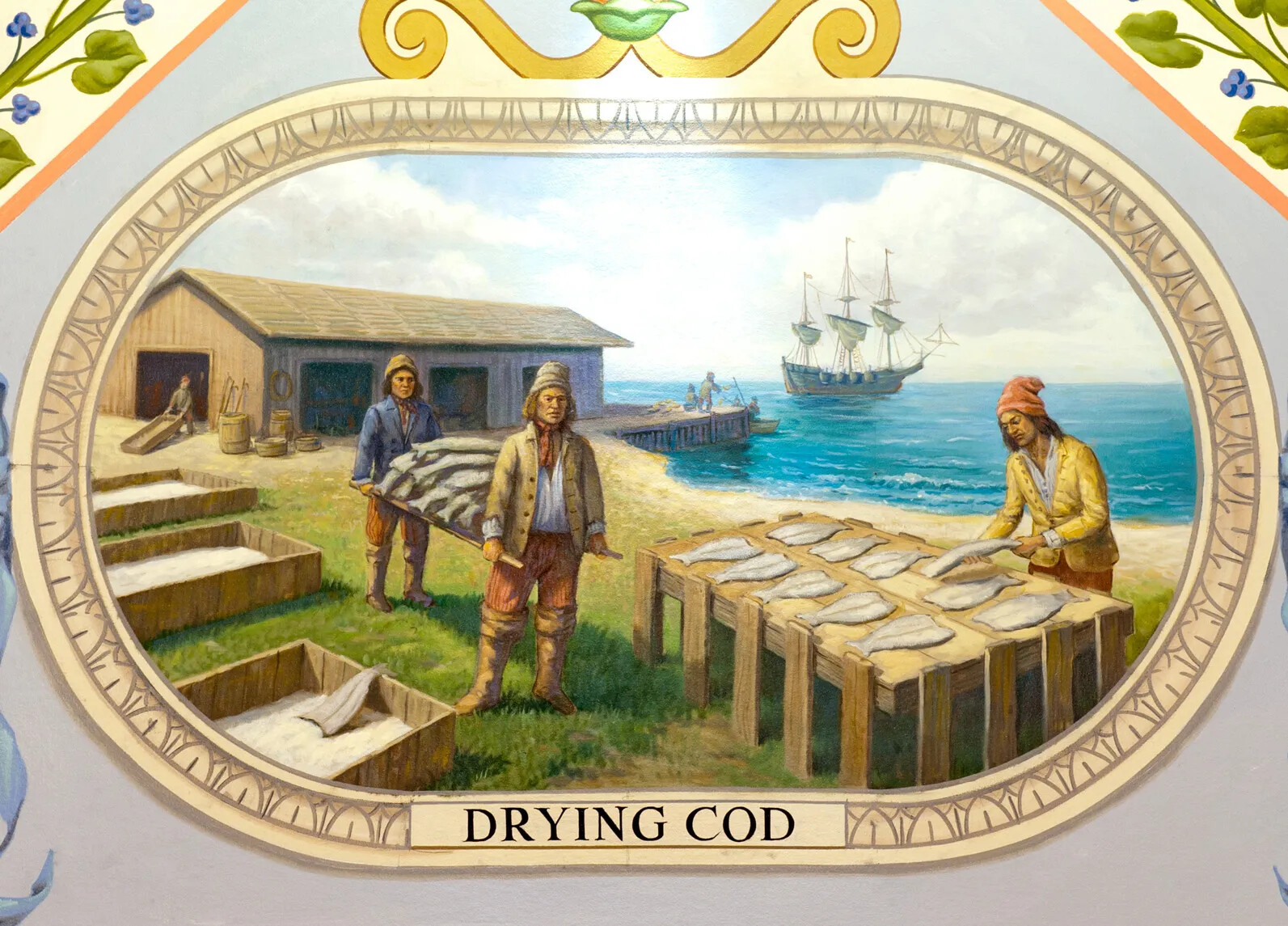
A colored painting of a group of men in fishermen's outfits. All of the men are engaged in different activities, like lying filleted fish bodies on wide wooden racks, carrying a pile of filleted fish, salting the fish, or helping each other out of a rowboat. In the distance is a large ship with three tall masts and sails. The title of the painting, located centered along the bottom border, reads "DRYING COD."
Drying Cod Painting
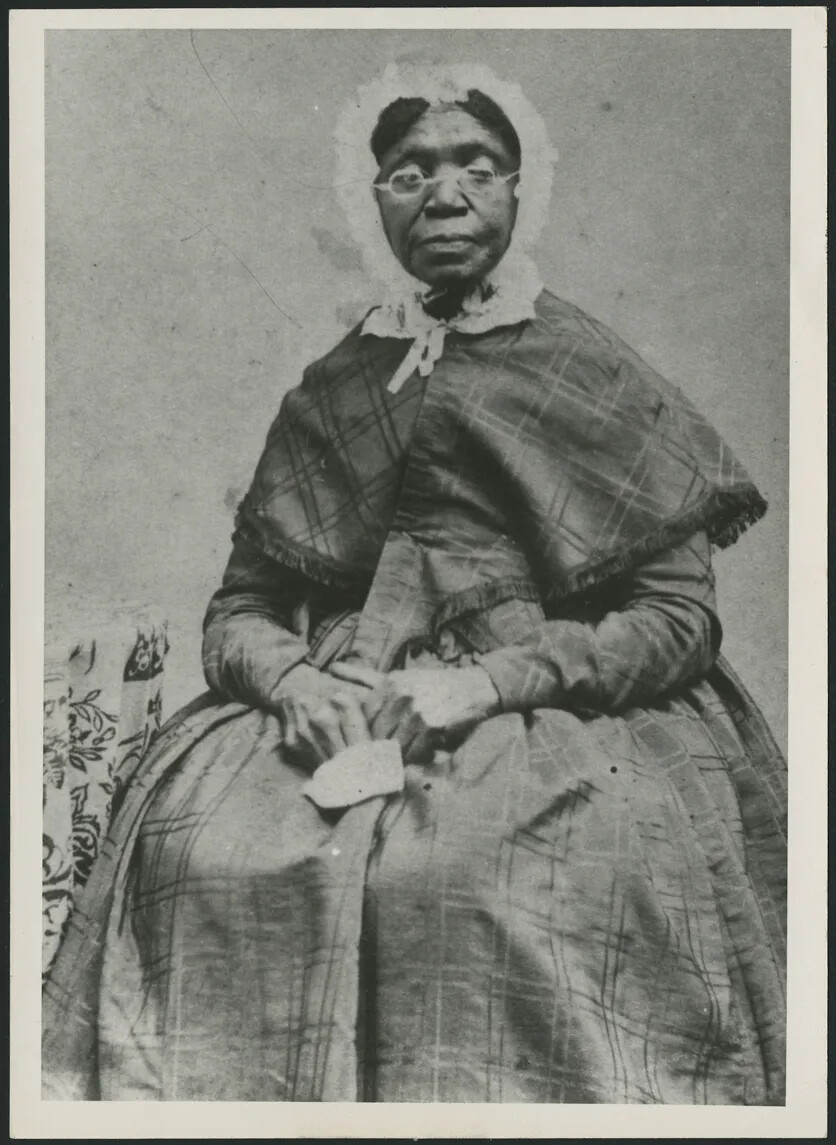
A black and white photograph of a Black woman sitting with her hands placed on her lap. She wears glasses, a long dress with long sleeves, a shoulder-length cloak, and a bonnet.
Esther Whipple Mullinaux
A colored print of a dark blue-bordered circle with the words "*TOWN OF EXETER*/NEW HAMPSHIRE" typed in gray text. Inside the circle, on a white background, there is a drawing of a fish and the words "FOUNDED/1638" typed in blue text.
Exeter Town Seal
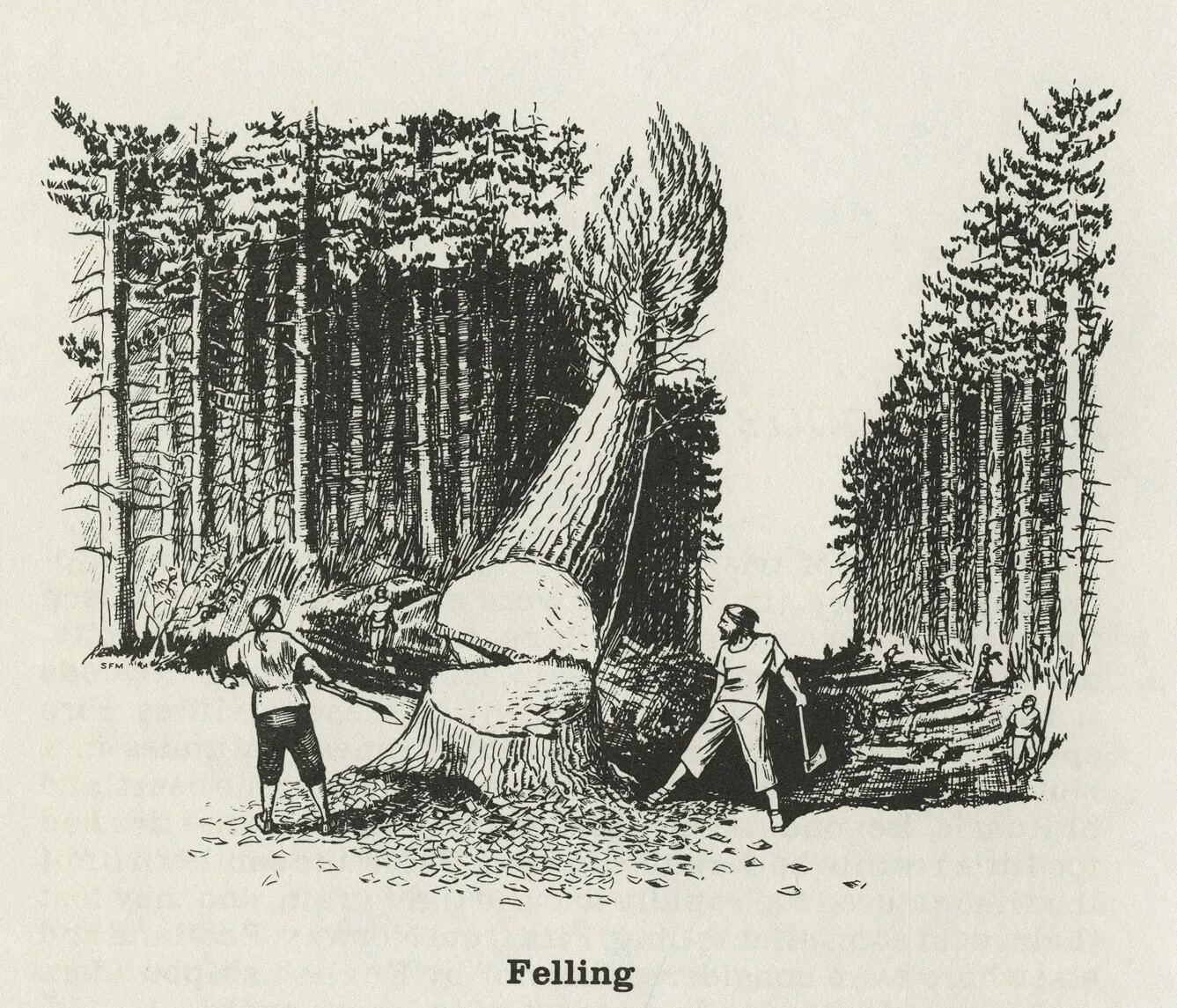
A black and white drawing of two men watching a tree with a cut trunk fall to the ground. Both men hold axes in their hands. The tree falls away from the viewer into a clearing lined with tall trees. The title of the drawing, located centered along the bottom border, reads "Felling."
Felling Mast Trees
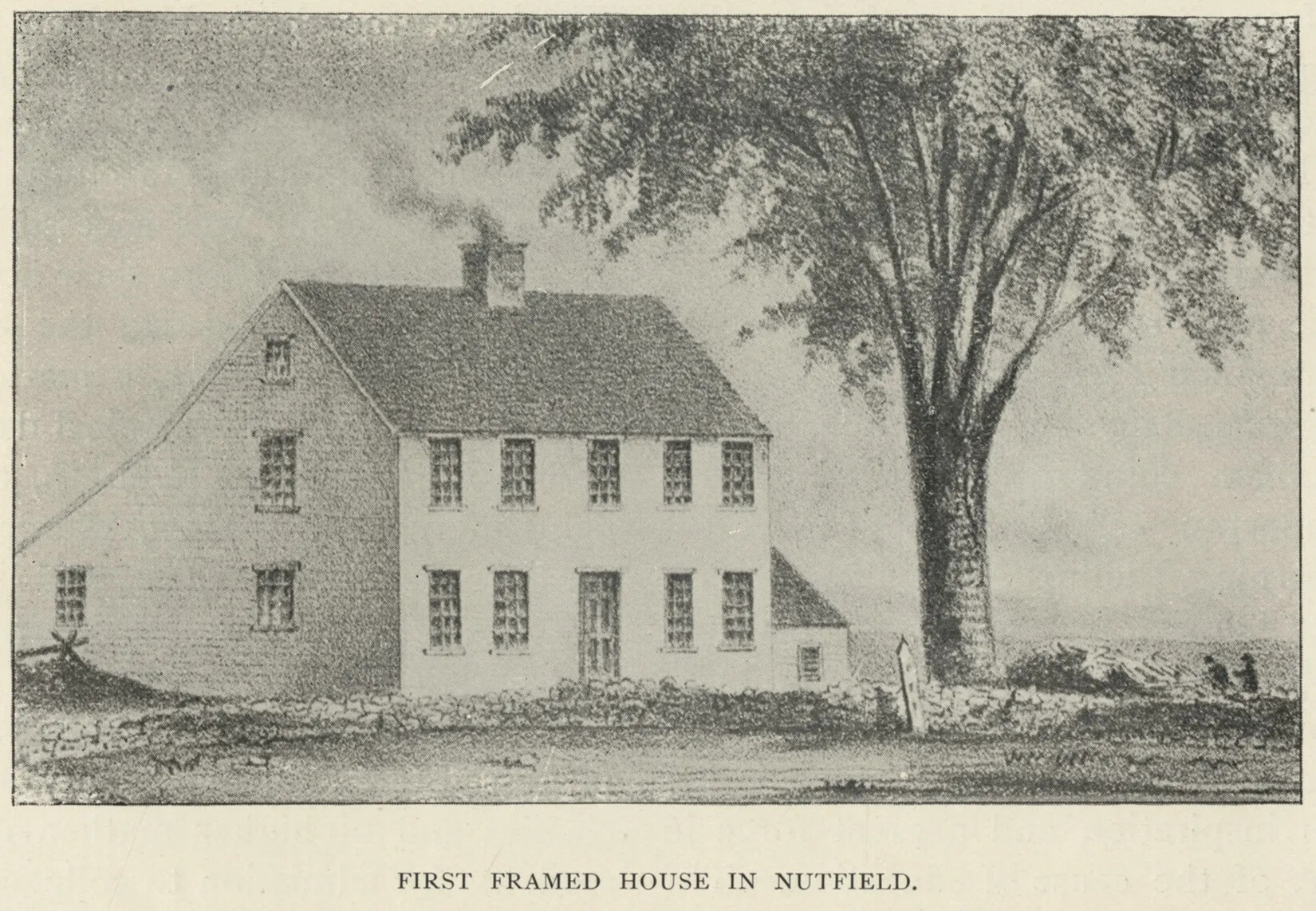
A black and white drawing of a two-storied house, with a small attic window on the third floor. The house has a short roof on one side and a long, slooping roof on the other. The house faces a field lined with a stone wall. To the right of the house is a large tree. The title of the drawing, located along the bottom border, reads "FIRST FRAMED HOUSE IN NUTFIELD."
First Framed House in Nutfield
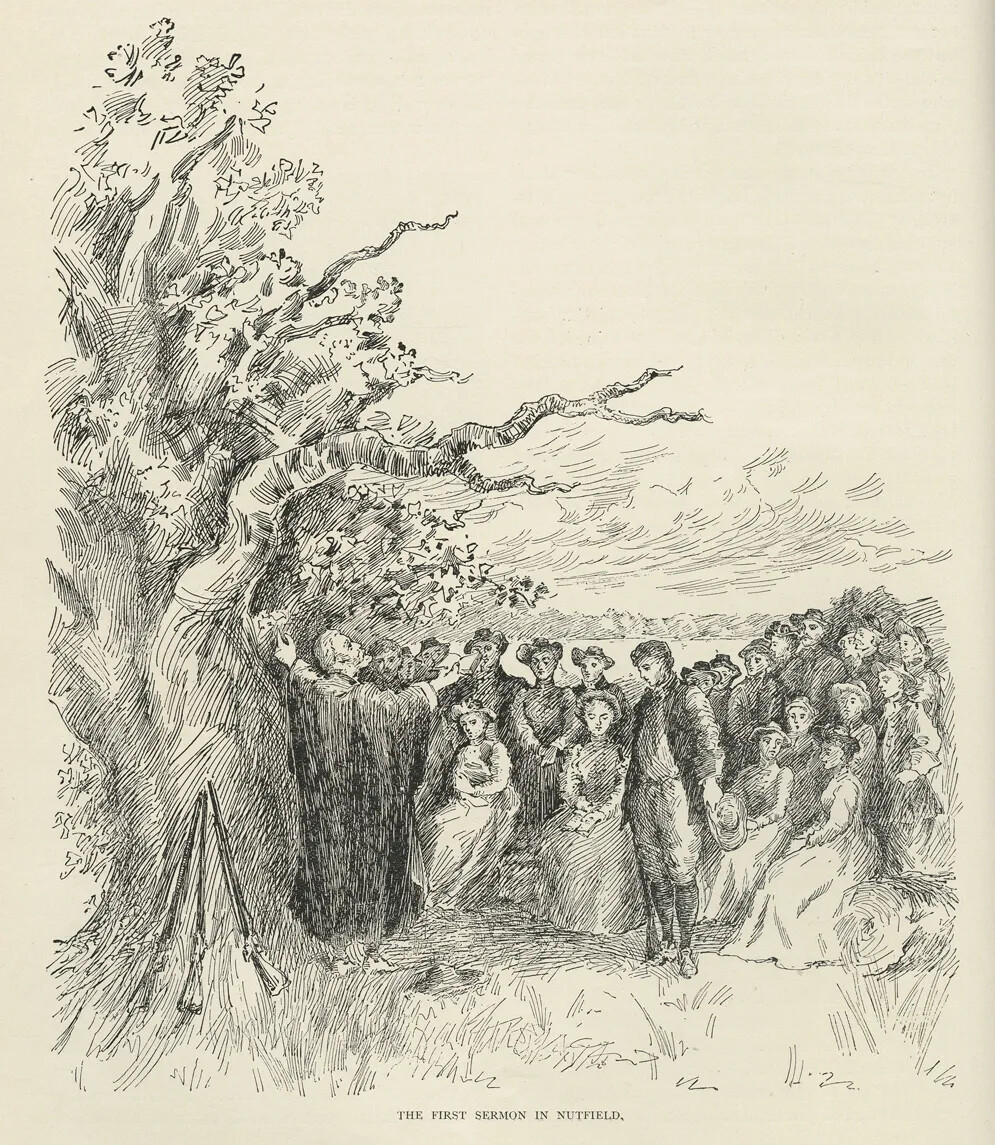
A black and white drawing of a large group of men and women standing and sitting to the right of a large tree. In front of the tree is a man facing the crowd, with his arms raised up in front of him. The title of the drawing, located along the bottom border, reads "THE FIRST SERMON IN NUTFIELD."
First Sermon at Nutfield
A colored photograph of a field of white flowers and green bushes. In the distance, there is a group of tall trees with green leaves.
Flax Field
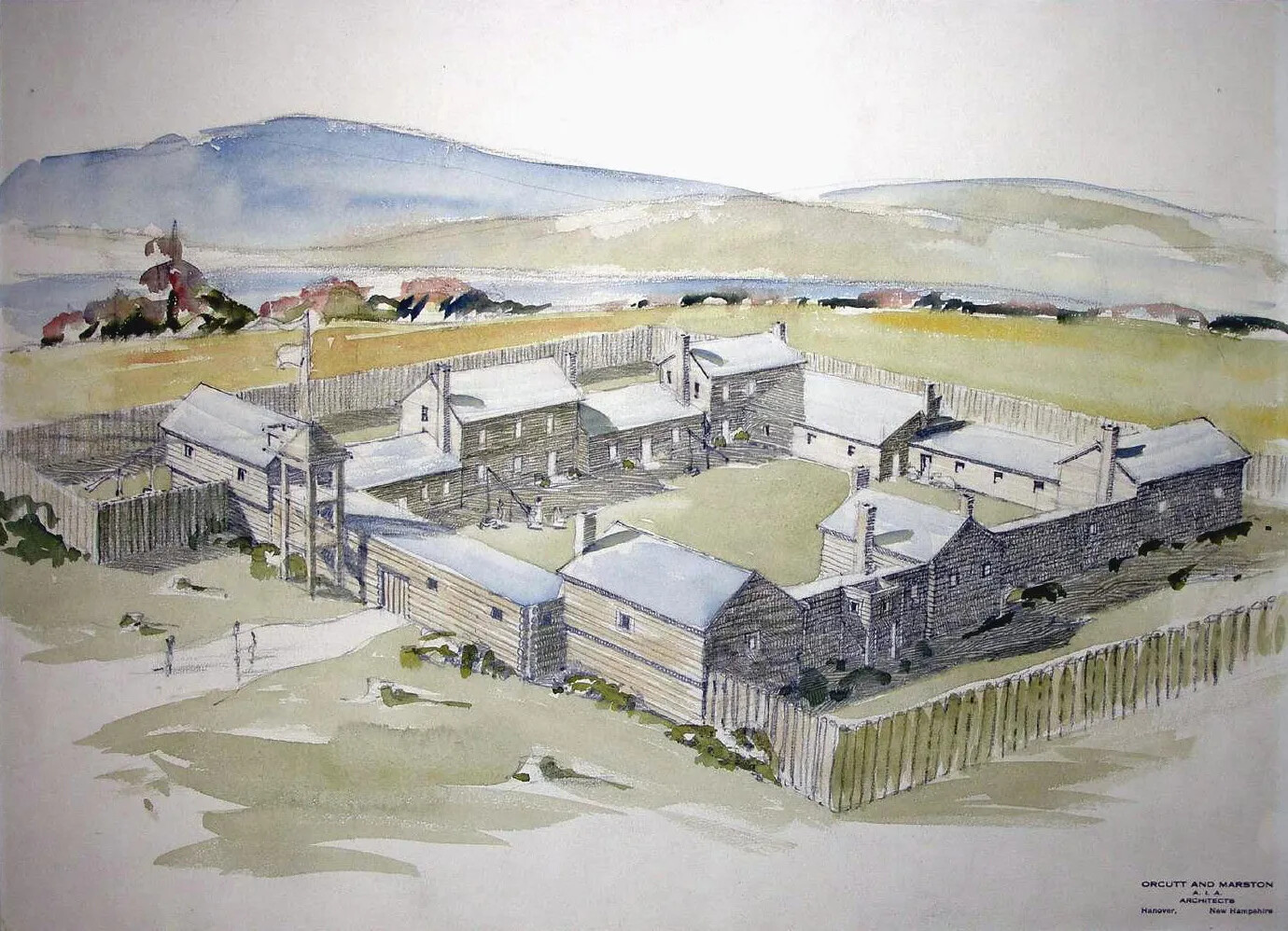
A colored painting of a group of multi-storied houses facing each other across a green field. The houses and field are bordered by tall fence posts.
Fort at No. 4
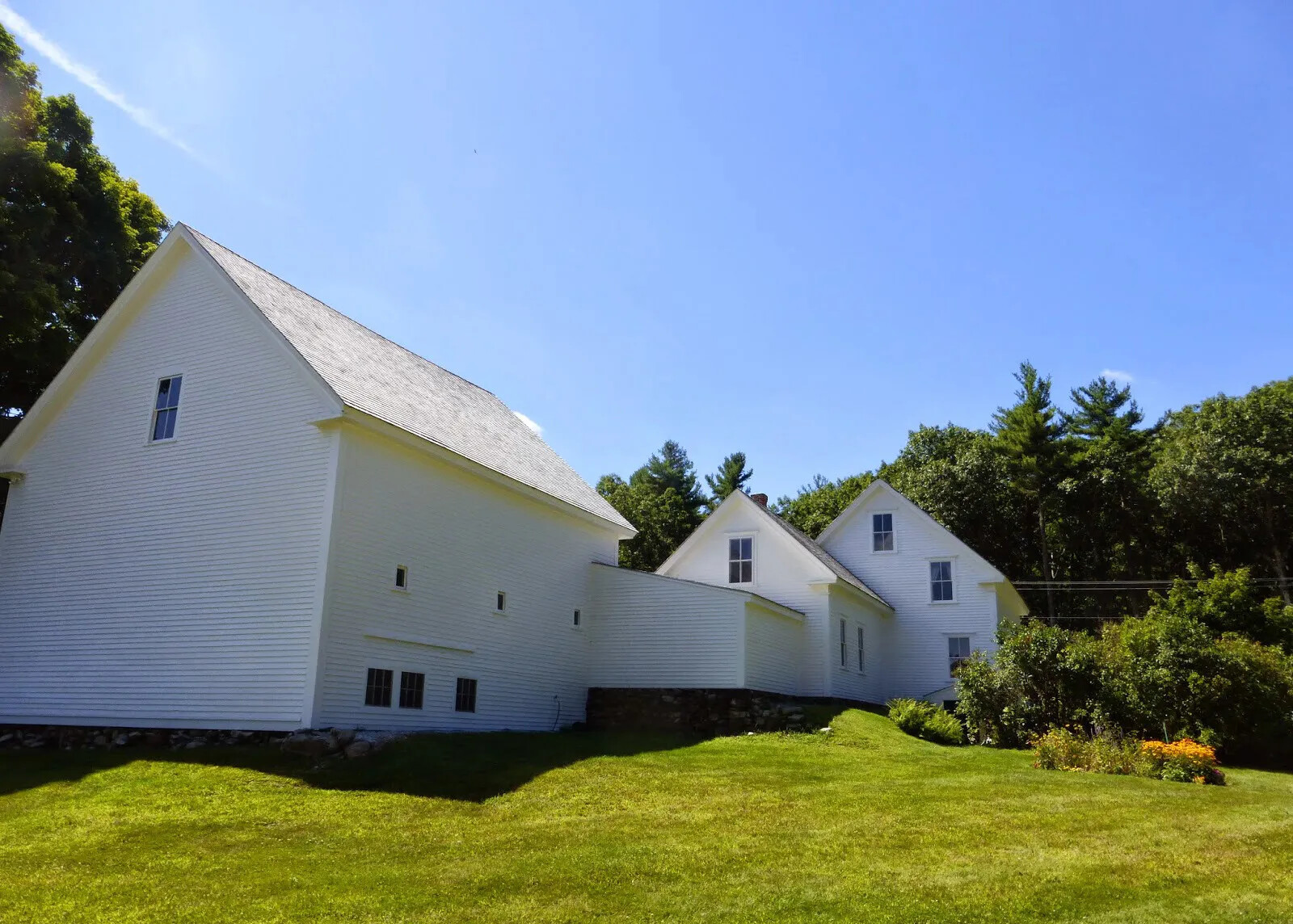
A colored photograph of a white two-storied house, with several multi-storied buildings attached to the back of it. Surrounding the house is a green field and tall trees with green leaves.
Frost Farm
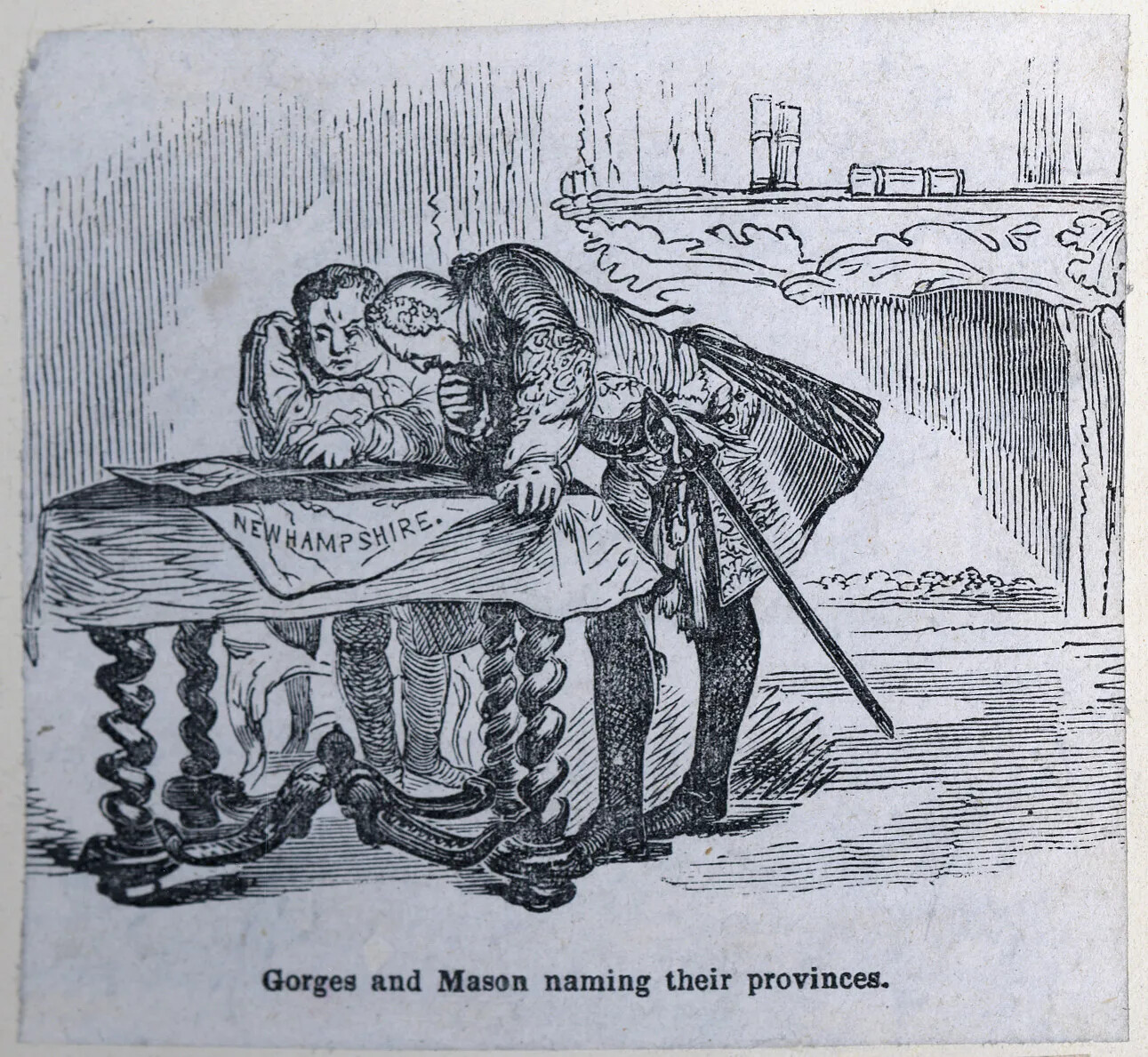
In a black and white cartoon, two figures are seen bending over a desk, looking at a piece of paper. They are dressed in formal clothing from the 1600s, and one of them wears a sword. The table and mantle behind them are ornate. Over the tablecloth, a corner of the paper hangs and the viewer can see it says "NEW HAMPSHIRE." The caption reads "Gorges and Mason naming their provinces."
Gorges and Mason Naming Their Provinces
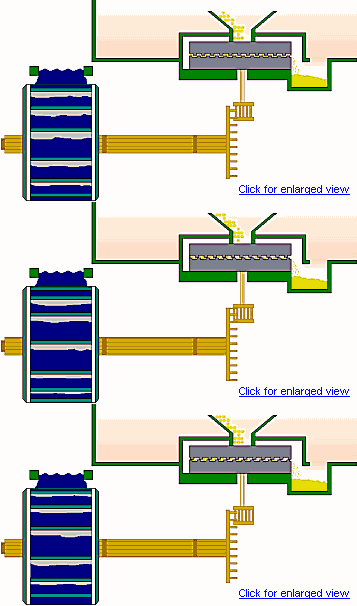
Grist Mill
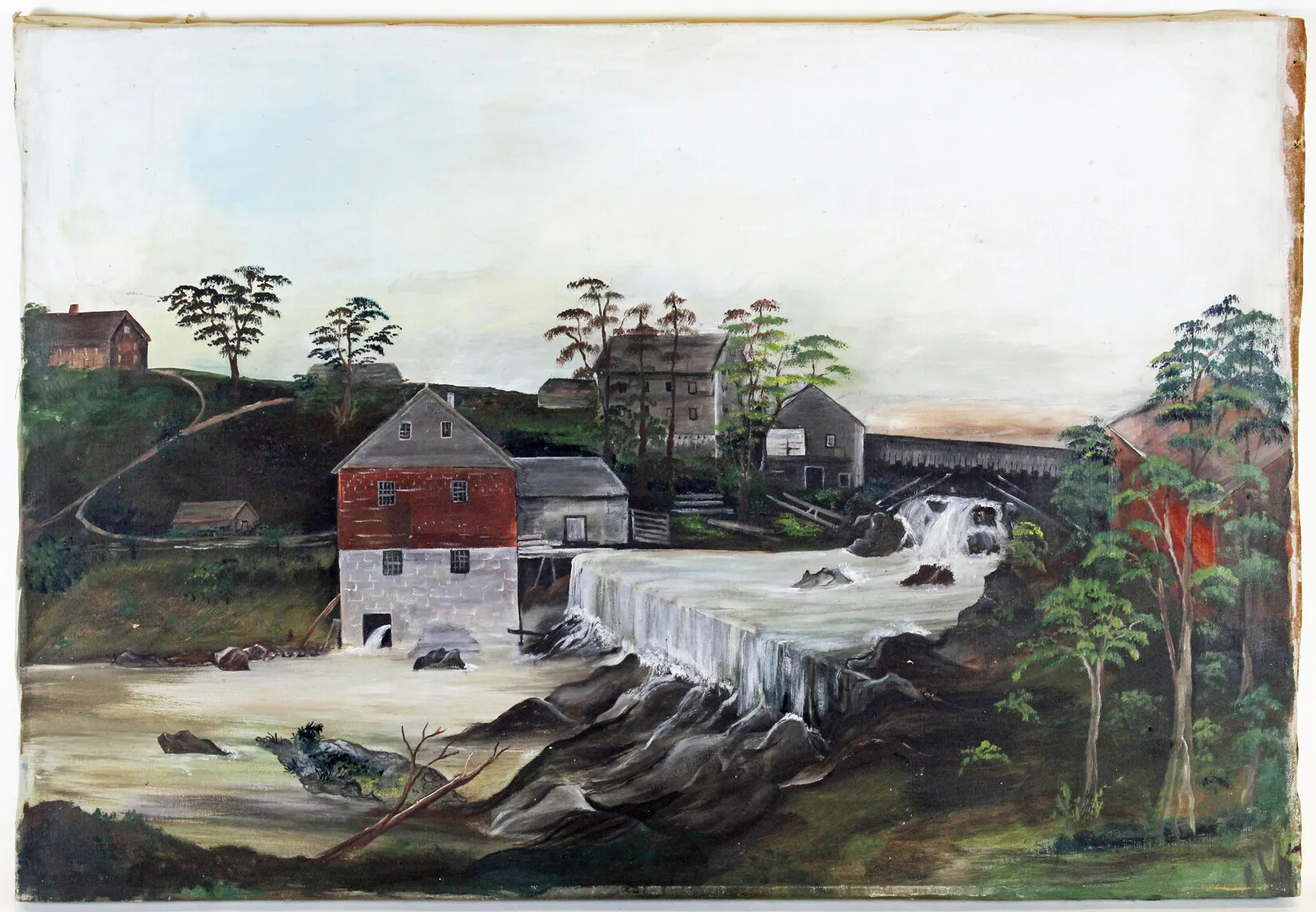
A colored painting of a group of multi-storied buildings facing a waterfall. Scattered throughout the water are several large boulders.
Grist Mill at Oliverian Falls
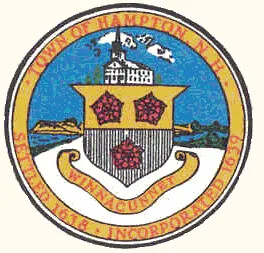
A colored print of a yellow-bordered circle with the words "TOWN OF HAMPTON, N.H./SETTLED 1638*INCORPORATED 1639" typed in red text. Inside the circle, on a half blue and white background, is a coat of arms with three red flowers. The top half of the coat of arms is yellow and the bottom half has vertical black and white stripes. Above the coat of arms is a white church with a tall steeple. Below the coat of arms, on a yellow ribbon, is the word "WINNACUNET" typed in red text.
Hampton Town Seal
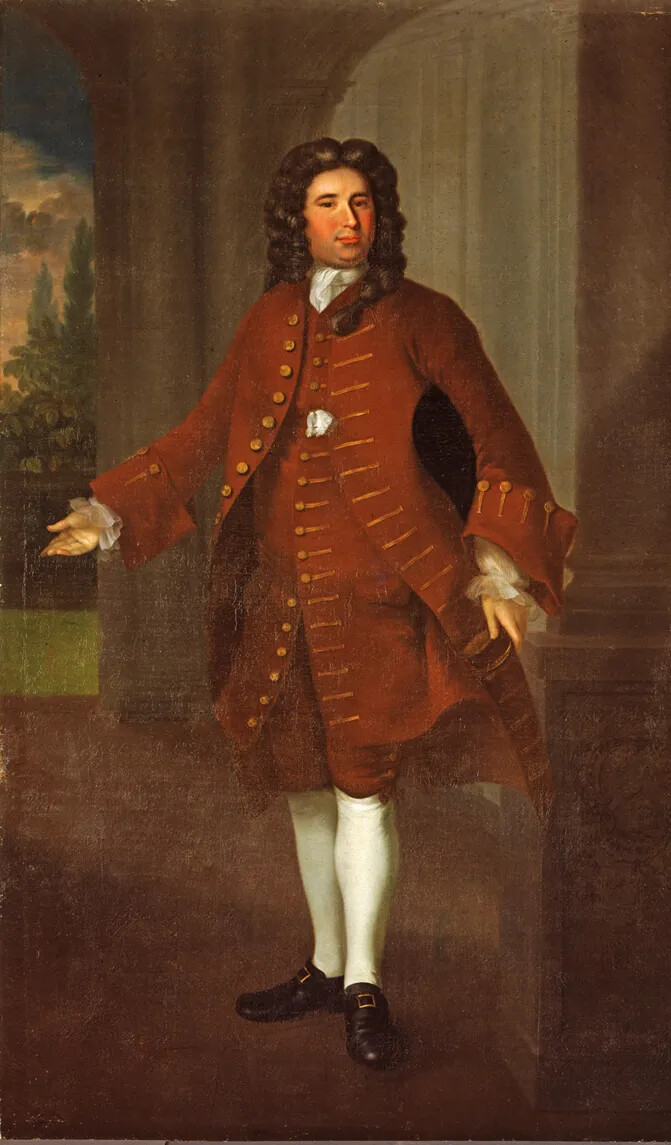
A colored painting of a white man with long brown, curly hair. He wears a long red jacket and vest with many gold-colored buttons, knee-length red pants, white stockings, and black shoes with large buckles. He stands with his arms stretched out in front of him and looks at the viewer.
John Wentworth
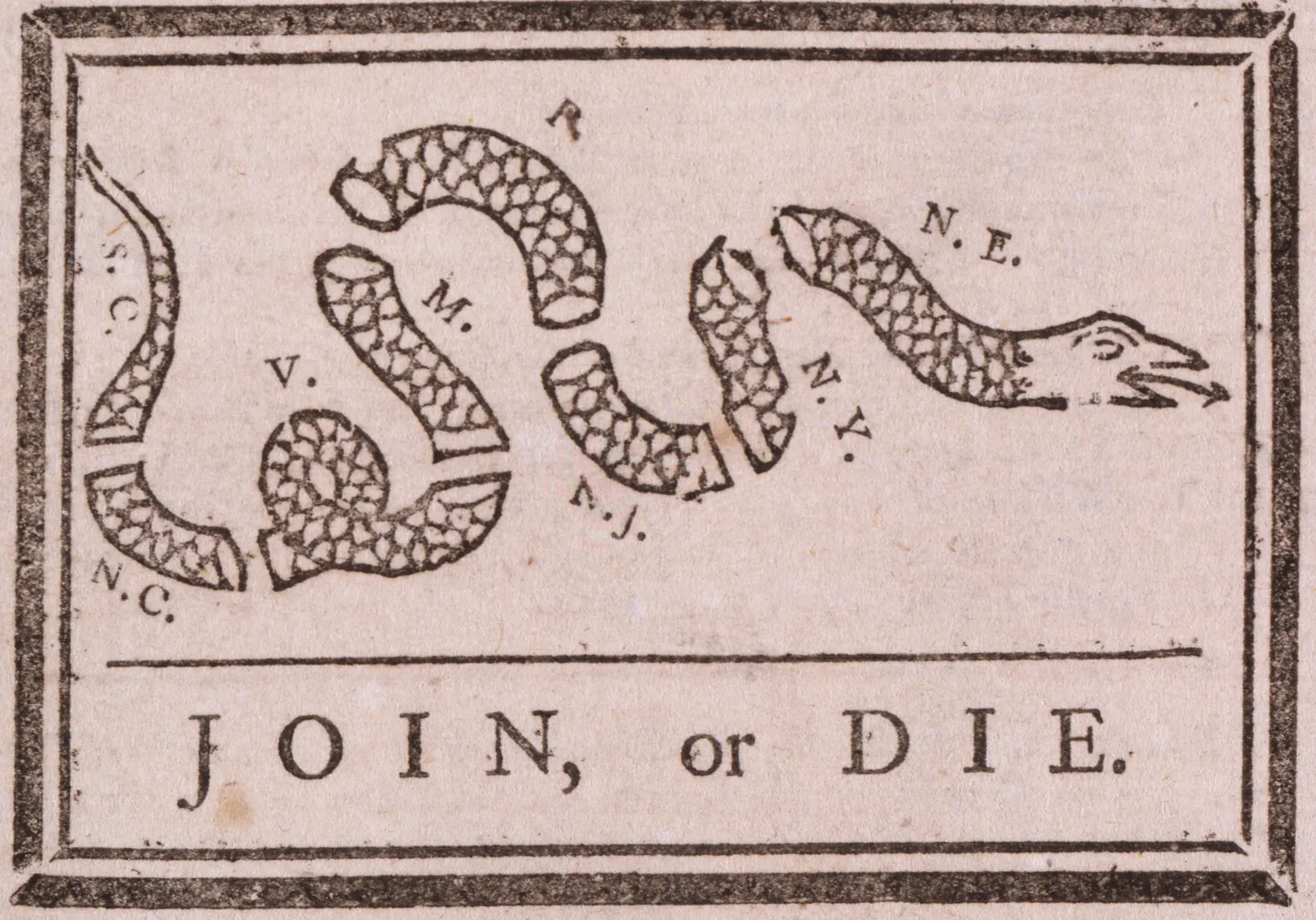
A black and white drawing of a snake that has been cut up into several pieces. The cut parts of the snake are labeled with capitalized letters, which read, from left to right: "S.C./N.C./V./M./R./N.J./N.Y./N.E." The title of the drawing, located along the bottom border of the drawing, reads: "JOIN, or, DIE."
Join or Die
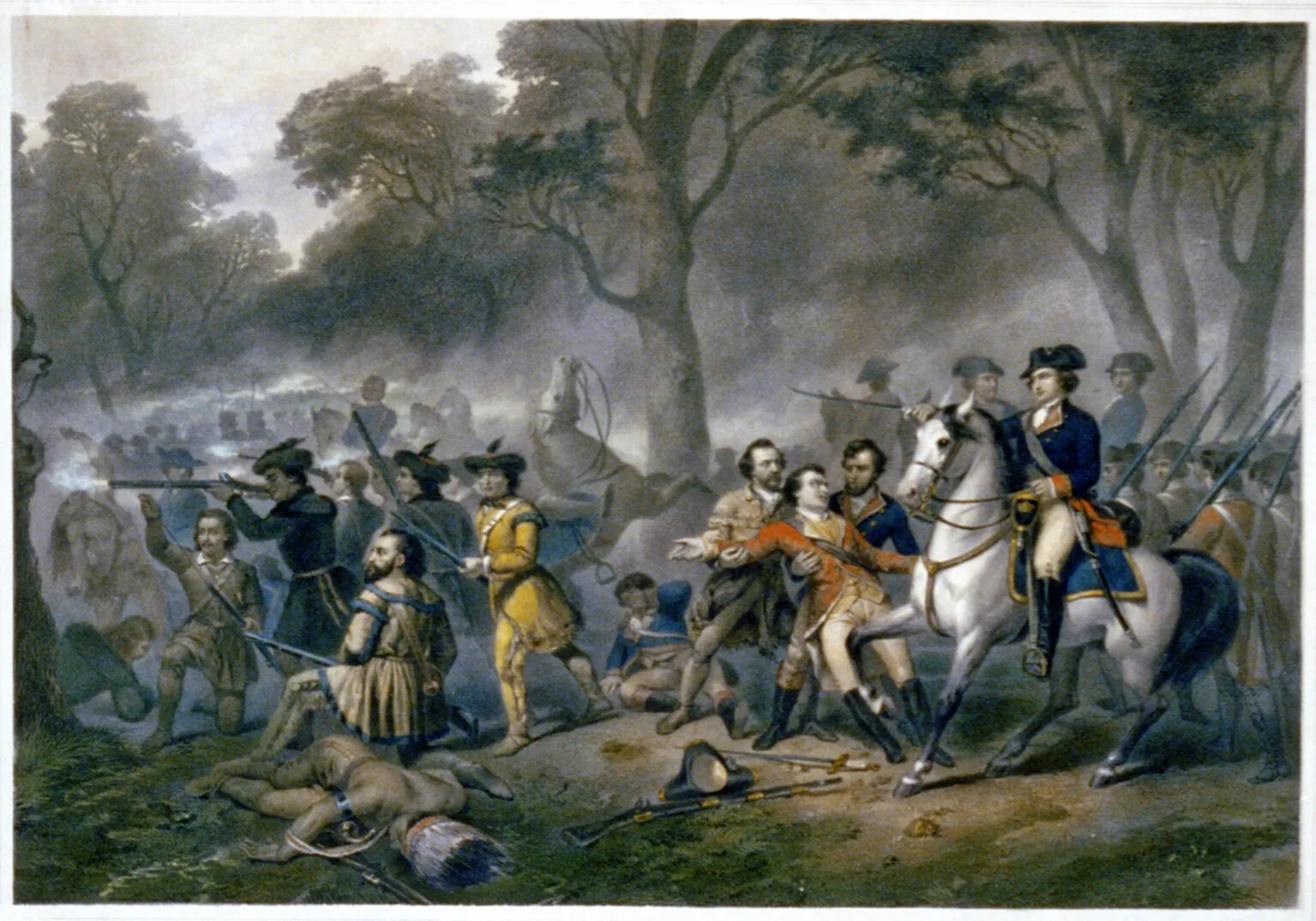
A colored painting of a group of soldiers marching through a forest. A man with a blue coat sits on top of a white horse on the right side of the drawing and points off into the distance, towards the left side of the drawing. Some of the soldiers run towards or point their muskets at the left side of the drawing as well.
Life of George Washington, the Soldier
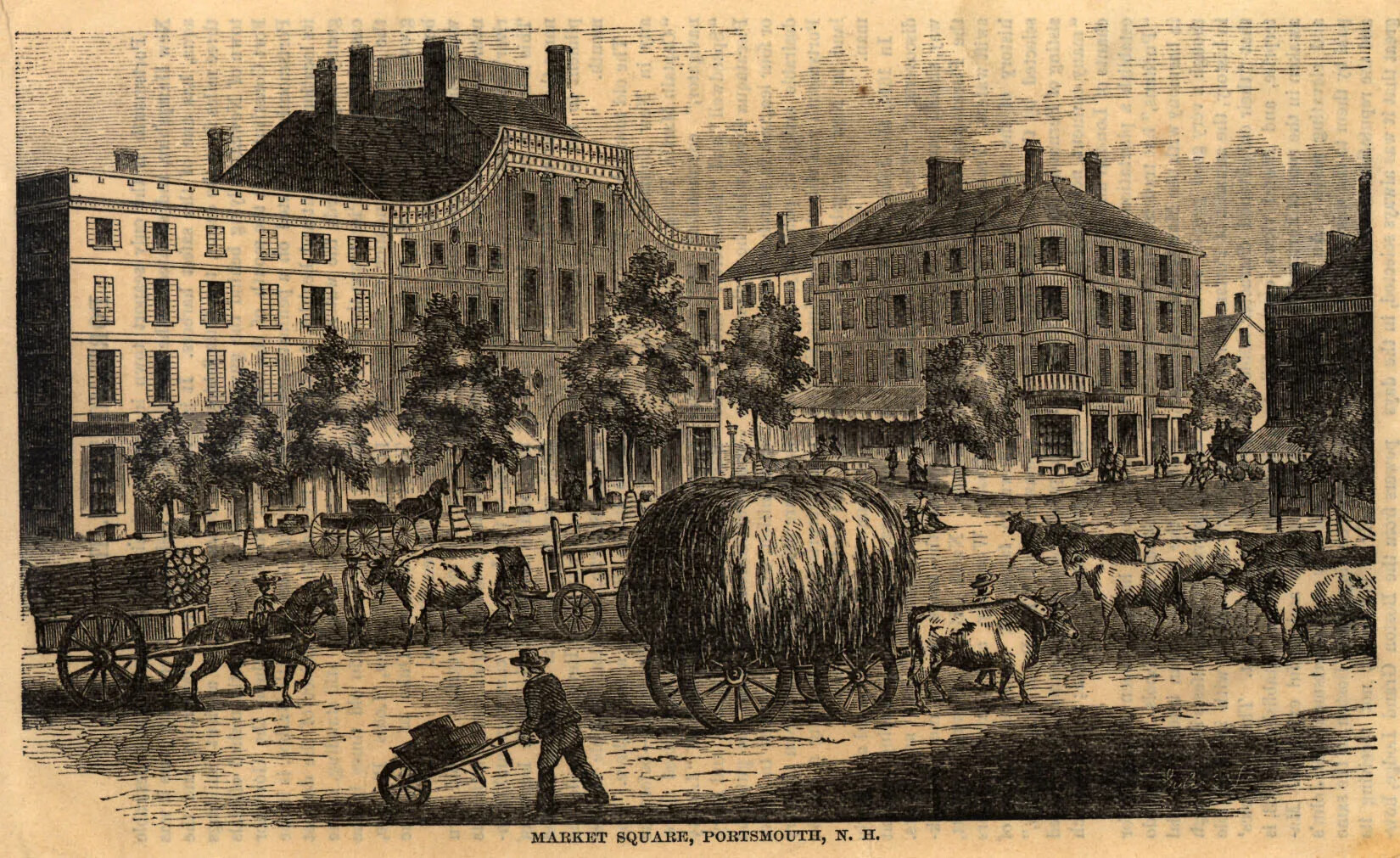
A yellowed piece of paper with a black and white sketch. The sketch shows two buildings, each four-stories tall, with one building facing the street in the foreground, and one positioned along the side street to the right. The streets and sidewalks in front of the buildings are lined with trees, and a few people are walking along them. The street in the foreground, from left to right, contains a horse-drawn carriage pulling logs, a man pushing a wheelbarrow, two sets of cattle pulling carts of hay, and various cattle roaming free. Typed text to the left of the sketch, along the border, reads “Portsmouth, N. H./415”.
Market Square, Portsmouth
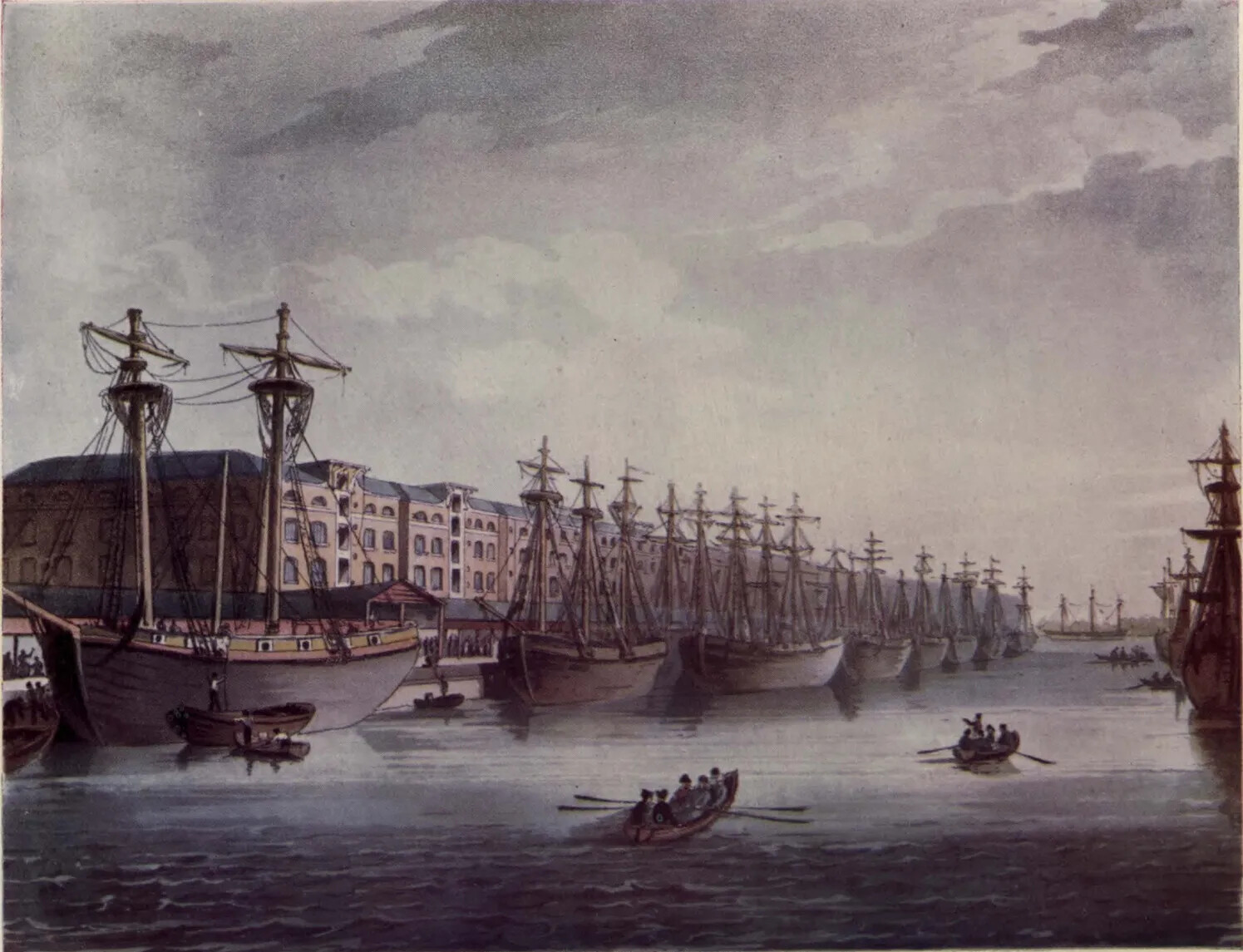
A colored painting of a row of multi-storied buildings facing a narrow body of water. Two rows of ships with tall masts border the body of water on both sides. Two row boats filled with people float between the rows of ships.
Merchants' Docks
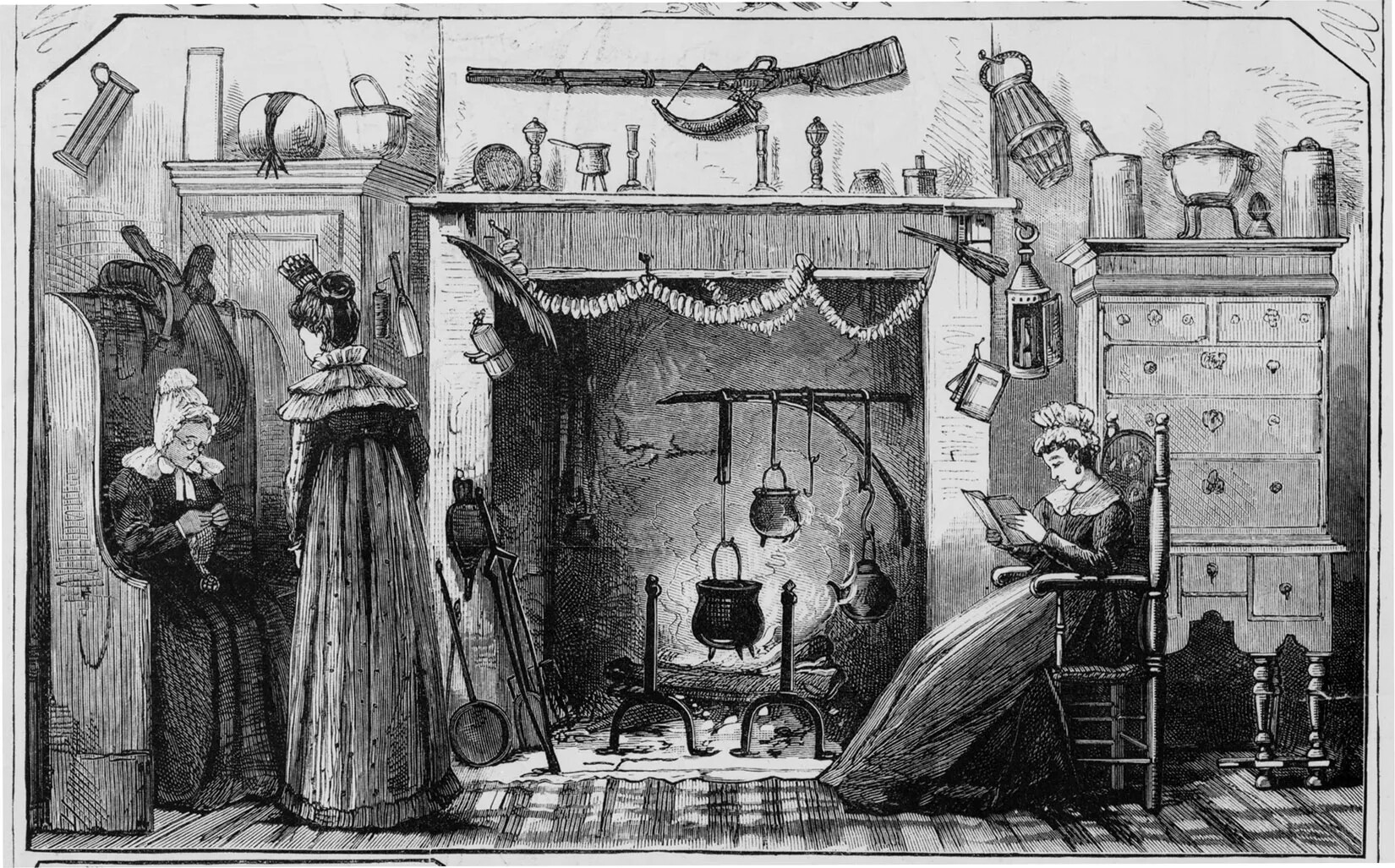
A black and white drawing of three women doing different activities in front of a large fire place. The woman on the left is sitting and knitting; the woman in the middle stands in front of the knitting woman, with her back turned towards the viewer; and the woman on the right is sitting and reading a book. All three women wear long dresses with long sleeves and bonnets. The fire place has large pieces of furniture on either side of it. Hanging above the fire place is a musket and powder horn. Inside the fire place are several pots hanging from hooks over a small fire.
New England Farm House
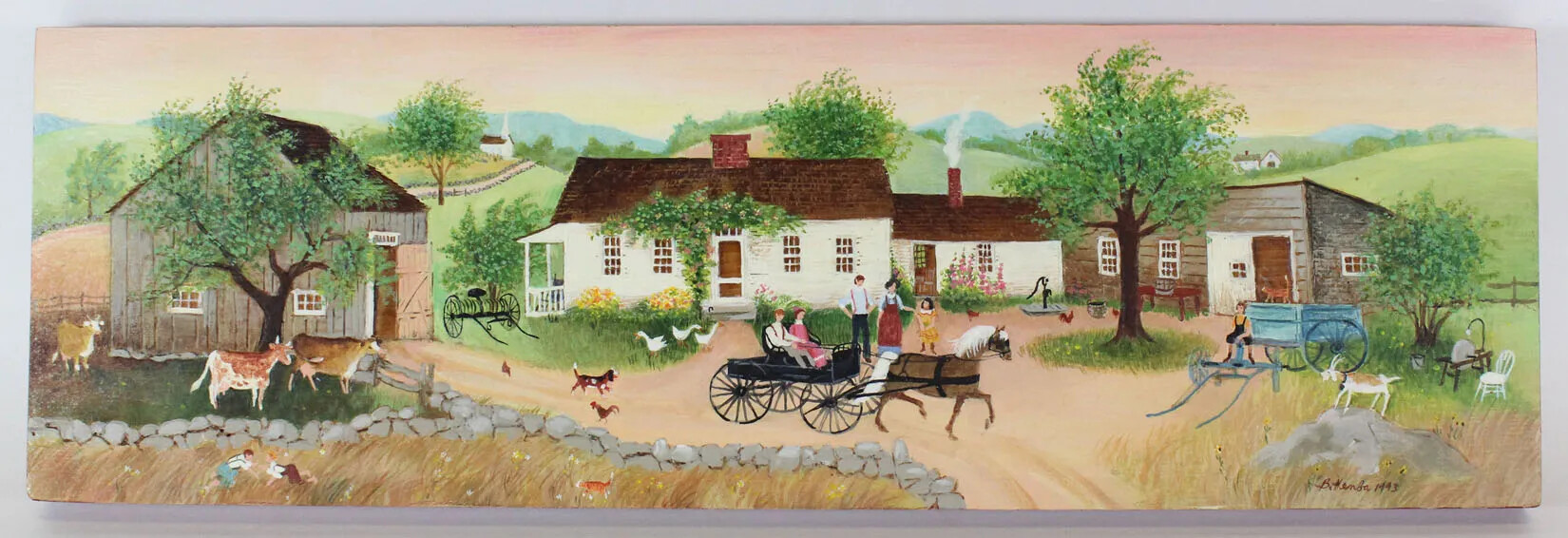
A colored drawing of a white farm house, several out-buildings, and various farming equipment. Chickens, cows, goats, geese, a dog, and two cats roam around the fields and in front of the house. A horse-drawn carriage with a man and a woman seated in the carriage rides past the house, as a man, woman, and small child watch on from the front yard.
New Hampshire Farm Scene
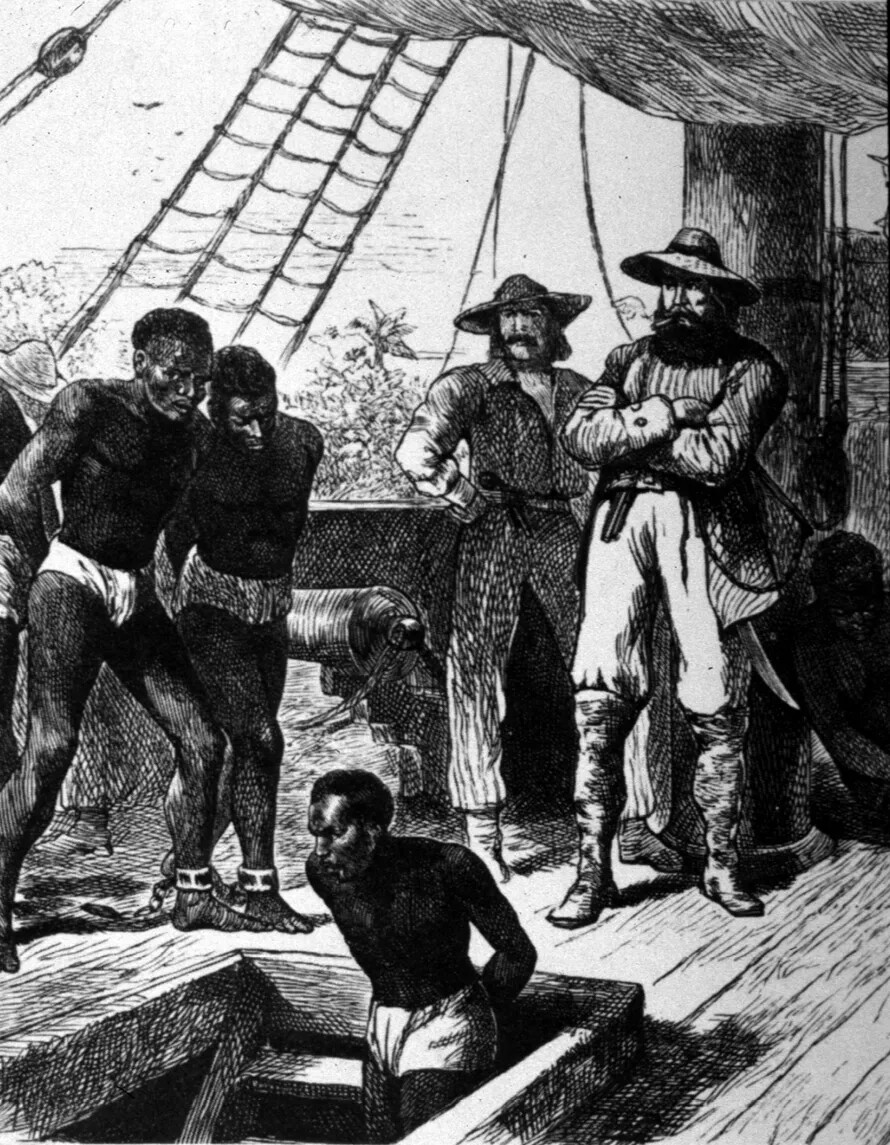
A black and white drawing of a group of Black and white men standing on the deck of a ship. The white men wear broad-rimmed hats, long-sleeved shirts and long pants. They stand off to the right and watch the group of Black men walk down a set of stairs, into the hull of the ship. The Black men wear a cloth around their waists, handcuffs, and are attached by a chain at the ankles.
On Board a Slave Ship
A colored print of a turquoise-bordered circle with the words "CITY OF PORTSMOUTH. N.H./INCORPORATED**1849" typed in yellow text. Surrounding the circle is a vine of gold-colored leaves. Inside the circle is a train on train tracks, driving parallel to a body of water and a row of multi-storied buildings. Floating on the body of water are two boats with tall masts. Along the bottom border of the inner circle are the words "SETTLED**1623" typed in yellow text against a red background.
Portsmouth Seal
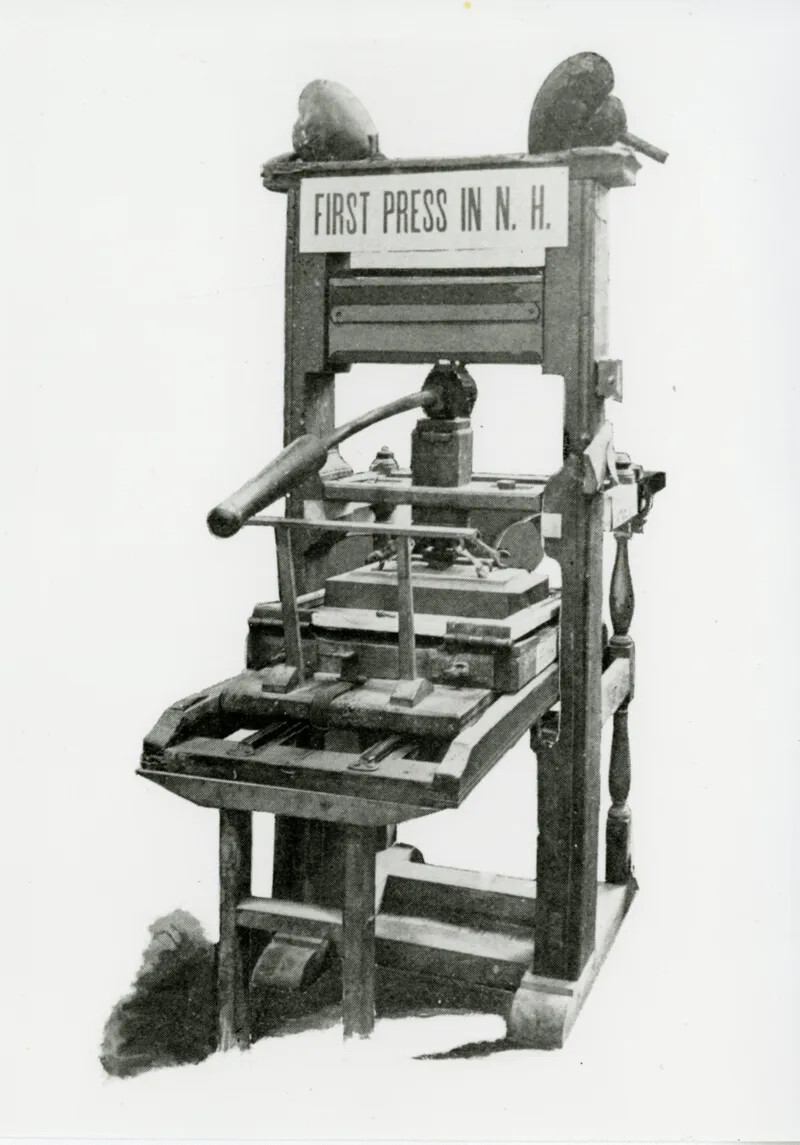
A black and white photograph of a tall wooden printing press. A plaque placed on top of the printing press reads "FIRST PRESS IN N. H."
Printing Press
Robert Rogers
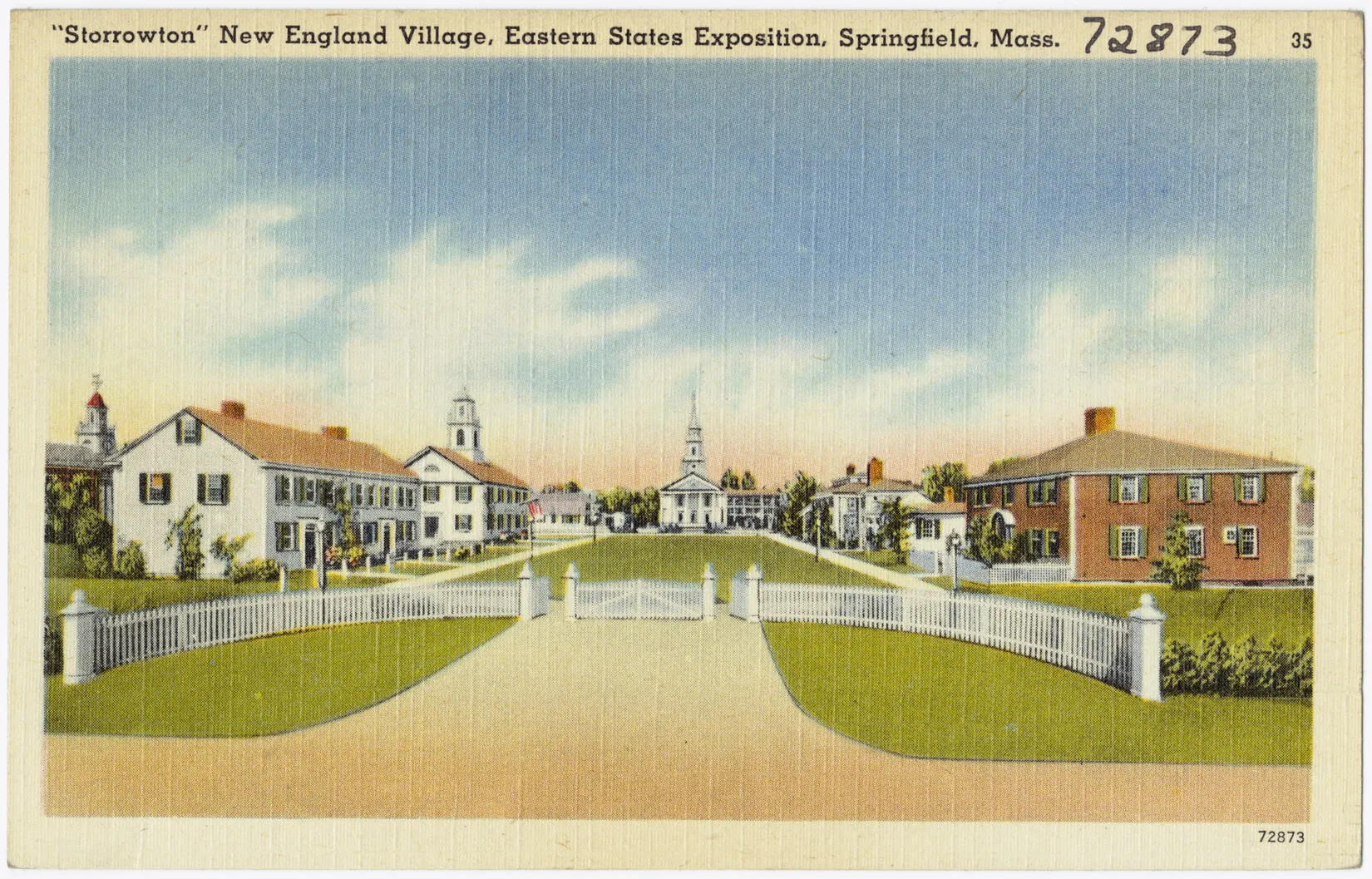
A colored postcard of a group of multi-storied houses and churches facing each other across a green field. At the forefront of the postcard is a curved white picket fence. The title of the postcard, located along the upper border, reads "'Storrowton' New England Village, Eastern States Exposition, Springfield , Mass. 72873 35."
Storrowton New England Village
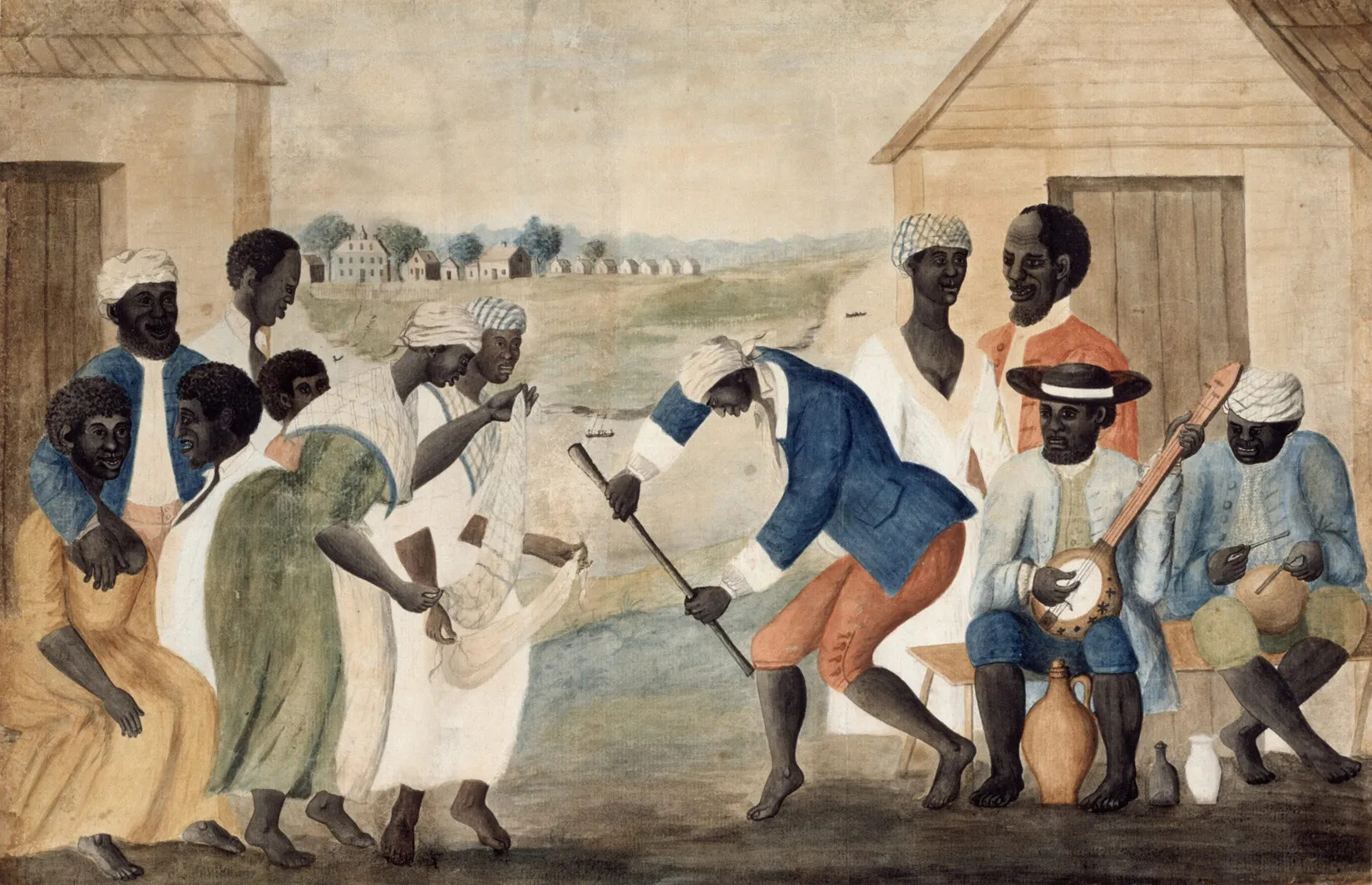
A colored painting of a group of Black men and women dancing and playing musical instruments. There are two single-storied houses in the background. In the distance, there is a large, multi-storied house and several single-storied house at the edge of a green field.
The Old Plantation
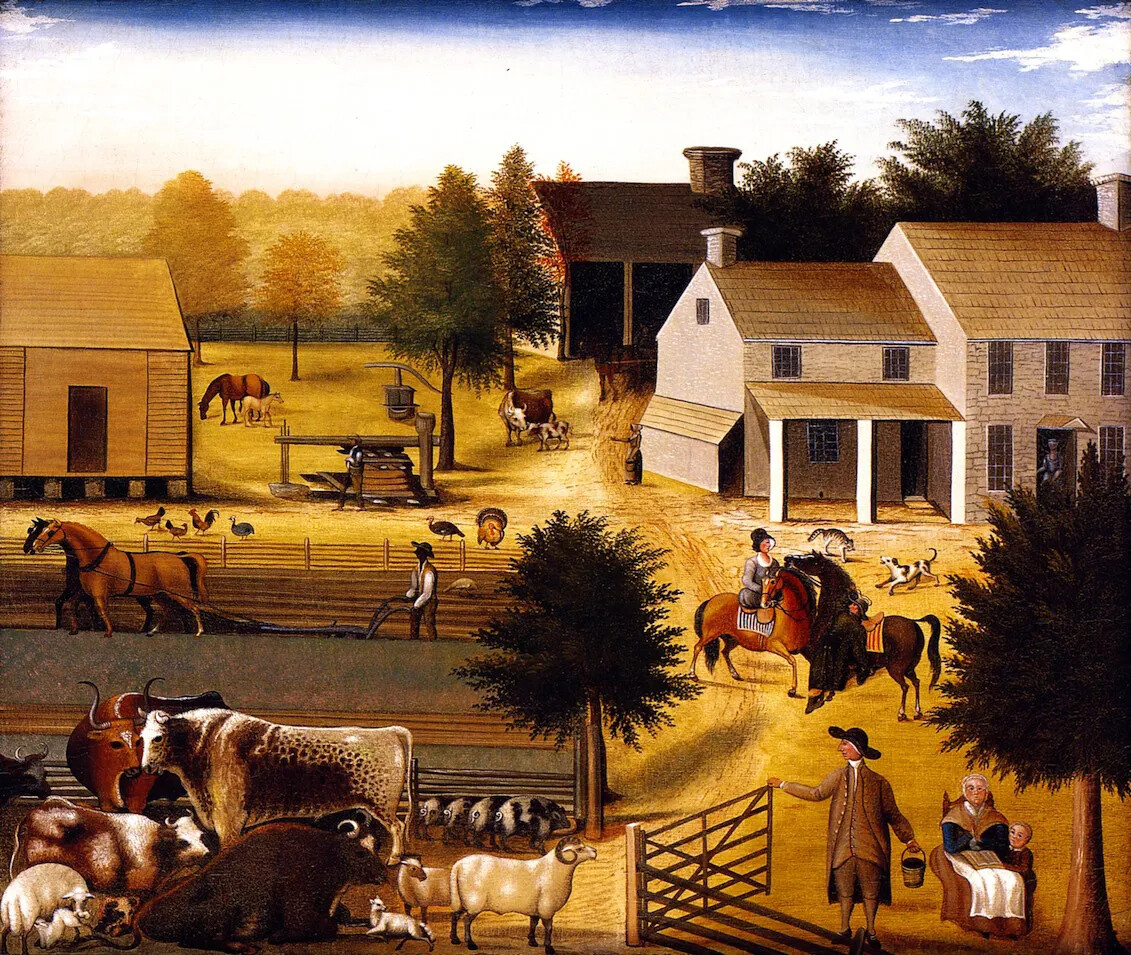
A colored painting of a farm yard. Scattered around the farm yard are small groups of white men, women, and children interacting with horses, cows, chickens, sheep, turkeys, dogs, and cats. A Black man is seen pushing a plow behind a team of two horses on the painting's left-hand side. To the right of the people and farm animals is a two-storied house and barn.
The Residence of David Twining, 1787
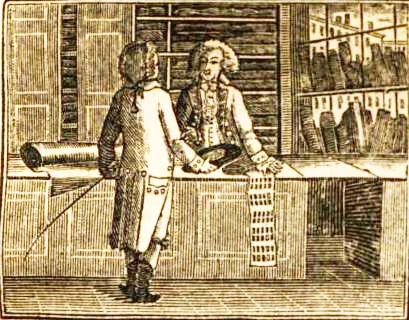
A black and white drawing of two men in a shop. One man stands with his back to the viewer on one side of a long counter, and the other man stands facing the viewer on the other side of the counter. Both men wear long buttoned coats and tie their long hair back in a ponytail. The man with his back to the viewer also holds a hat in his right hand and a walking stick in his left.
The Shopkeeper