
Primary Source Set - Old Man of the Mountain

Though its exact age at the time of its fall from the side of Cannon Mountain is debatable, we know the remarkable rock formation known as the Old Man of the Mountain looked out over Franconia Notch for thousands, if not millions, of years. It inspired writers, artists, musicians, and politicians, not to mention the tens of thousands of visitors and hikers who explored the Notch every year for the purpose of seeing it themselves. Officially named a state emblem in 1945, the rugged “face” of the Old Man was widely embraced as a miraculous symbol of the character of the state of New Hampshire.


Background

Geologists have determined that what viewers perceived as the profile view of the forehead, nose, mouth, and chin of a man’s face jutting out from the side of Cannon Mountain were actually five serendipitously placed layers of granite. Anecdotes about the first sighting of the Old Man abound, but the granite profile was first seen—other than presumably by Native Americans—around 1805 when it was first noticed by members of a surveying party working and camping in Franconia Notch near Ferrin’s Pond (later renamed Profile Lake). Just one or two members of the party happened to be in just the right spot, looking in just the right direction to see the remarkable face.

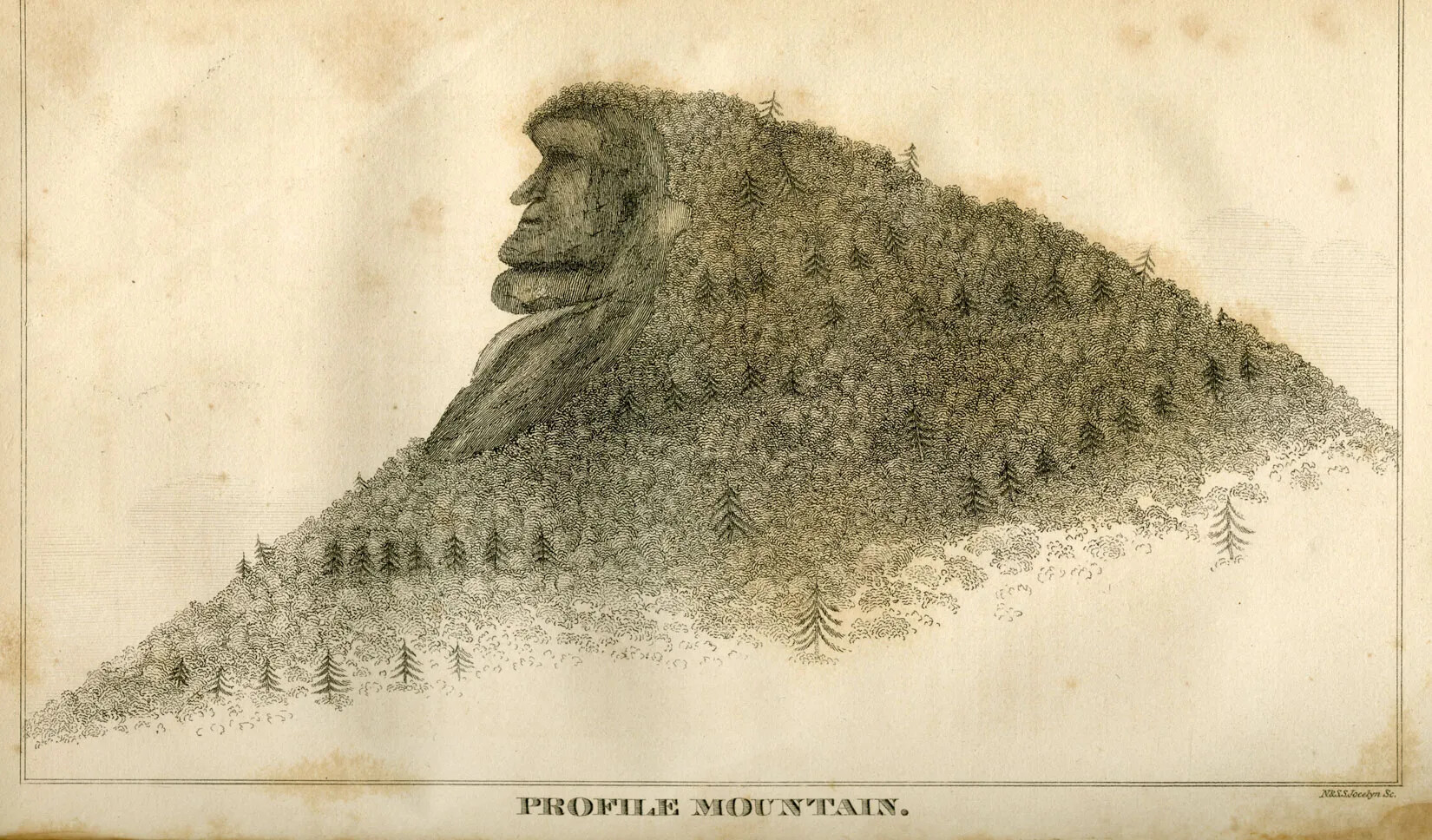
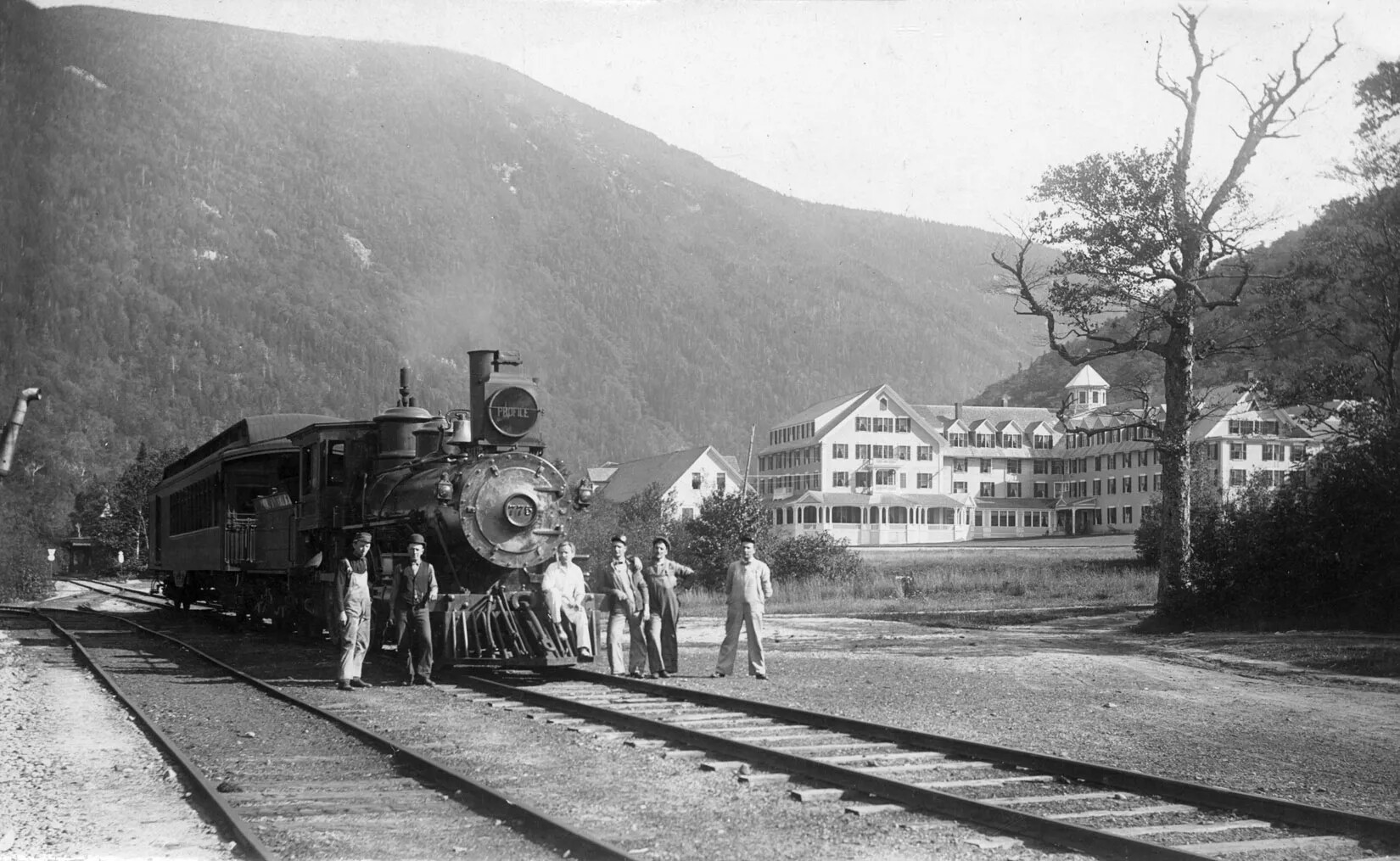
The first appearance of the Old Man in print did not appear until 1828, when an issue of the American Journal of Science & Arts published a sketch and description of the natural wonder. Around the same time, New Hampshire experienced a boom in tourism as travelers eager to explore the White Mountains prompted expansion of railroads and the construction of inns and hotels. The “profile” on Cannon Mountain, which was then called Profile Mountain, was one of the White Mountains’ most popular attractions and also inspired the naming of the nearby lake, one of the region’s grandest hotels, and even a branch of the railroad.  

While people enjoyed viewing the Old Man of the Mountain from the ground below, its exact location was not pinpointed until 1872 when members of the Appalachian Mountain Club hiked to its ledges. The excitement about the discovery was tempered by the news that the forehead ledge seemed to be separating from the mountain. In 1916, Edward Geddes, a stone mason from Massachusetts, installed the first set of turnbuckles that secured the forehead ledge to the cliff. 

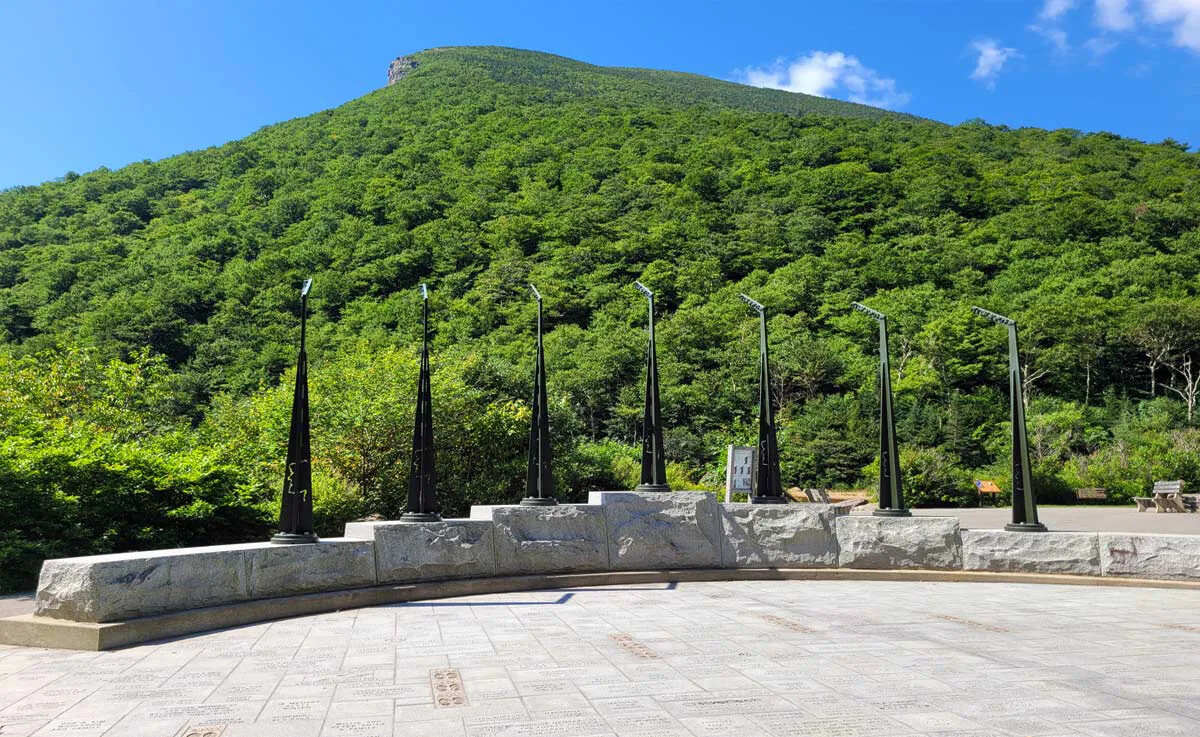
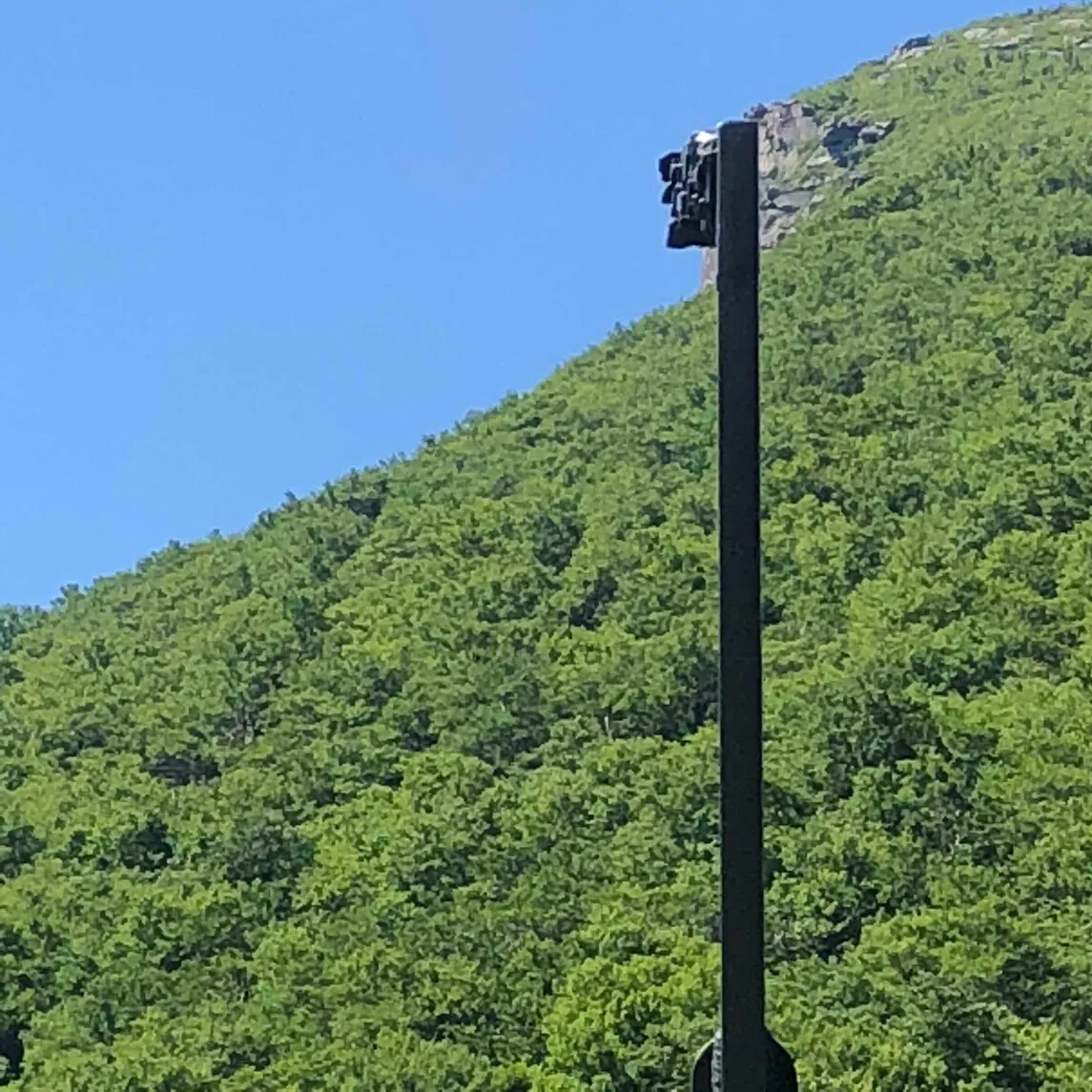
Over the next 87 years, the Old Man of the Mountain would require many more repairs. In 1987 Niels Nielsen, who had been overseeing and making annual repairs since the 1960s, was named the official caretaker of the Old Man of the Mountain. Nielsen and his family, particularly his son David who succeeded him as official caretaker in 1992, and daughter-in-law Deborah, cared for the Old Man of the Mountain until its ledges collapsed sometime in the early morning hours of May 3, 2003. Today, visitors to Franconia Notch can still get a glimpse of the Old Man by using special steel “profilers” set up at the viewing site. 

This primary source set guide can be used in several ways to explore the Old Man of the Mountain. It is not necessary to use all sources in a set to create a meaningful inquiry. Rather, educators are encouraged to select—or have their students select—the sources best suited to your project.


Additional Resources

  • Gfroerer, John, dir., Family Profile: Taking Care of the Old Man (Concord: Accompany, 1996), DVD, 25 min. 
  • Hancock, Frances Ann Johnso,. Saving the Great Stone Face: The Chronicle of the Old Man of the Mountain, ed. Ruth Ayres-Givens (Canaan: Phoenix Publishing, 1984).  
  • Heald, Bruce D., 101 Glimpses of the Old Man of the Mountain (Charleston, S.C.: History Press, 2009). 
  • Hutchinson, Robert, The Old Man of the Mountain, (San Francisco, C.A.: Browntrout Publishers, 2003). 
  • Melman, Peter, Uniquely New Hampshire (Chicago, I.L.: Heinemann Library, 2004). 
  • Timeline of New Hampshire History, New Hampshire Historical Society, nhhistory.org/Timeline

Focus Questions

In addition to our general suggestions for using primary source sets, consider giving students one of the following prompts for an inquiry using this primary source set about the Old Man of the Mountain.

  • 1
    Why is the Old Man on the Mountain a symbol of New Hampshire?
  • 2
    Do you think the Old Man should continue to be a symbol of New Hampshire even though it has fallen? Why or why not?
Audiovisuals in this Primary Source Set:

Mason Presents: The Old Man of the Mountain

Documents in this Primary Source Set:

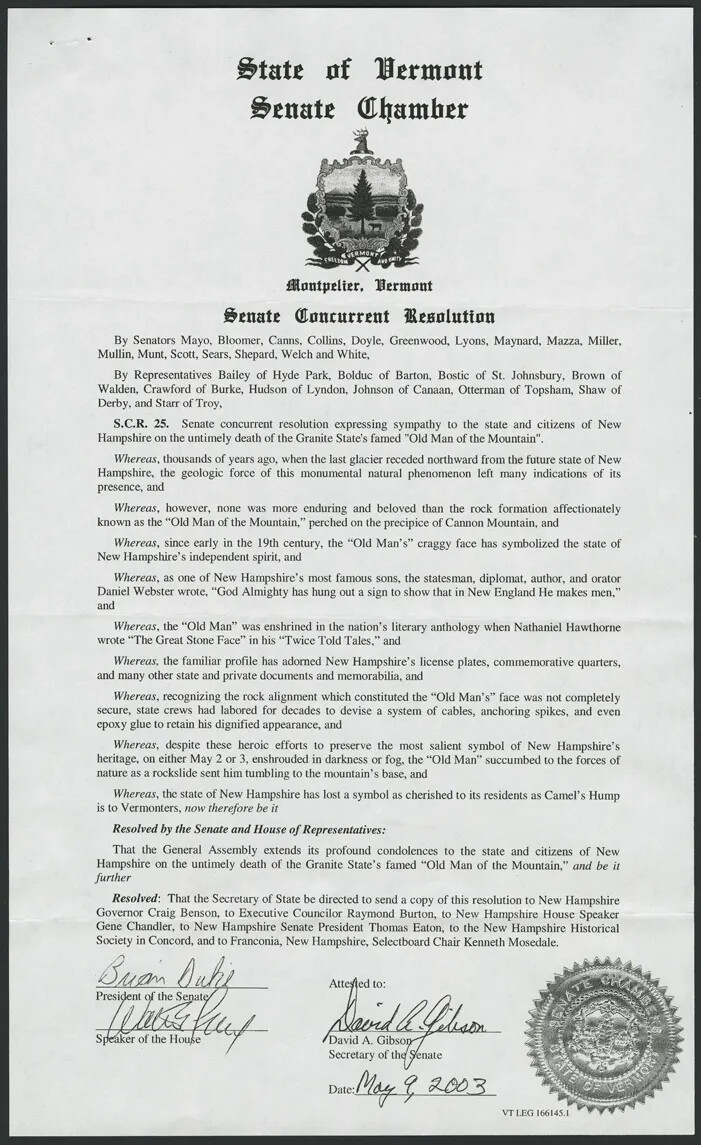
A white document with black lettering has about fourteen small paragraphs and three signatures at the bottom with a date of May 9, 2003. It is titled "State of Vermont Senate Chamber" and "Montpelier, Vermont Senate Concurrent Resolution." There is a gold raised seal at the bottom.
Vermont's Statement about the Old Man of the Mountain

Explainer Videos and Virtual Field Trips in this Primary Source Set:

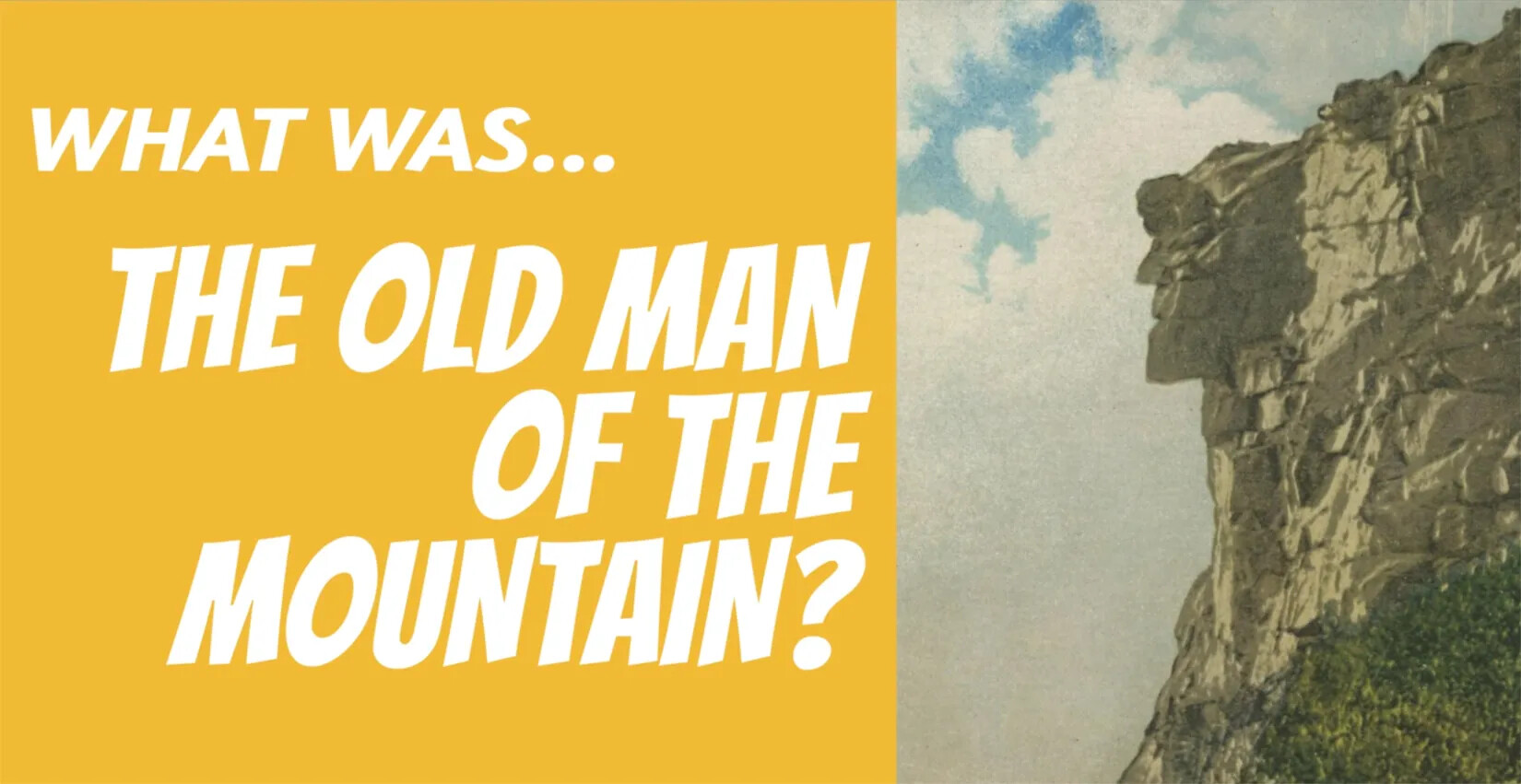
Mason Asks: What Was the Old Man of the Mountain?

Objects in this Primary Source Set:

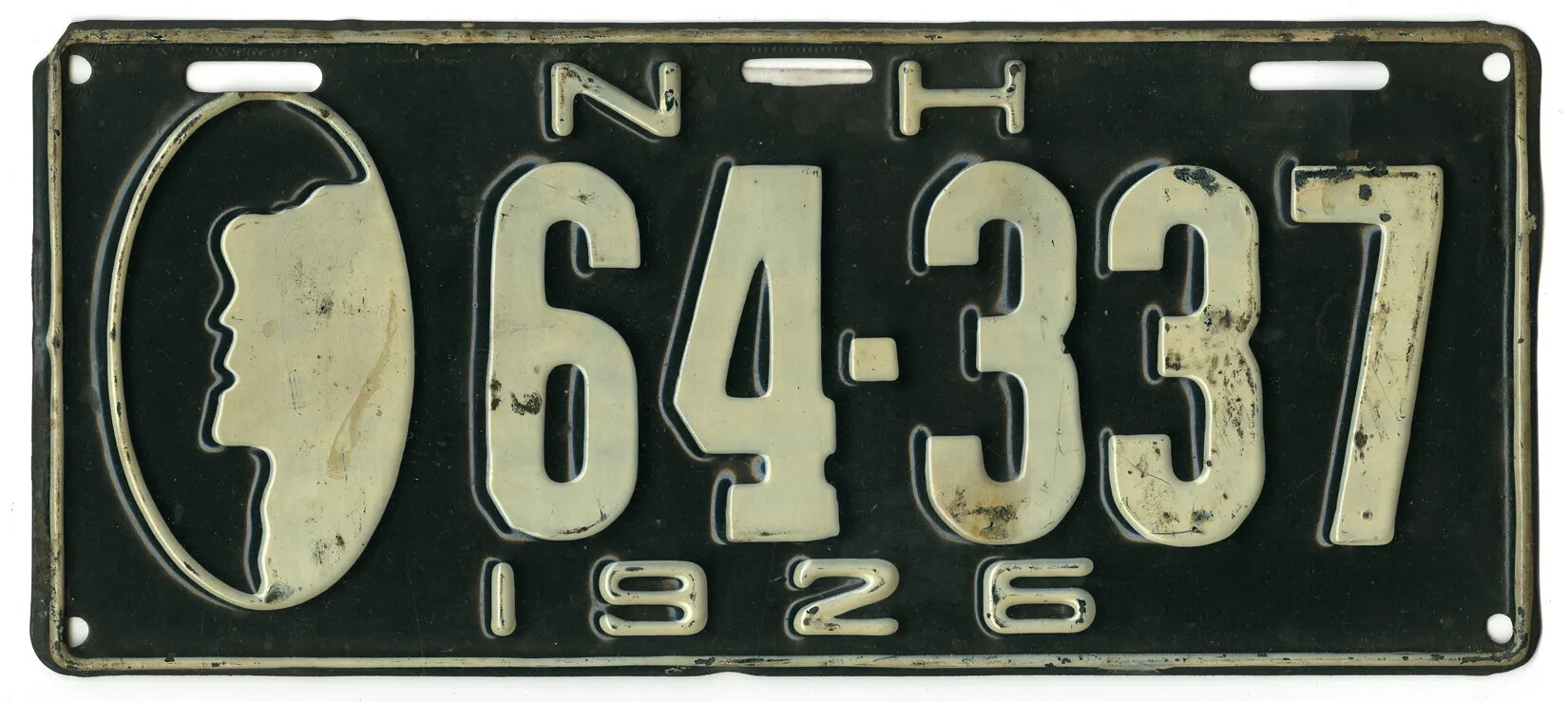
A license plate has raised white lettering on dark green background. There is an outline of a profile face encircled on the left. The plate reads "NH 64-337 1926."
License Plate
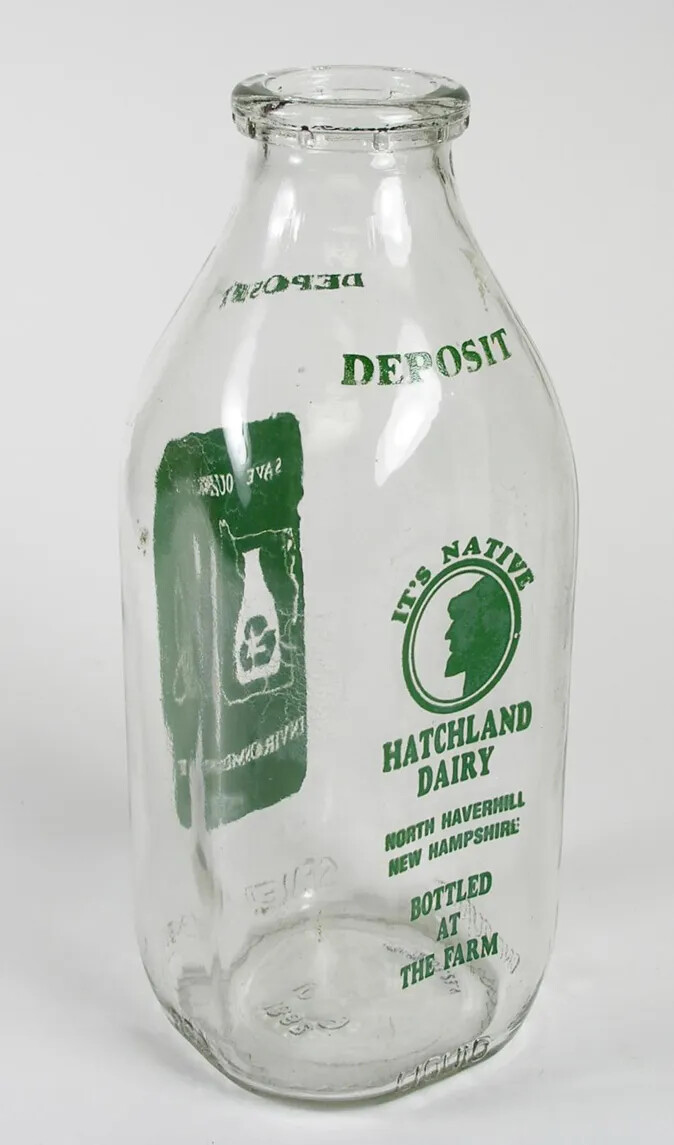
A one quart glass jug has green lettering and pictures. Words read  "DEPOSIT / IT'S NATIVE / HATCHLAND / DAIRY / NORTH HAVERHILL / NEW HAMPSHIRE / BOTTLED / AT / THE FARM." In the middle of the words is an outline image of the Old Man of the Mountain in an oval.
Milk Bottle
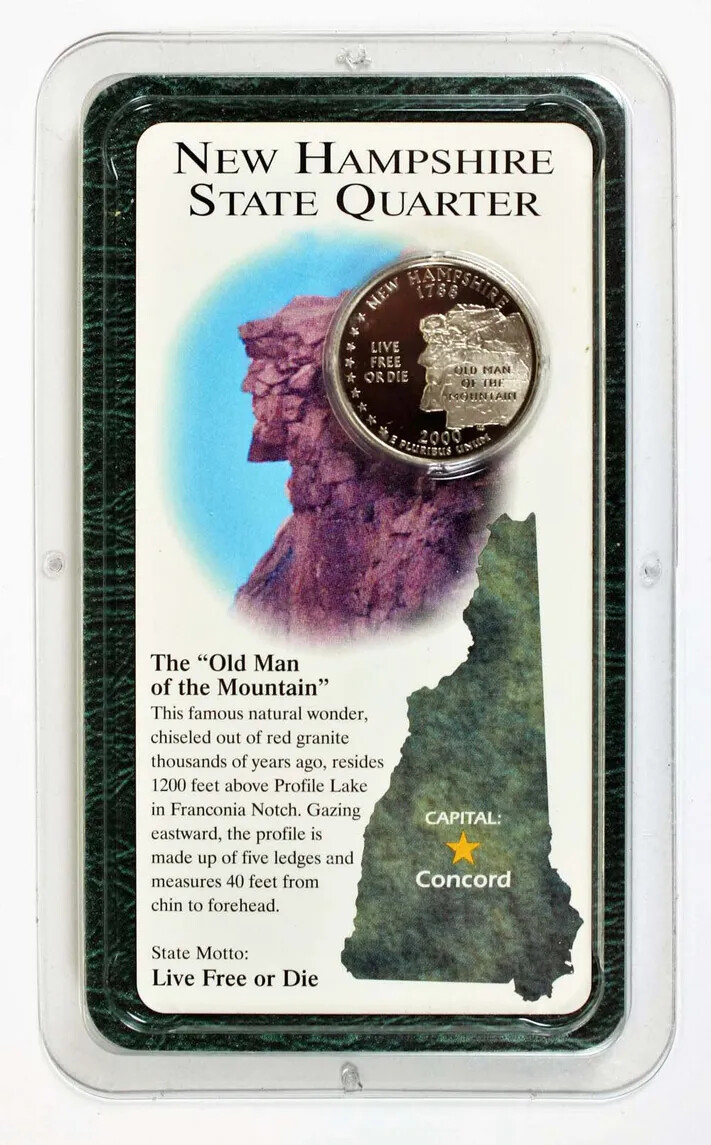
A rectangular item has a quarter fixed onto a card explaining the imagery of the quarter. The quarter shows the profile of a man made of rock, and it is placed next to a photograph of actual rocks that form a man's profile. Below the quarter is an outline of the state of New Hampshire with a star in the middle labeled "Capital Concord." To the left of the state outline is a paragraph giving the history of the Old Man of the Mountain, and at the bottom it says "State Motto: Live Free or Die." The item is titled "New Hampshire State Quarter."
New Hampshire State Quarter
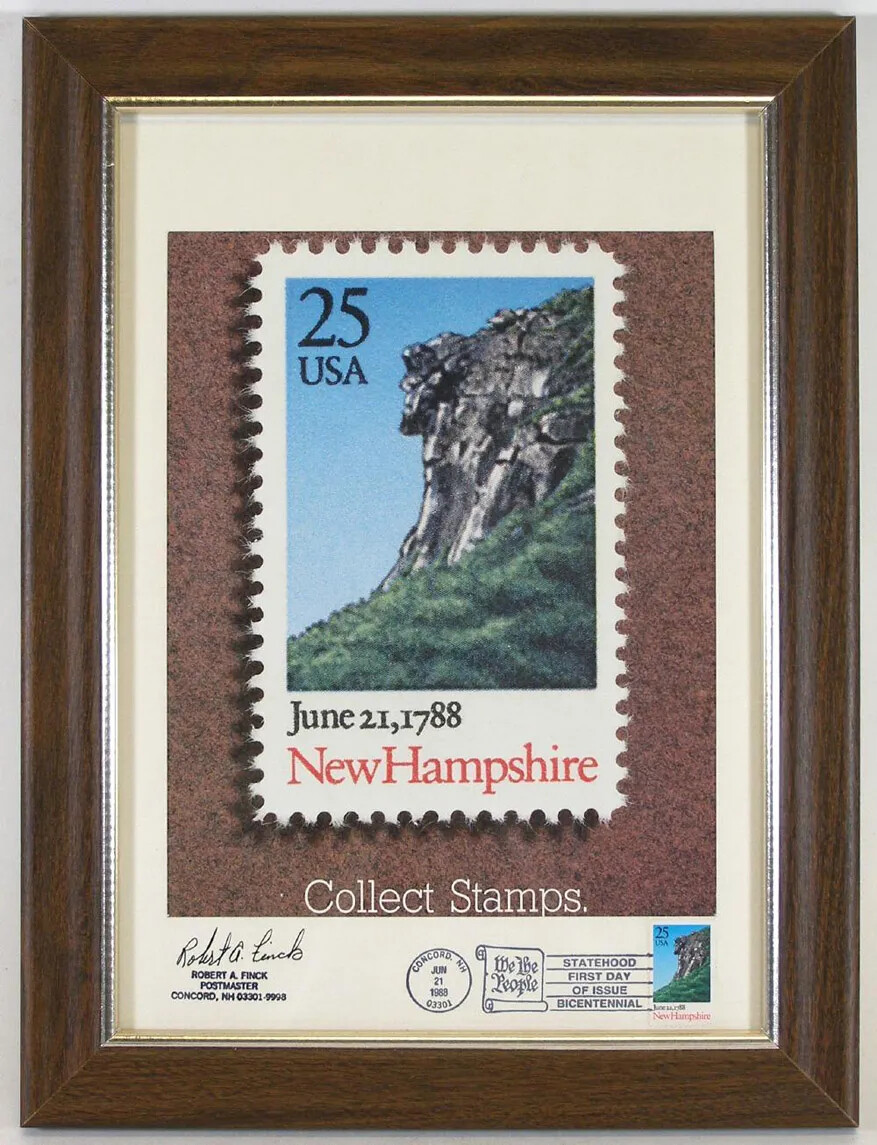
A postage stamp is framed with dark wooden frame and white and maroon background. The stamp shows a granite cliff where the rocks form the profile of a man, facing left. The stamp reads "25 USA June 21, 1788 New Hampshire." At the bottom of the frame is a signature of the Postmaster in Concord, NH, as well as a postage cancellation stamp. The actual stamp pictured is at the bottom on the right with the words "We the People" and "Statehood First Day of Issue Bicentennial."
Old Man of the Mountain Stamp
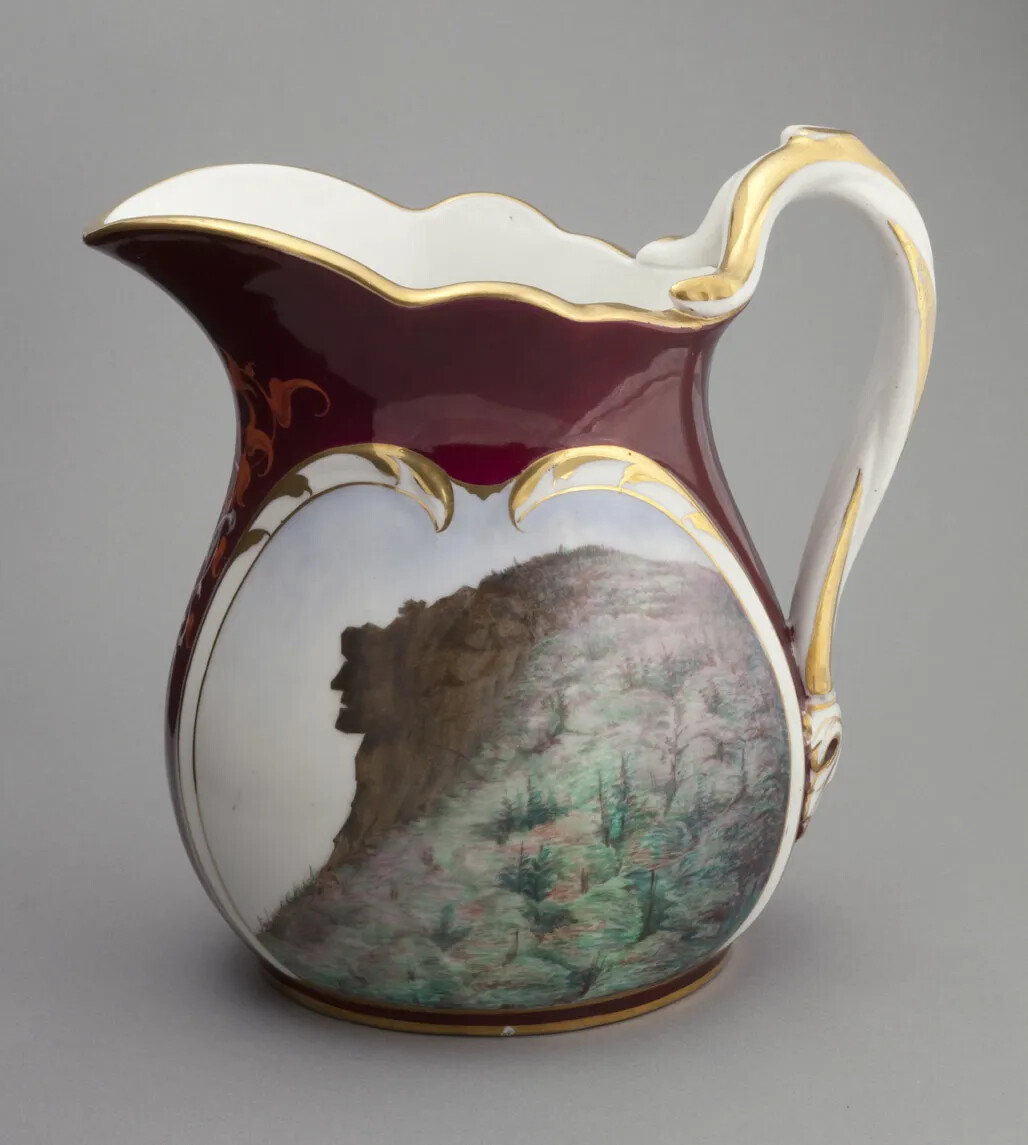
Molded, white glazed porcelain pitcher has a tapered neck, wide mouth and spout, and loop handle. On the body of the pitcher is a printed image of a painting of a profile of a man's face on a mountain top. The picture is in an oval floral medallion panel. The pitcher has a maroon background with decorative red, white, and gold mirrored scrolls.
Profile House Pitcher

Photographs & Prints in this Primary Source Set:

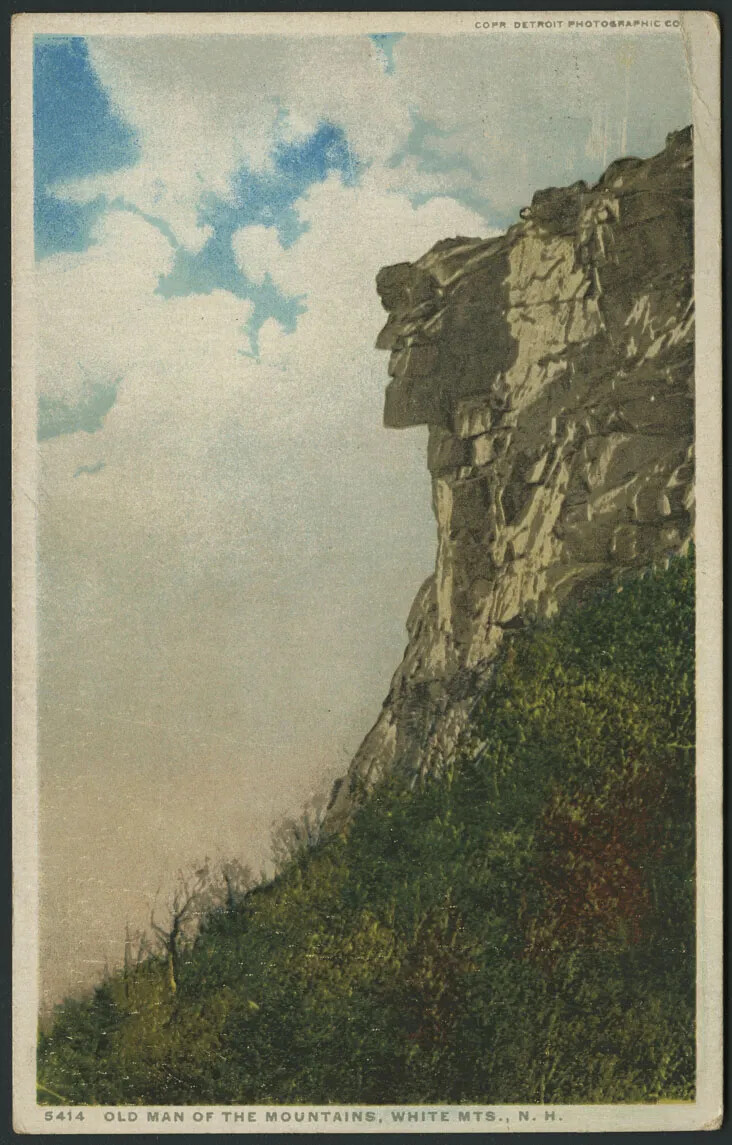
A colored postcard of the edge of a rocky mountain. The overhanging edge of the mountain is shaped in the face of a man, with a high forehead, a pointed nose, a mouth, and a chin. Behind the mountain is a blue sky mixed with white clouds. Leading up to the mountain from the bottom left corner is a hill of green shrubbery.
Old Man of the Mountain
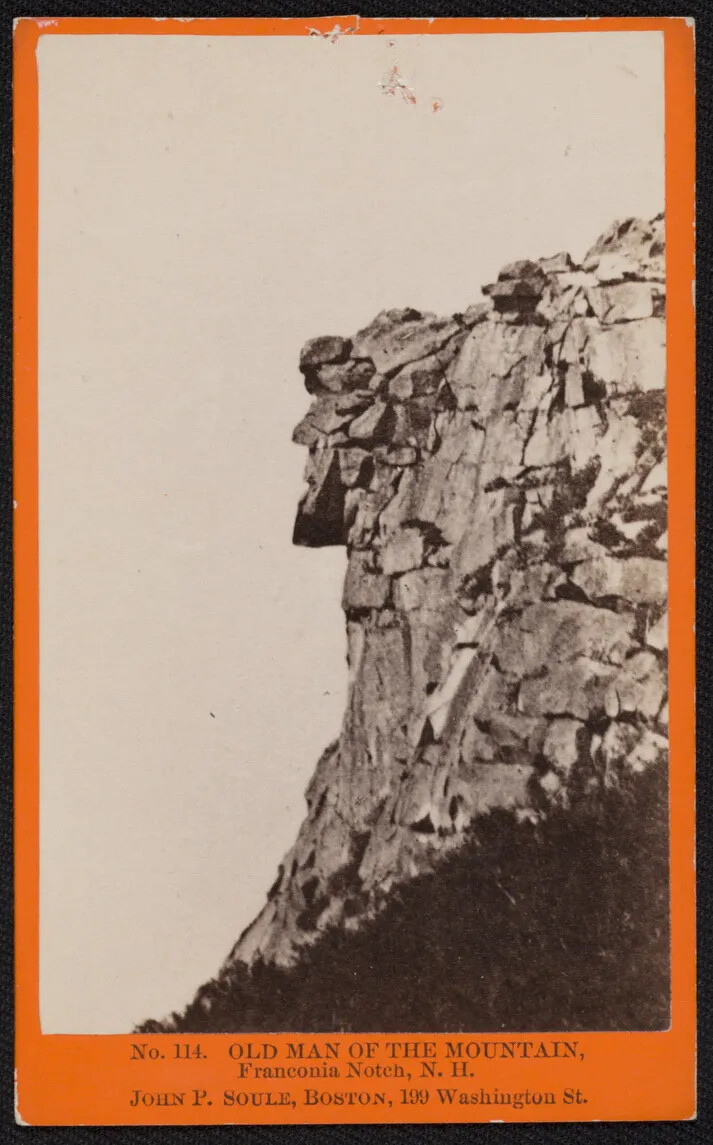
Black and white photograph shows a rocky cliff with many different slabs of granite. At the edge on the left, the rocks come together to form the profile of a man. Trees are seen at the bottom of the cliff. The picture is outlined in orange, and at the bottom it reads "No. 114 Old Man of the Mountain/ Franconia Notch, N.H./ John P. Soule, Boston, 199 Washington Street."
Old Man of the Mountain Carte de Visite
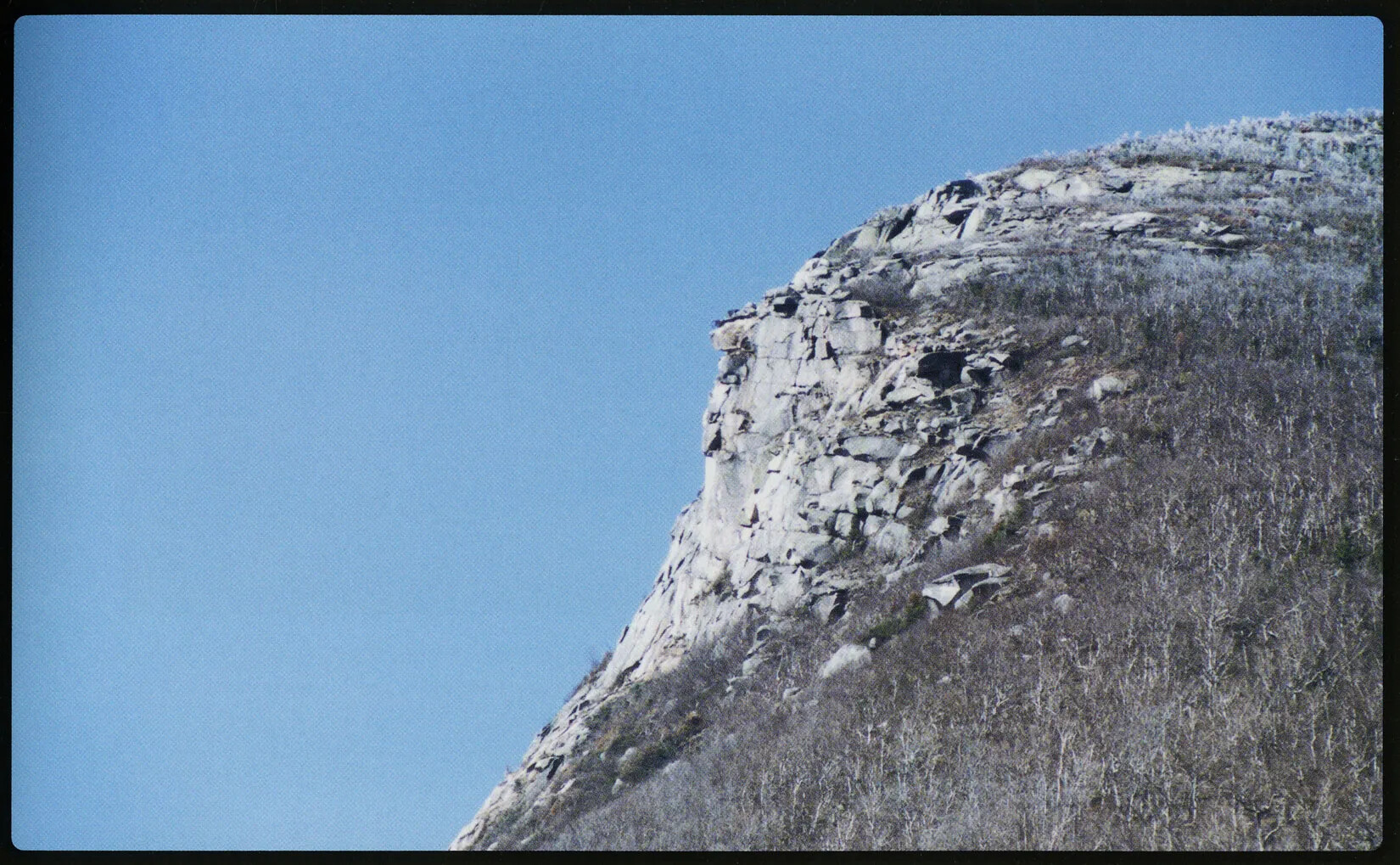
The edge of a rocky mountain is seen in this color photograph. There are sparse trees leading to the rocky cliff, which has granite slabs of no particular formation.
Old Man of the Mountain Falls
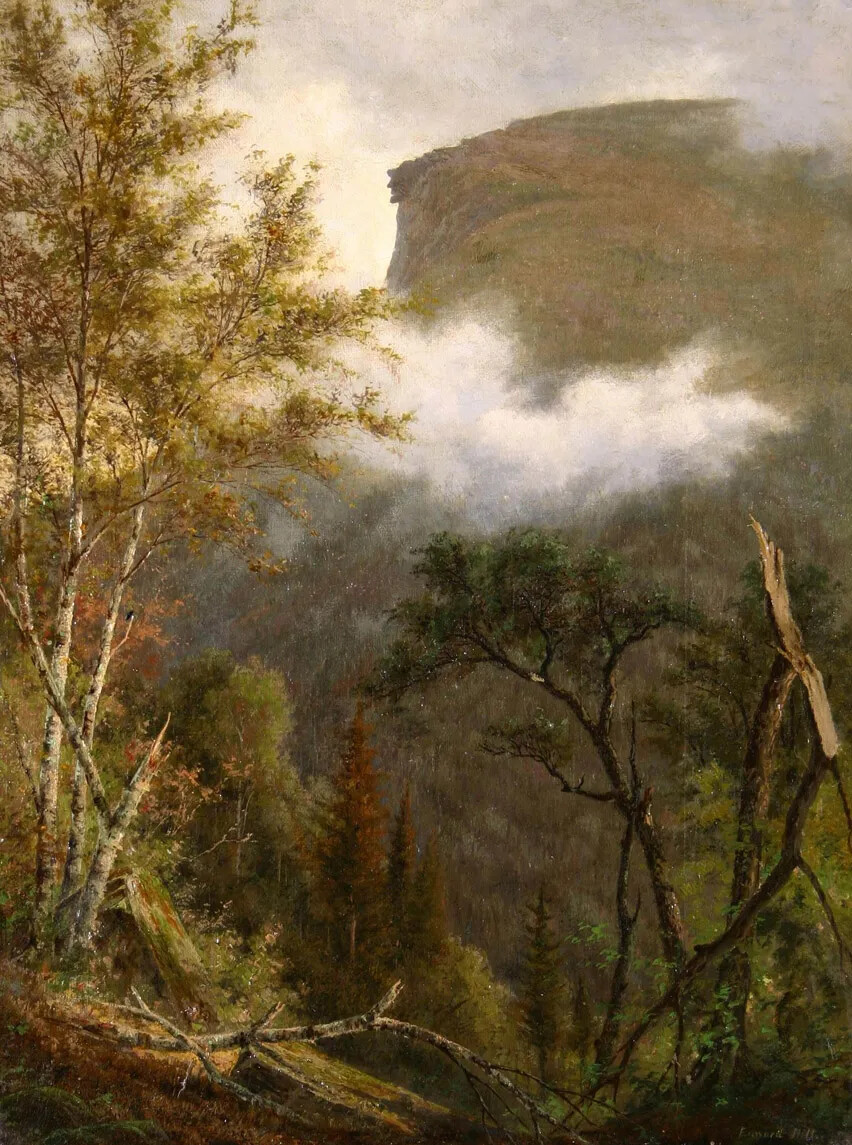
A landscape painting of the Old Man of the Mountain shows birch trees on the left side forefront with some broken. A gorge in the center has trees bending over and broken on right in the foreground. The Old Man of the Mountain's profile is upper center, surrounded by rising mist and clouds in background.
Old Man of the Mountain Painting
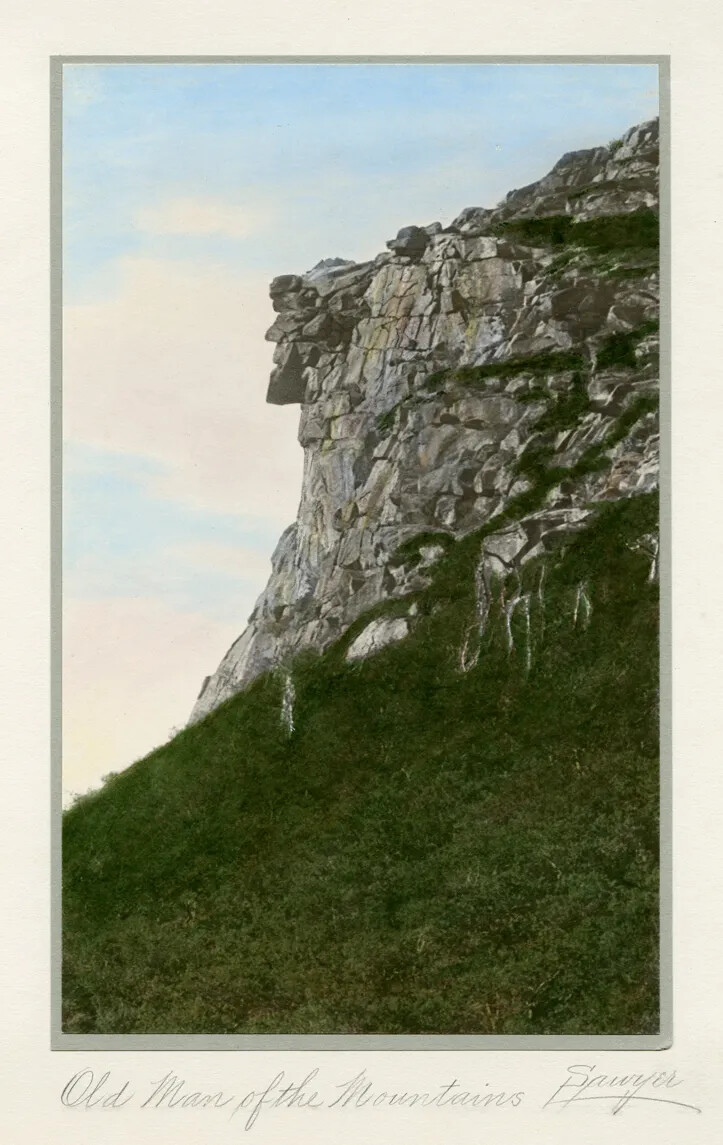
A colorized photograph of a rocky cliff. At the cliff's edge, the rocks come together to form the profile of a man's face. Green trees are seen at the bottom of the cliff.
Old Man of the Mountain Photograph
Old Man of the Mountain Viewing Plaza
A black and white drawing of a mountain is seen. On the mountain are many trees, notably large pine trees. On the top of the mountain a face in profile, formed from rock, looks to the left. The face is about a third the height of the mountain.
Profile Mountain/Old Man of the Mountain
Black and white landscape photograph shows the base of two mountains. A large white hotel with four floors and wrap-around porch sits in the background on the right. On the left, two railroad tracks run from the background to the foreground. A steam locomotive with passenger car is parked, and six men are gathered around the engine. They wear hats and work clothes or overalls.
Steam Engine at the Profile House
A color photograph shows a green, treed mountainside. At the top is a rocky cliff. A black column reaches from the bottom of the photograph to the cliff, and attaches the profile of a face to the cliff.
View of Old Man with Profile Post