
Primary Source Set - The NH State House

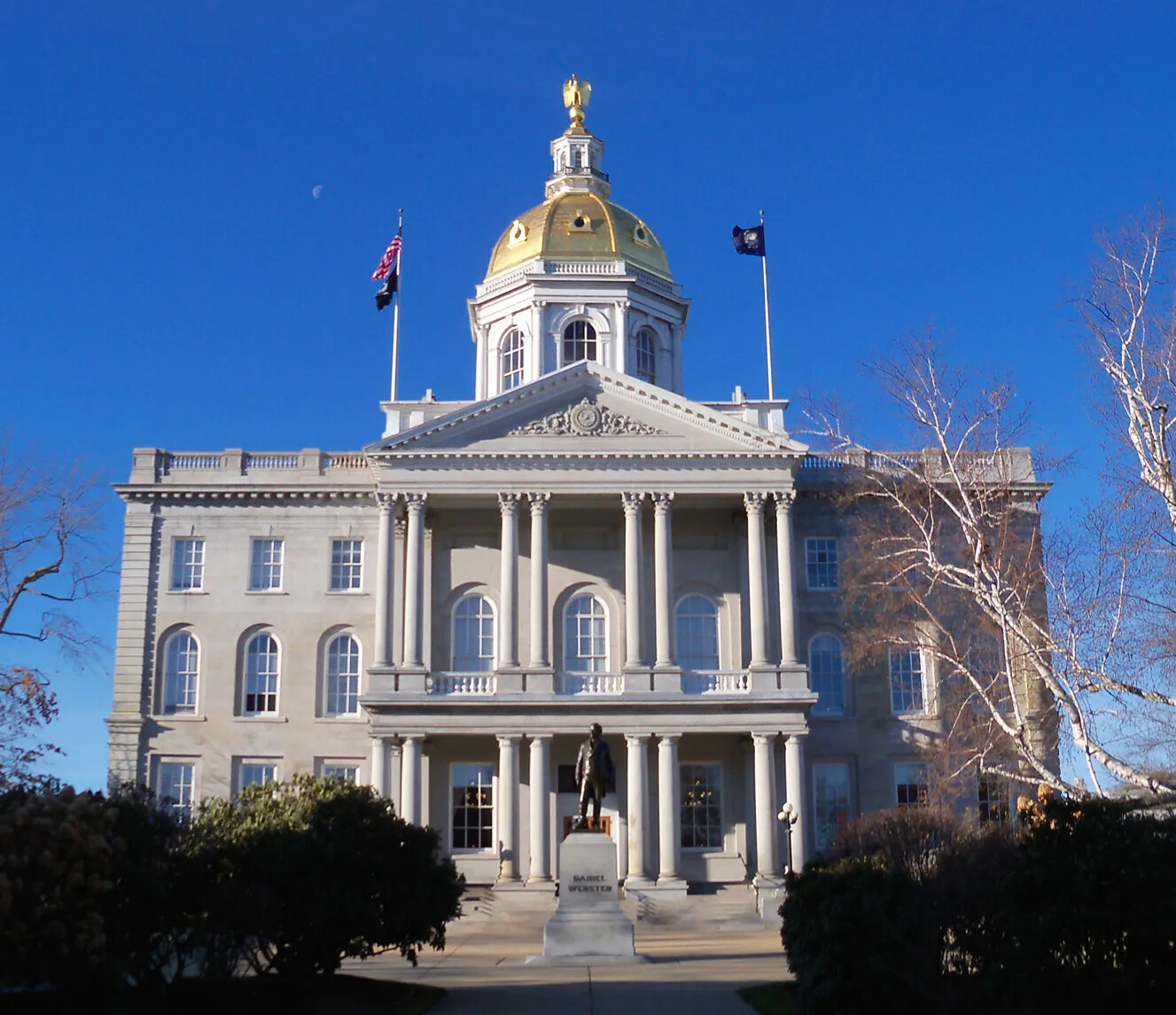
The New Hampshire State House is the center of government for the Granite State. Built between 1816 and 1819, it recently celebrated its 200th anniversary. It is the oldest state house in continuous use in the United States.


Background

At the time the state house was built, Concord had only recently become the state capitol. Before that, the legislature met all over the state, in churches, town halls, and even taverns. Although sessions were occasionally held in places like Charlestown, Hanover, Hopkinton, and Amherst, most of the time the center of state government was in the Seacoast region, which frustrated people who lived elsewhere in New Hampshire. Establishing the state capitol in Concord, which is located at the geographical center of the state, was a compromise.

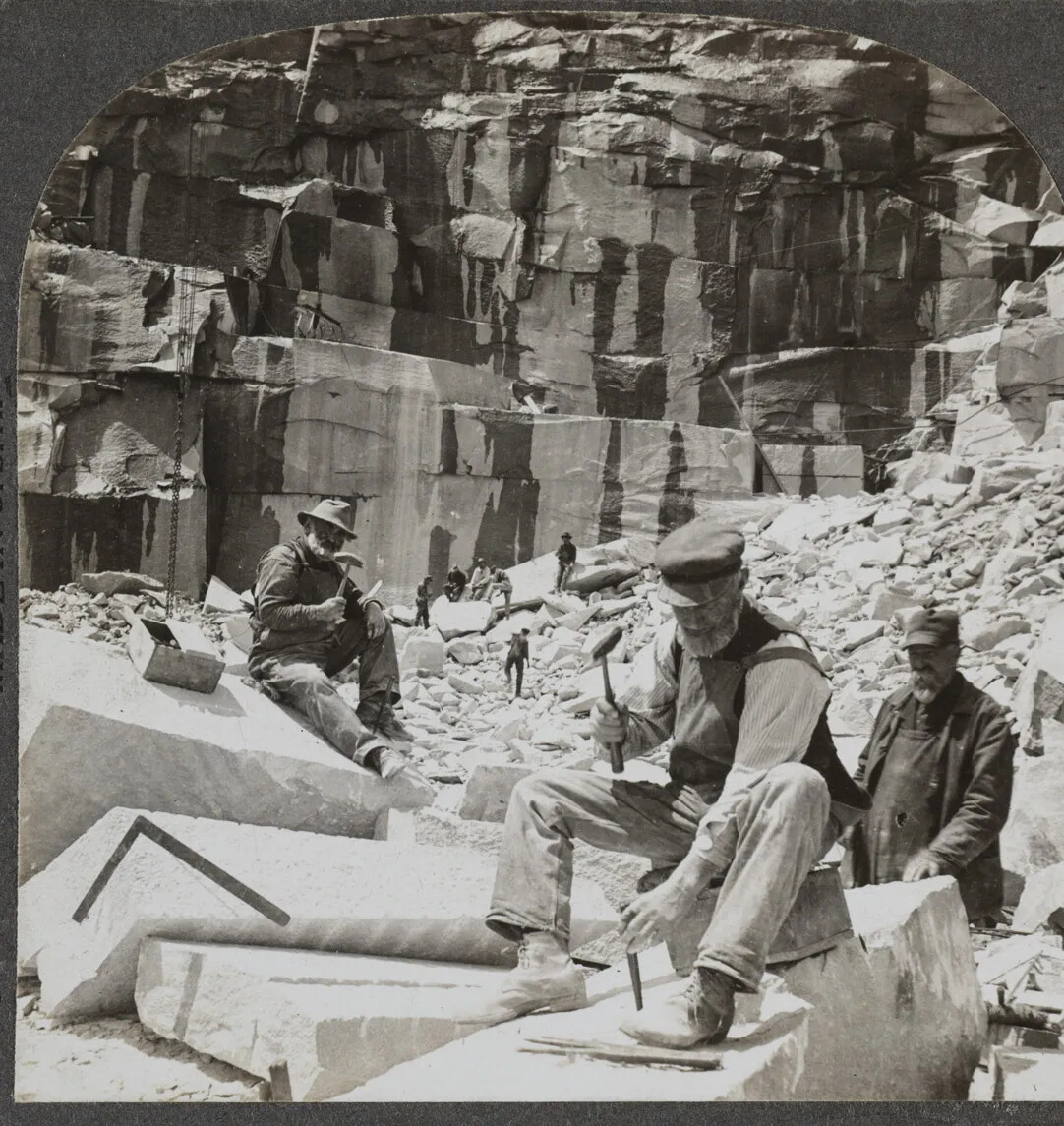
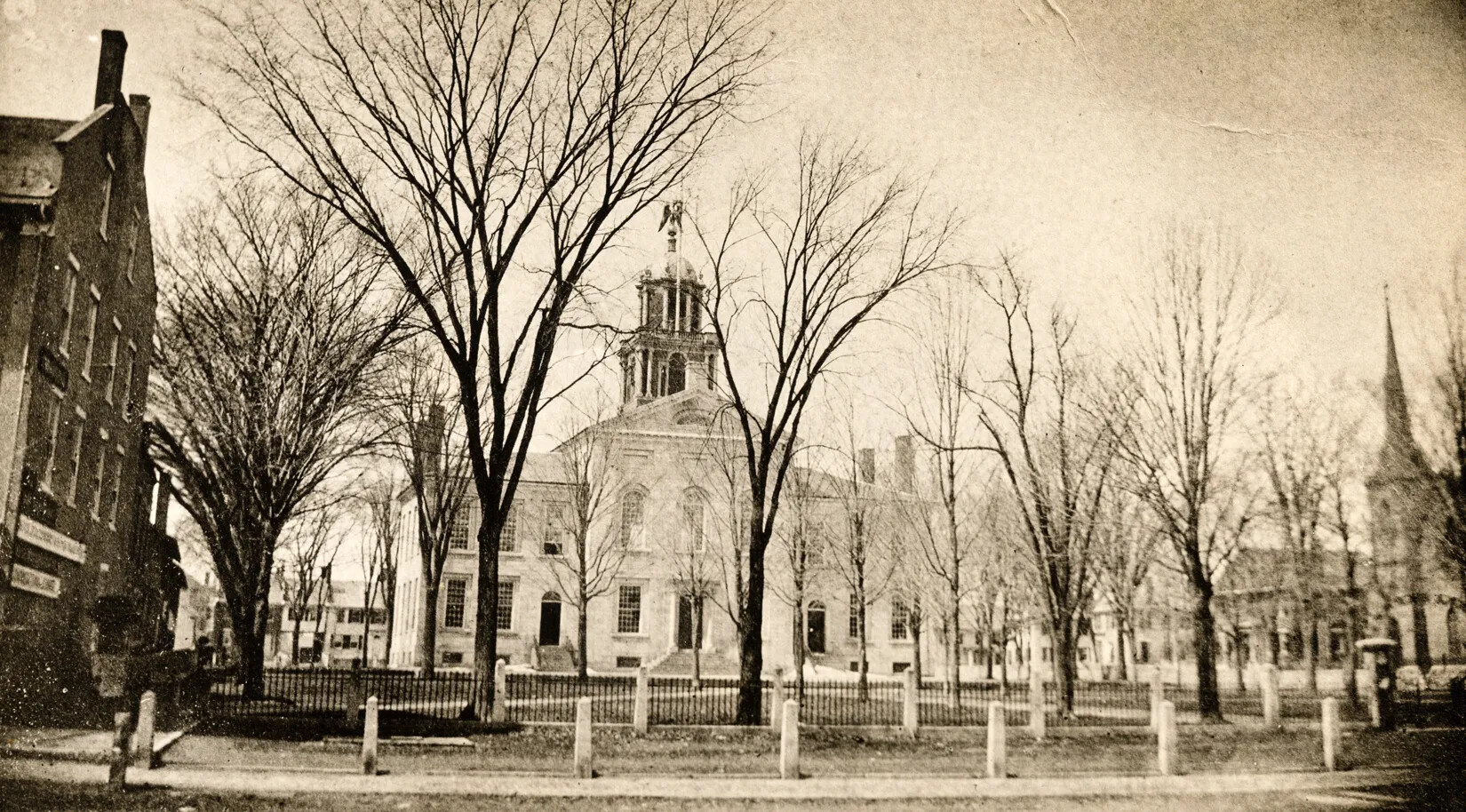
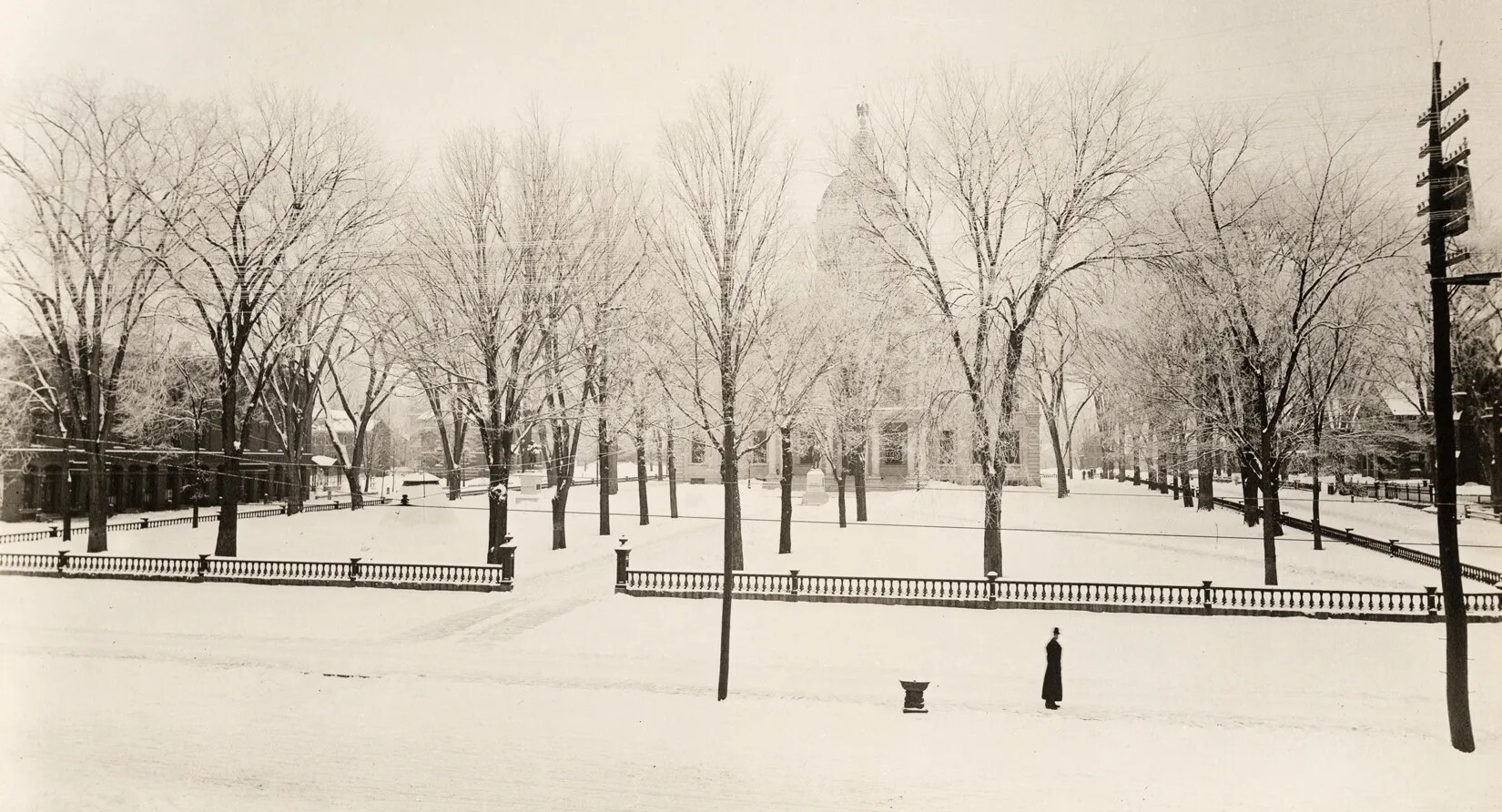
The state house was constructed out of granite quarried at nearby Rattlesnake Hill. The original design was fairly simple: it included a large public space at the center of the building (now known as Doric Hall after its eight Doric columns), a handful of offices for state officials including the governor, and the two chambers of the New Hampshire legislature: the House of Representatives and the Senate. The building was constructed in the Federalist style, which was typical of the time, and was topped by a cupola with a wooden eagle painted with gold leaf. Doric Hall became the scene of many ceremonies and official state occasions, while the area around the state house, known as the State House Yard, was used more informally for concerts, a marketplace, speakers, protests, and even baseball games!

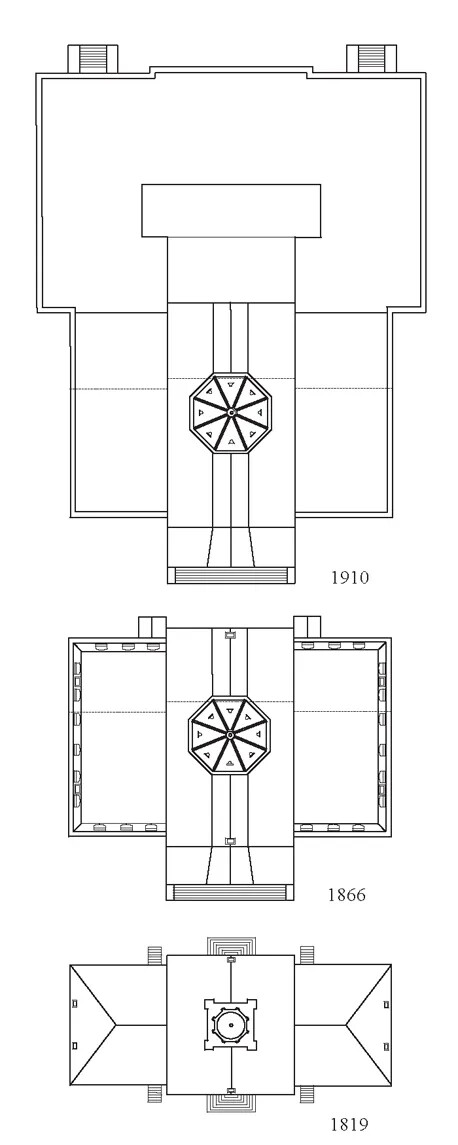
Within just a few decades of its completion in 1819, the state house had already become too small for the state government, and in 1864–66, the building underwent a major renovation. The back of the state house was expanded, which created more office space and made both chambers of the legislature larger. The cupola on top of the building was replaced with a gold dome and the wooden eagle was reinstalled at its pinnacle. After the Civil War, the flags from New Hampshire’s regiments were placed in glass cases in Doric Hall, giving the space a new name: the Hall of Flags. In the years that followed, dozens of portraits were added to the state house walls of all the governors of New Hampshire except one (Meshech Weare, the first governor) along with other notable New Hampshire figures like General John Stark, President Franklin Pierce, and Senators John P. Hale and Daniel Webster.

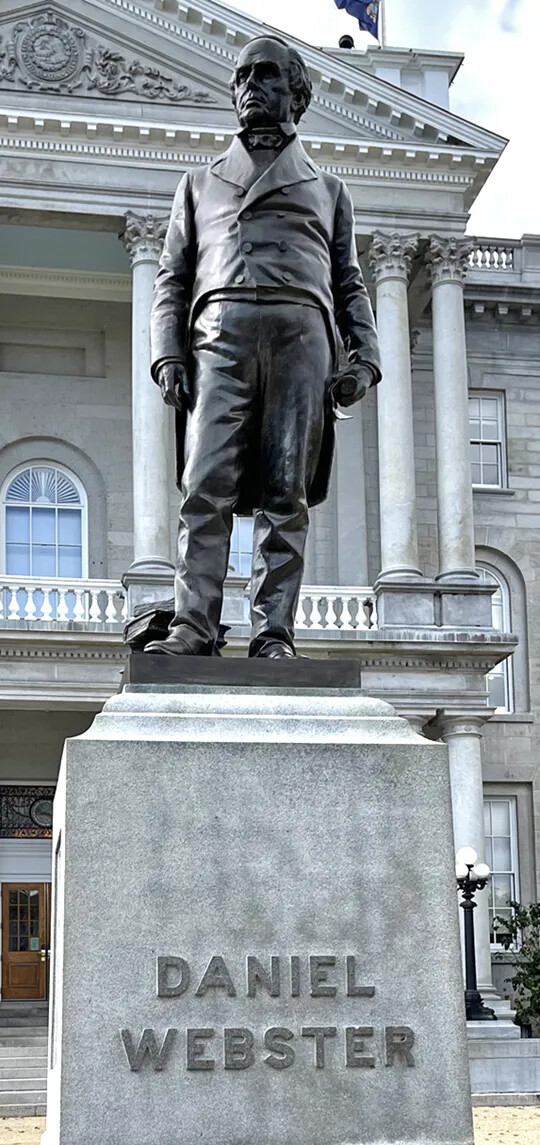
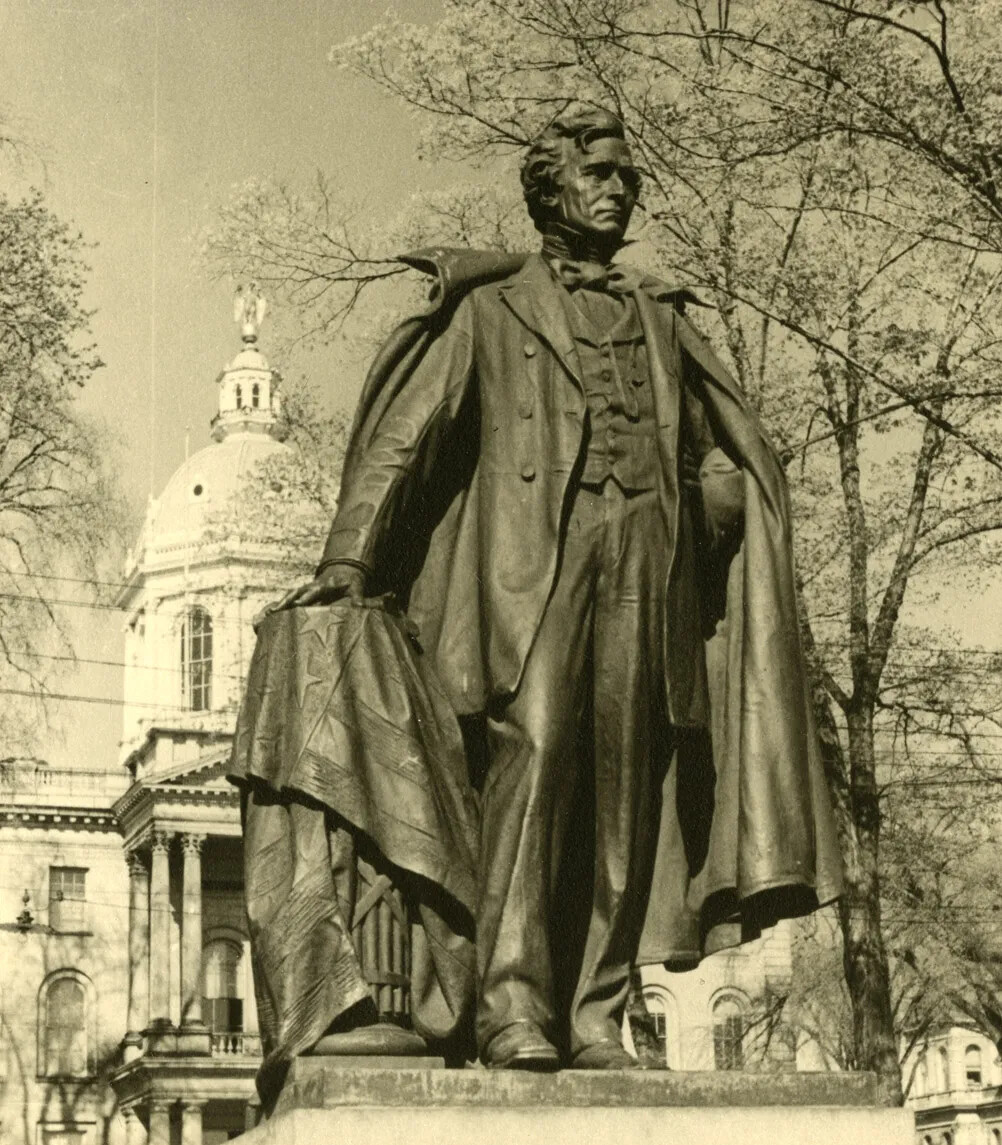
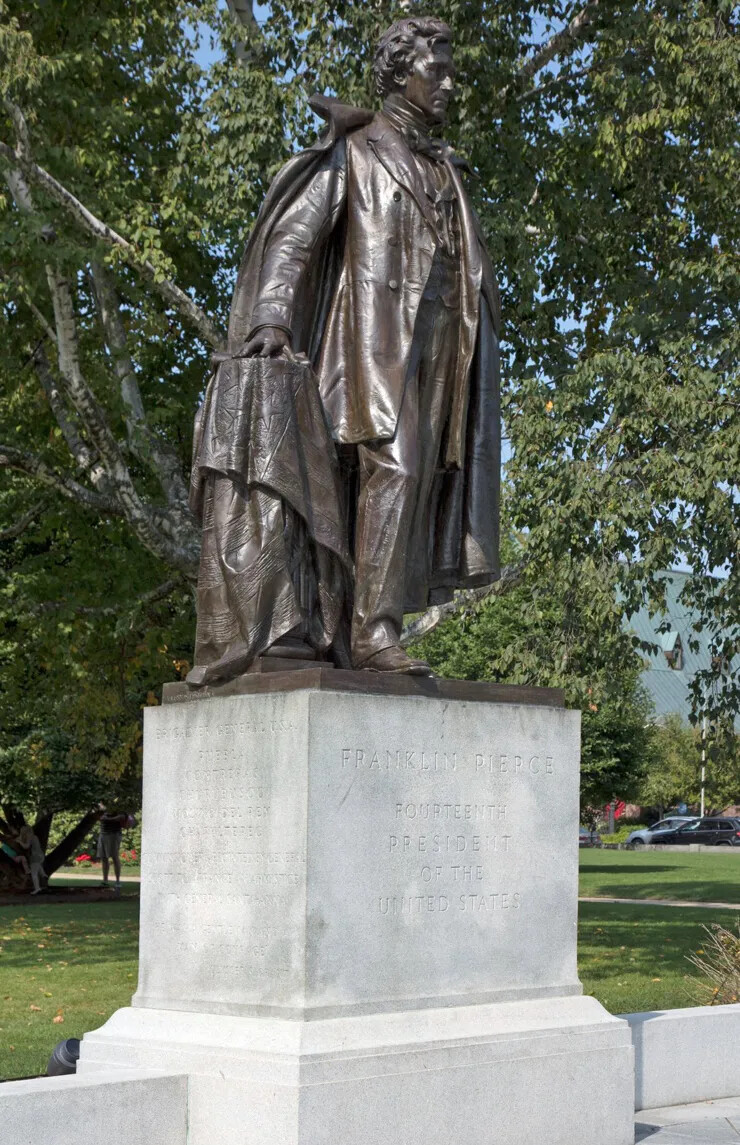
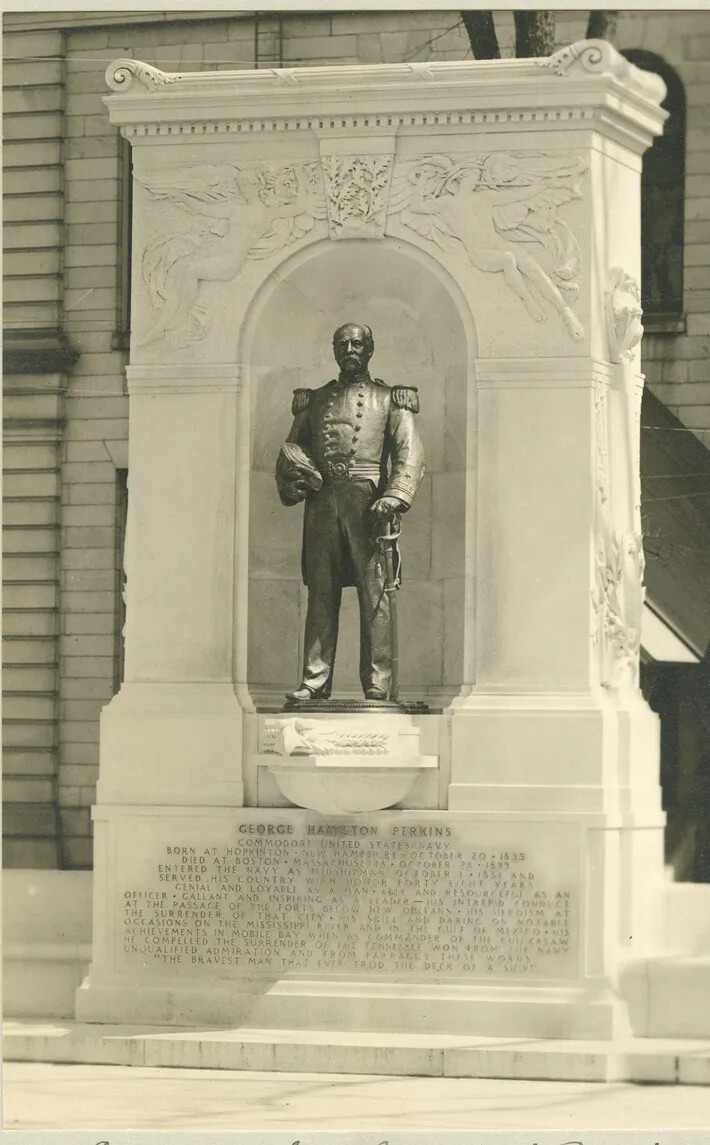
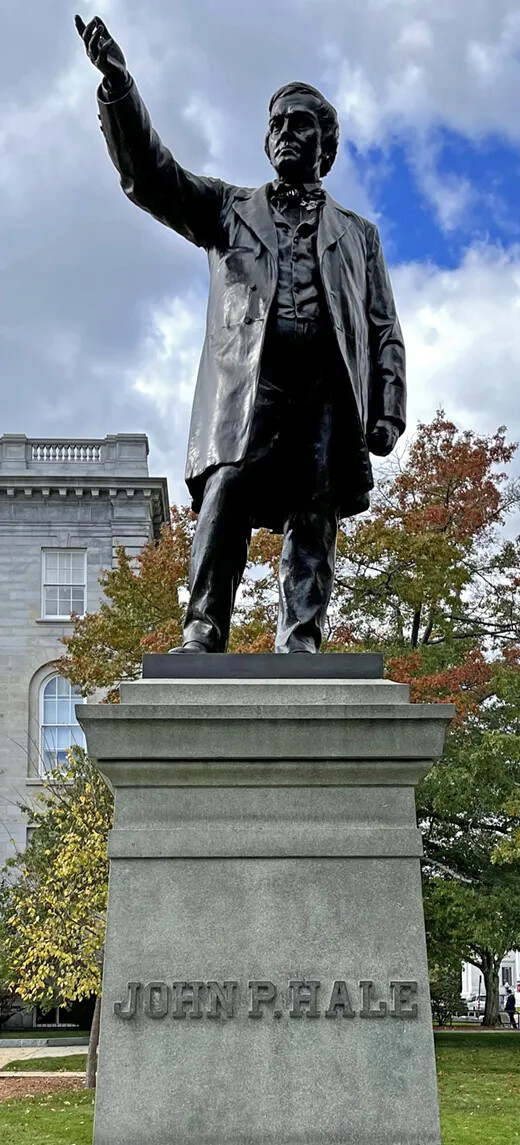
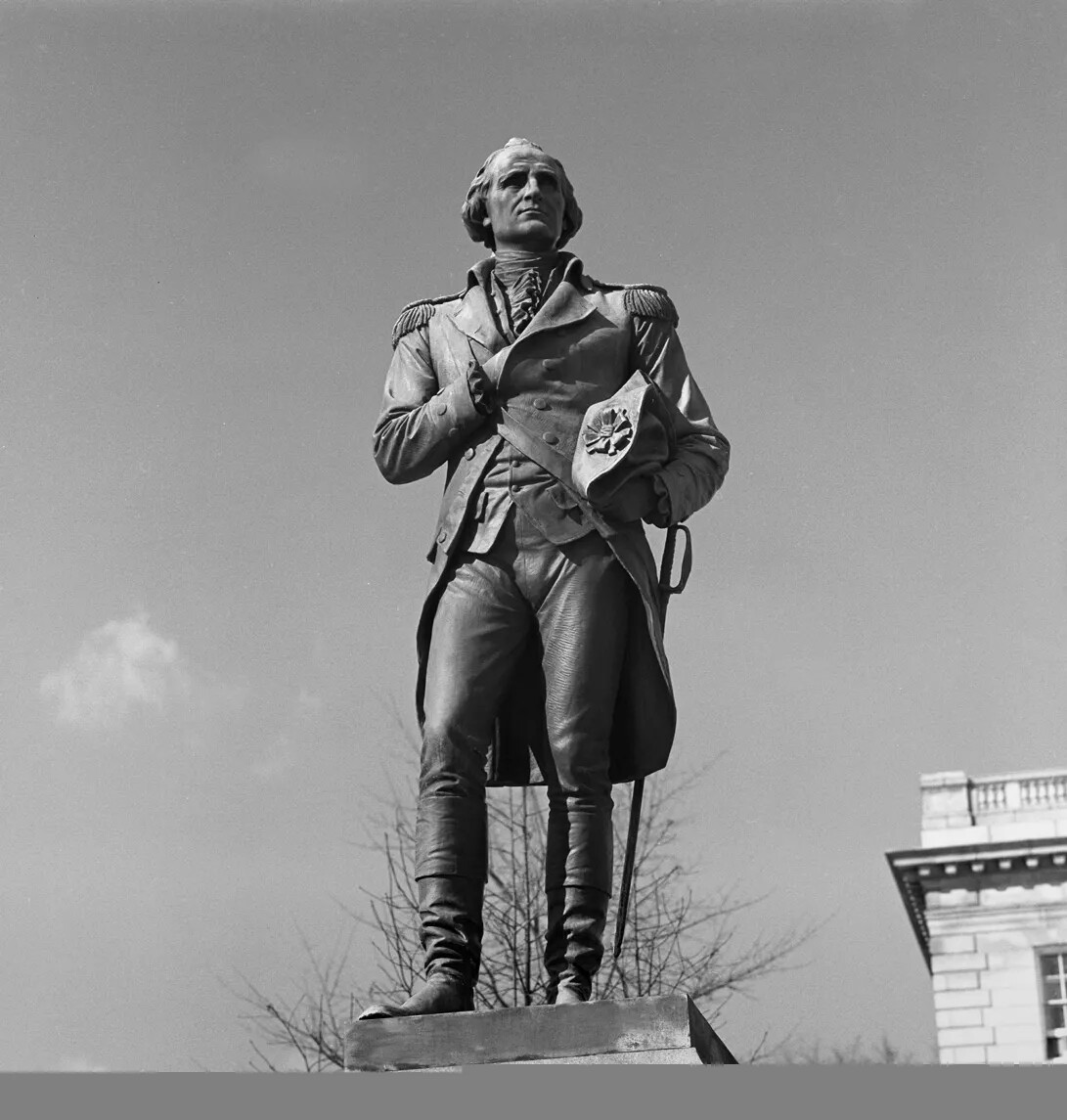
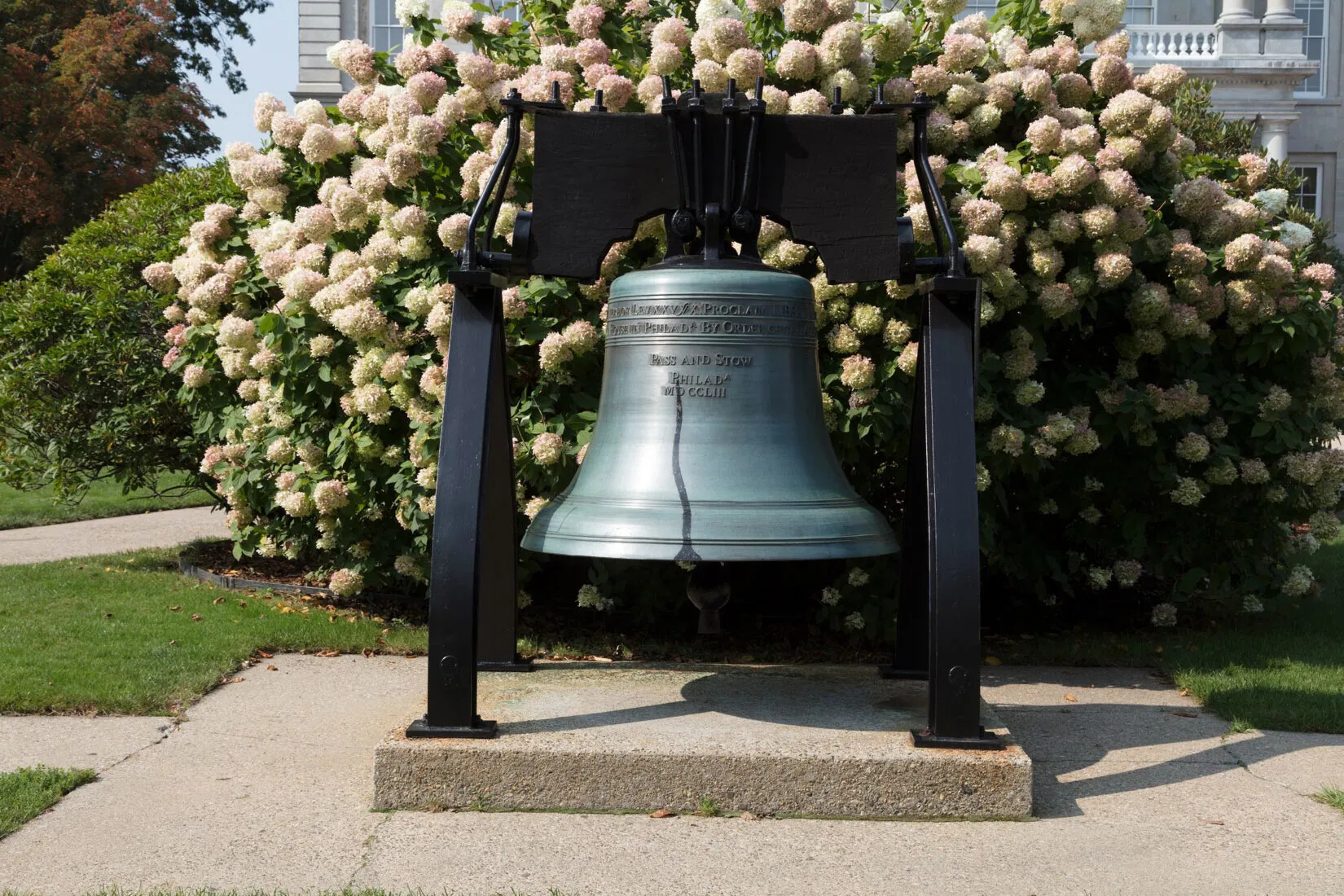
In the late 19th century, the state also began to build statues on the state house lawn, commemorating figures from the state’s history: Webster, Stark, Hale, Pierce, and Admiral George Hamilton Perkins. Other memorials, mainly to New Hampshire soldiers or symbols representing national patriotism like a replica of the Liberty Bell, were added over the years.

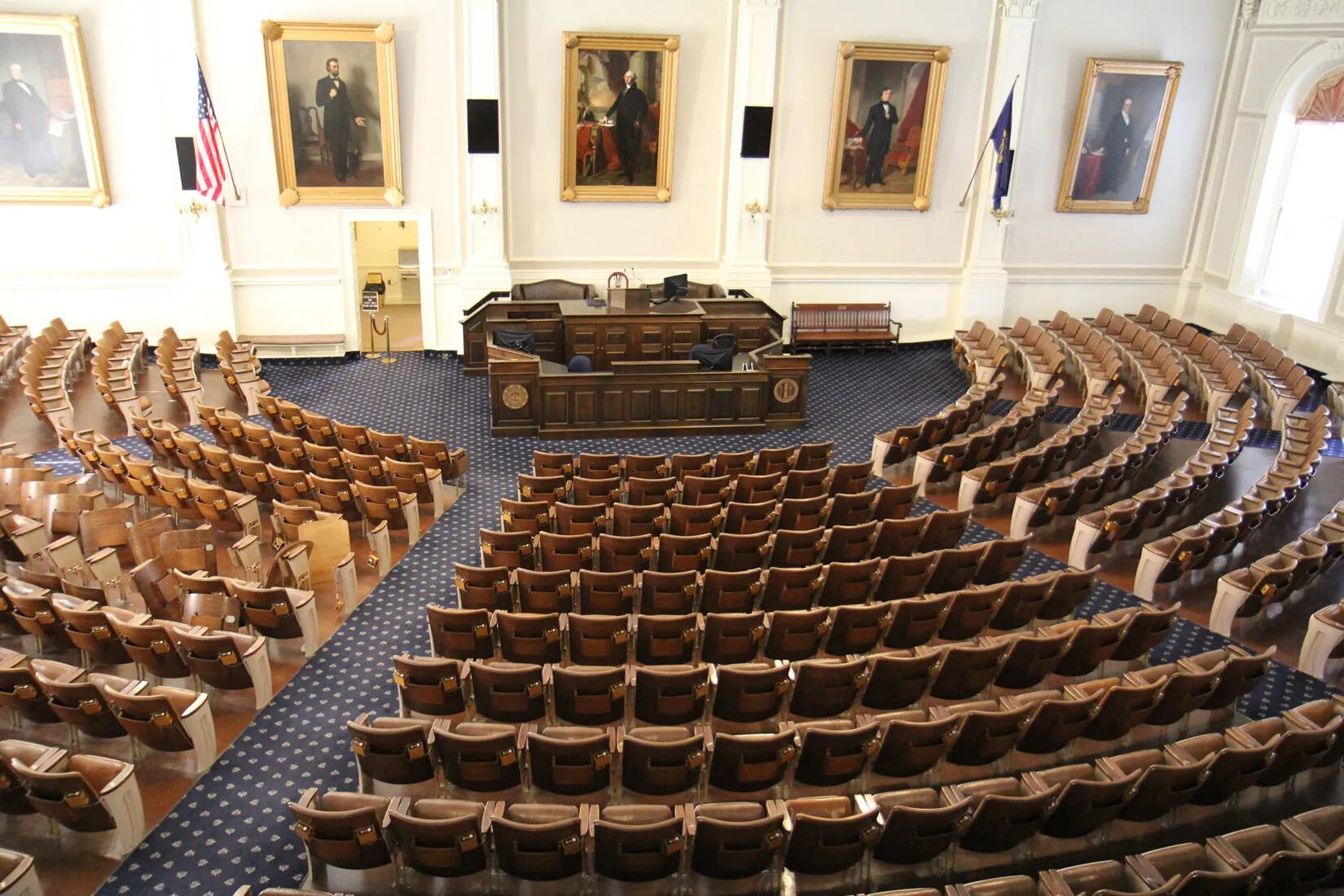
Space remained an issue, though, especially as the state house once housed the state supreme court, the state library, and the state historical society. At one point there was even a small natural history museum located in the building. The state legislature also grew dramatically during these years, reaching 400 members. The N.H. House of Representatives remains the largest representative body in the country other than the U.S. House of Representatives, despite New Hampshire’s relatively low population. Conversely, the N.H. Senate is the smallest state senate in the nation.

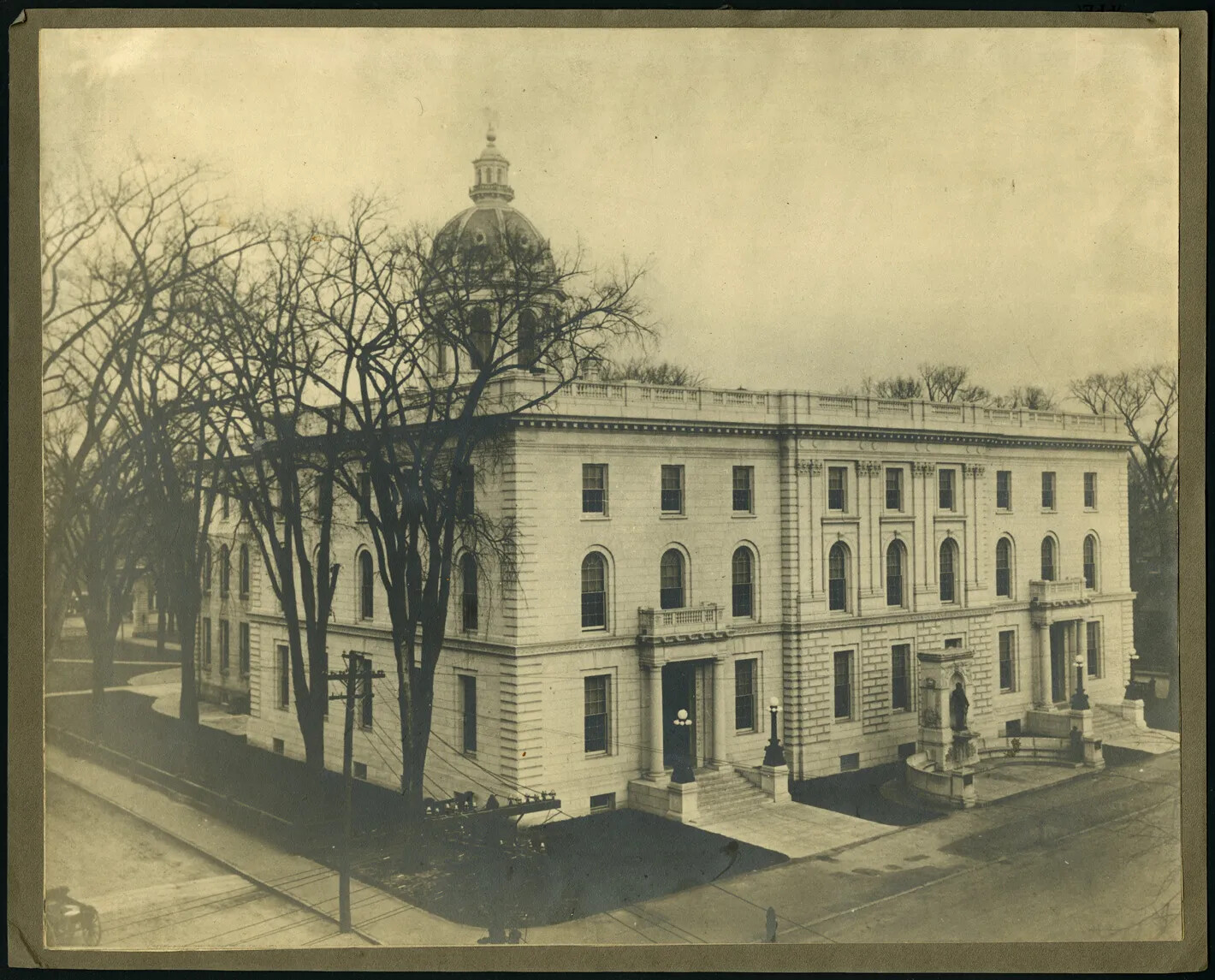
The state house underwent another massive renovation in 1910, which saw the addition of the entire back portion of the building around a small courtyard. This expansion more than doubled the building’s size and included a large chamber for the executive council and new office space for the governor. Even then, the state government quickly outgrew the new space. The state supreme court, the state library, and the state historical society had moved out long before the 1910 addition, but it became clear to state leaders that they needed more space, leading to the creation of the Legislative Office Building across the street from the state house, the state annex across a different street, and eventually the state office complex on Concord Heights, just over a mile away.

Every four years, the New Hampshire State House gets national attention when the presidential candidates come to register for the New Hampshire primary. It is a longstanding tradition that the candidates come in person, meet N.H. Secretary of State Bill Gardner, sign the official forms on an antique desk in Gardner's office, and stop in the Visitors' Center to take pictures with the staff. With lots of campaign supporters and the national press in attendance, it becomes a media event for each candidate.

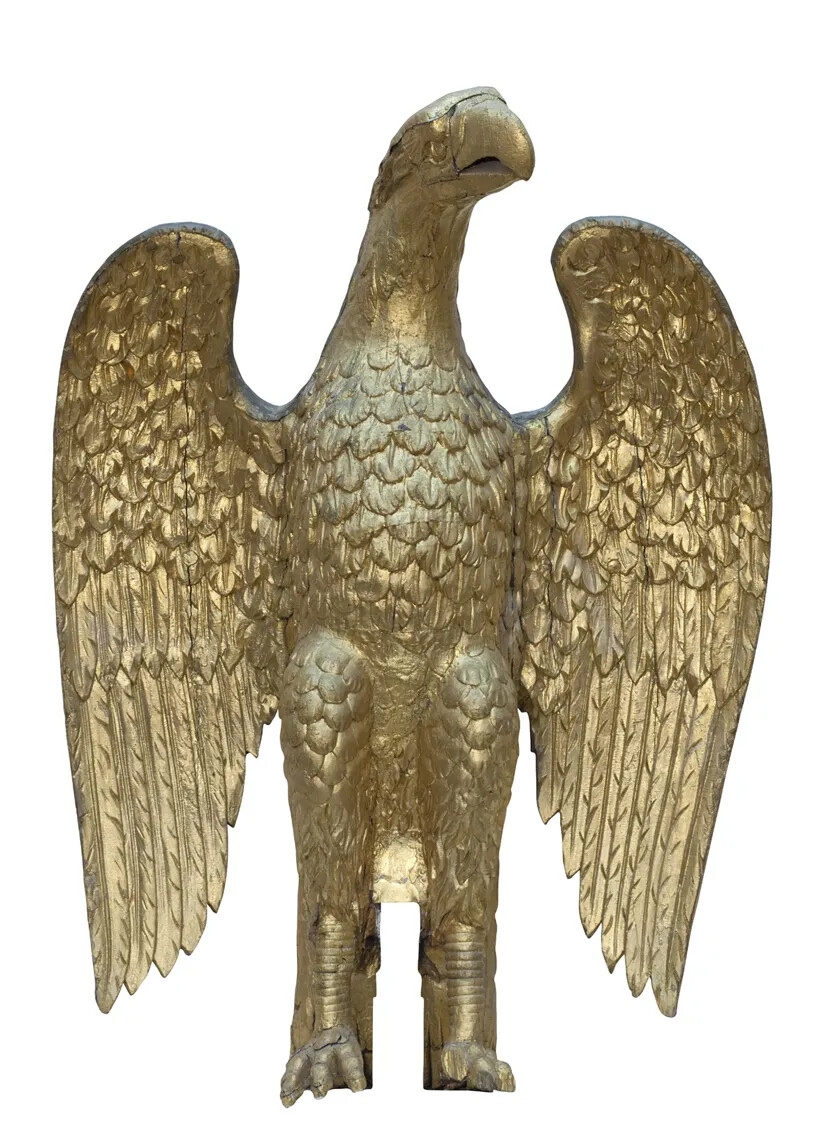
The state house is full of symbols of New Hampshire, with multiple depictions of the state seal; portraits, murals, and mementos of famous Granite Staters (including Alan Shepard’s moon rock); keepsakes from the state’s long history as the first-in-the-nation primary; and memorials to the state’s soldiers. The wooden state house eagle was replaced with a metal version in 1957, but the original stands today inside the New Hampshire Historical Society, welcoming visitors in the grand stairway.

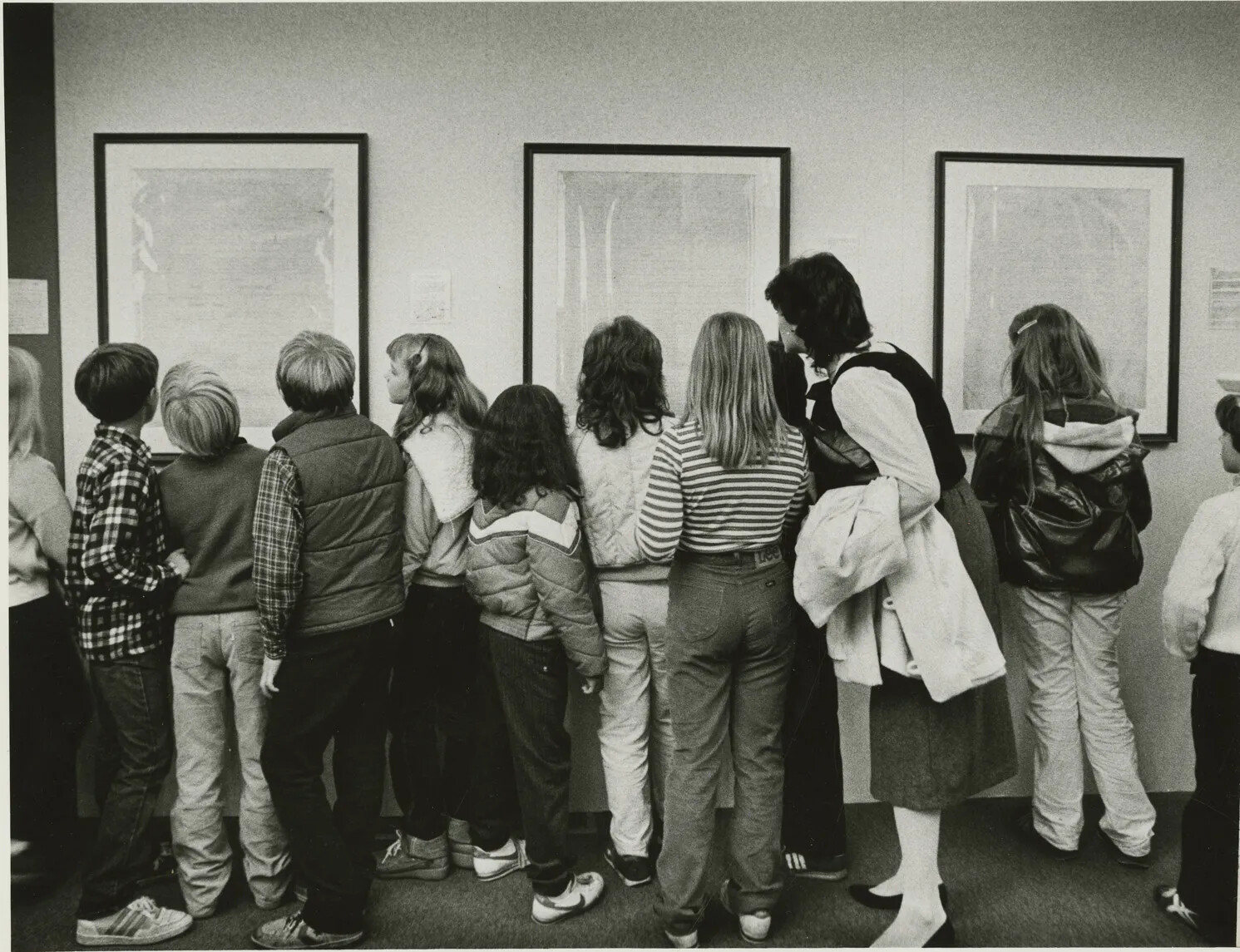
Images of the state house appear on all sorts of commemorative items, from postcards to key chains to bottles. The state house was even painted on some of the panels of the world-famous Concord coach. Every year, thousands of school children visit the New Hampshire State House, where a tour of this state icon has become a rite of passage for many Granite State kids.


Additional Resources

Focus Question

In addition to our general suggestions for using primary source sets, consider giving students the following prompt for an inquiry using this primary source set about the New Hampshire State House.

  • 1
    How does the NH State House capture the character of New Hampshire?

Biographies in this Primary Source Set:

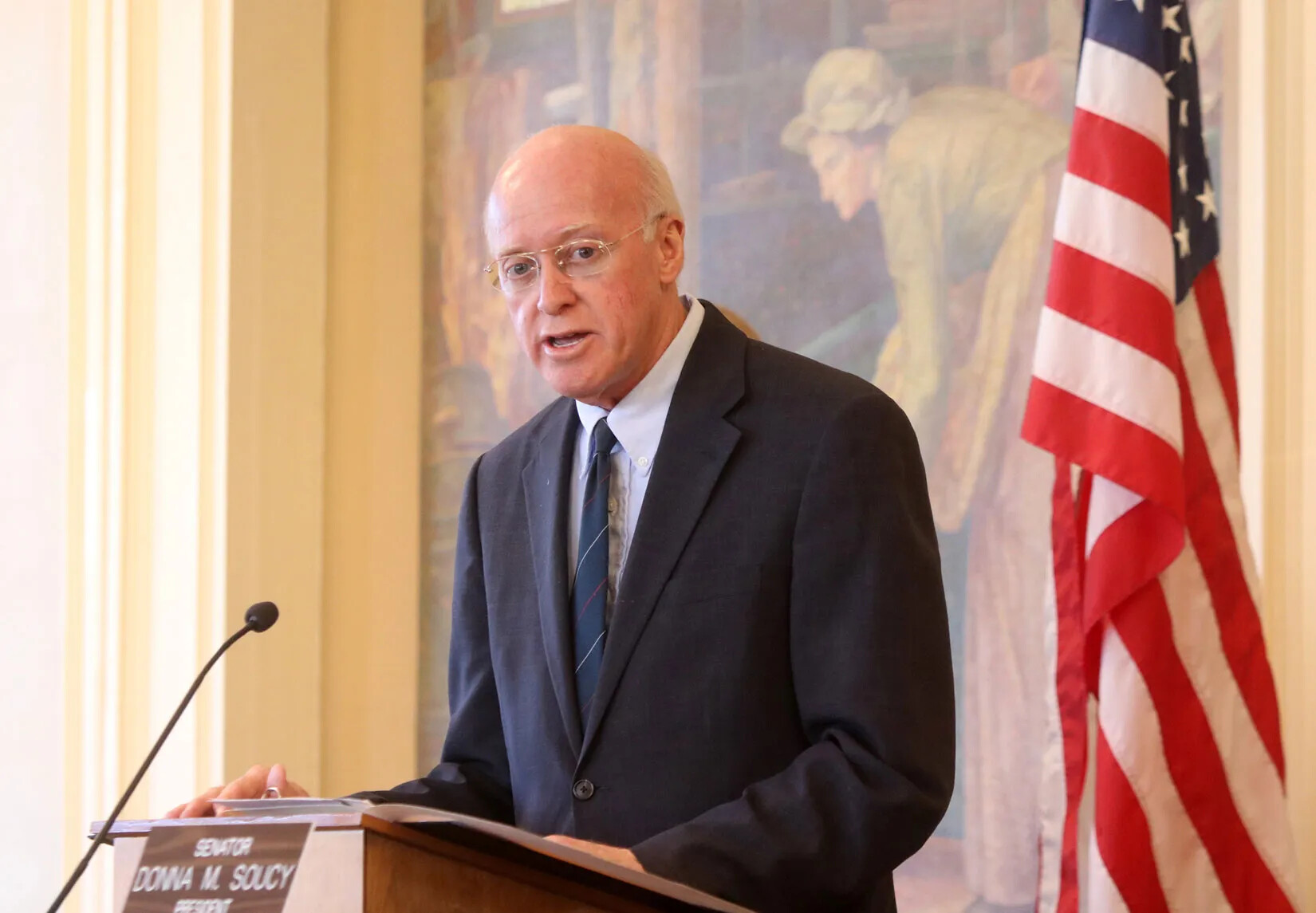
A man in suit stands at a podium. His grey hair is balding and he wears glasses. He seems to be speaking, and is looking to his left almost directly at the viewer. There is a microphone on the podium and some papers. Next to the man is an American flag, and behind him, a painting of a scene from colonial days.
Bill Gardner
A solid black image of a moose, with white capital letters inside reading "SORRY, NO PICTURE AVAILABLE."
Meshech Weare

Documents in this Primary Source Set:

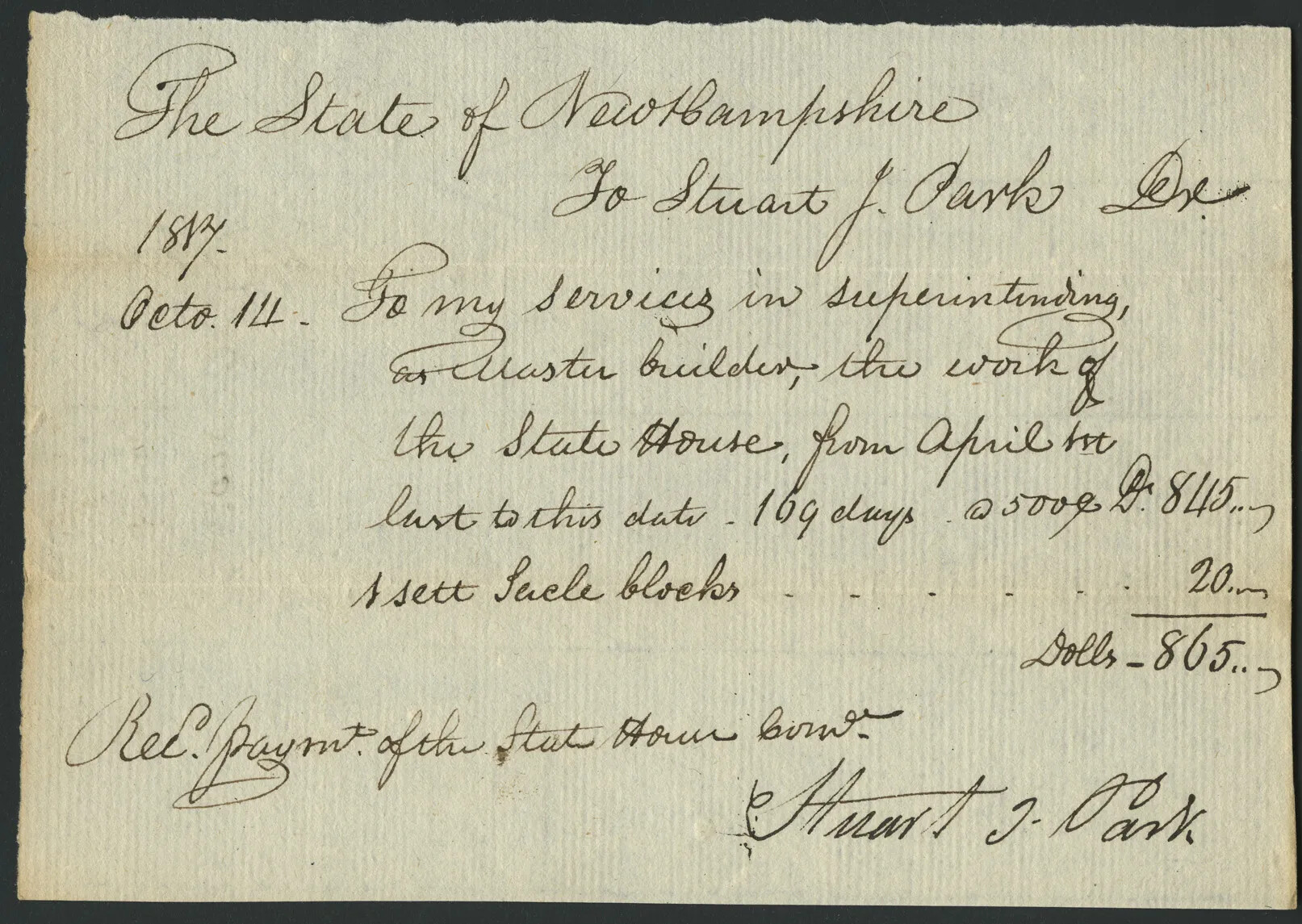
A horizontal document with several lines of text written in cursive handwriting in black ink on white paper.
Receipt for State House Builder
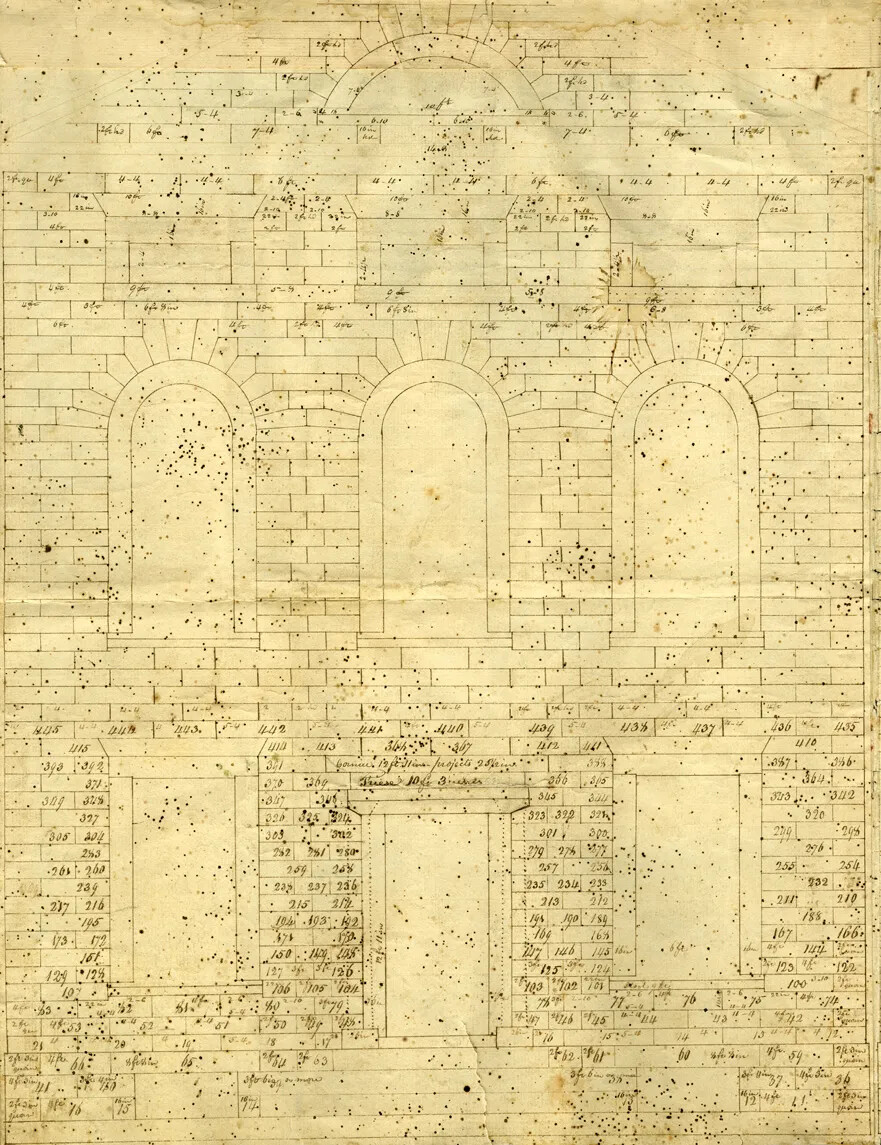
A vertical document on light brown paper. Drawn on the paper in black ink is the exterior of a building, showing rectangular bricks and two rows, or floors, of windows. The windows on the first floor are rectangular and the windows on the second floor are arched. Written in several of the rectangular bricks on the first floor are three-digit numbers. The document is splotched throughout with little black marks.
State House Stonecutting Plan

Explainer Videos and Virtual Field Trips in this Primary Source Set:

Mason Explains: The New Hampshire State House

Maps & Charts in this Primary Source Set:

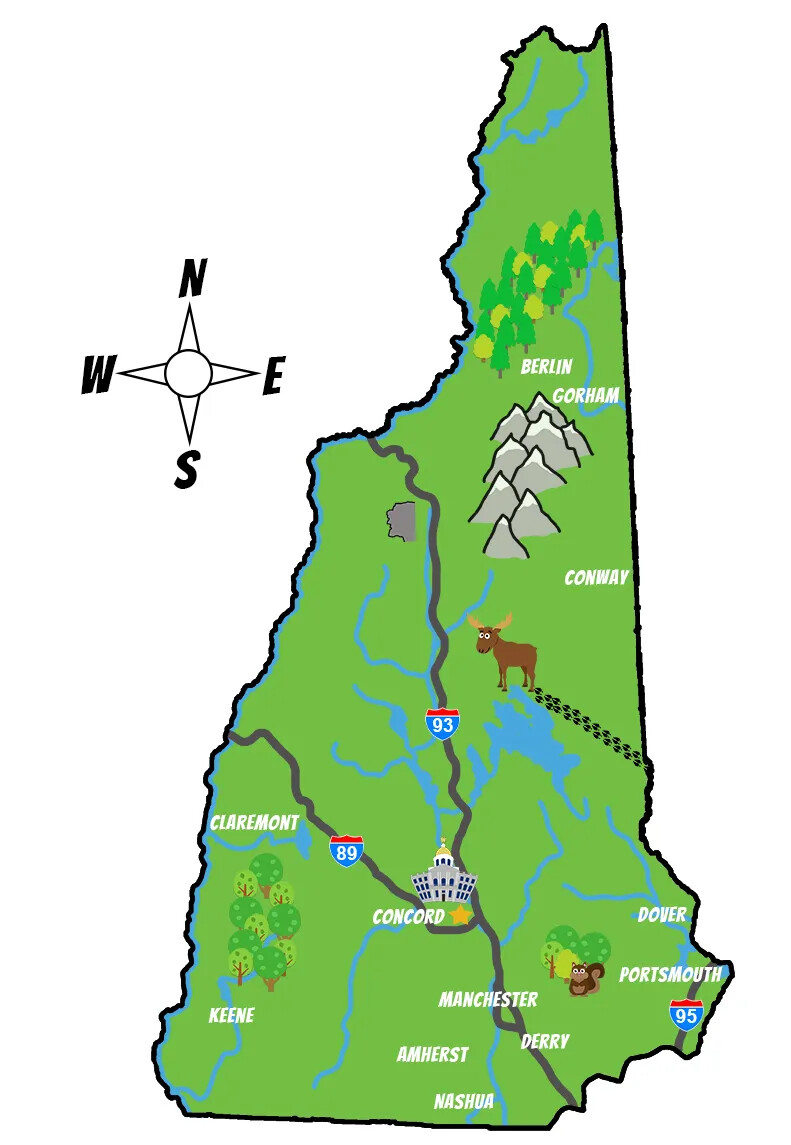
A colored map of New Hampshire. The state is colored in green, and all of the rivers and lakes are blue. Scattered around the state are different illustrations of physical features, such as mountains and trees, as well as a moose and a squirrell. There are also illustrations of the New Hampshire State House, the two major highways that criss-cross through the state, and several town names typed in white text. To the left of the map is a compass rose.
Mason's Map of New Hampshire

Objects in this Primary Source Set:

Daniel Webster Statue
A tall statue of a man with his right hand on his right hip, and his left hand on a short pillar covered in an American flag. He wears a high-collared shirt, necktie, vest, pants, and long coat. Over his shoulders is draped a large collared coat.
Franklin Pierce Statue
A bronze statue of a man standing on a pedestal. He wears a long cape over his coat and rests his right hand on a fabric-covered stool.
Franklin Pierce Statue in Concord
George Perkins Memorial
John Hale Statue
John Stark Statue
A large cast-iron bell, with a large crack in its center. The bell hangs from a four-postered metal base, positioned on top of a raised concreate slab. The bell sits outside, in front of a flowering bush and flat green patches of grass.
Liberty Bell Replica
A carved gold-colored eagle statue. The wings of the eagle are spread open, and the neck is positioned slightly to the right.
Original State House Eagle
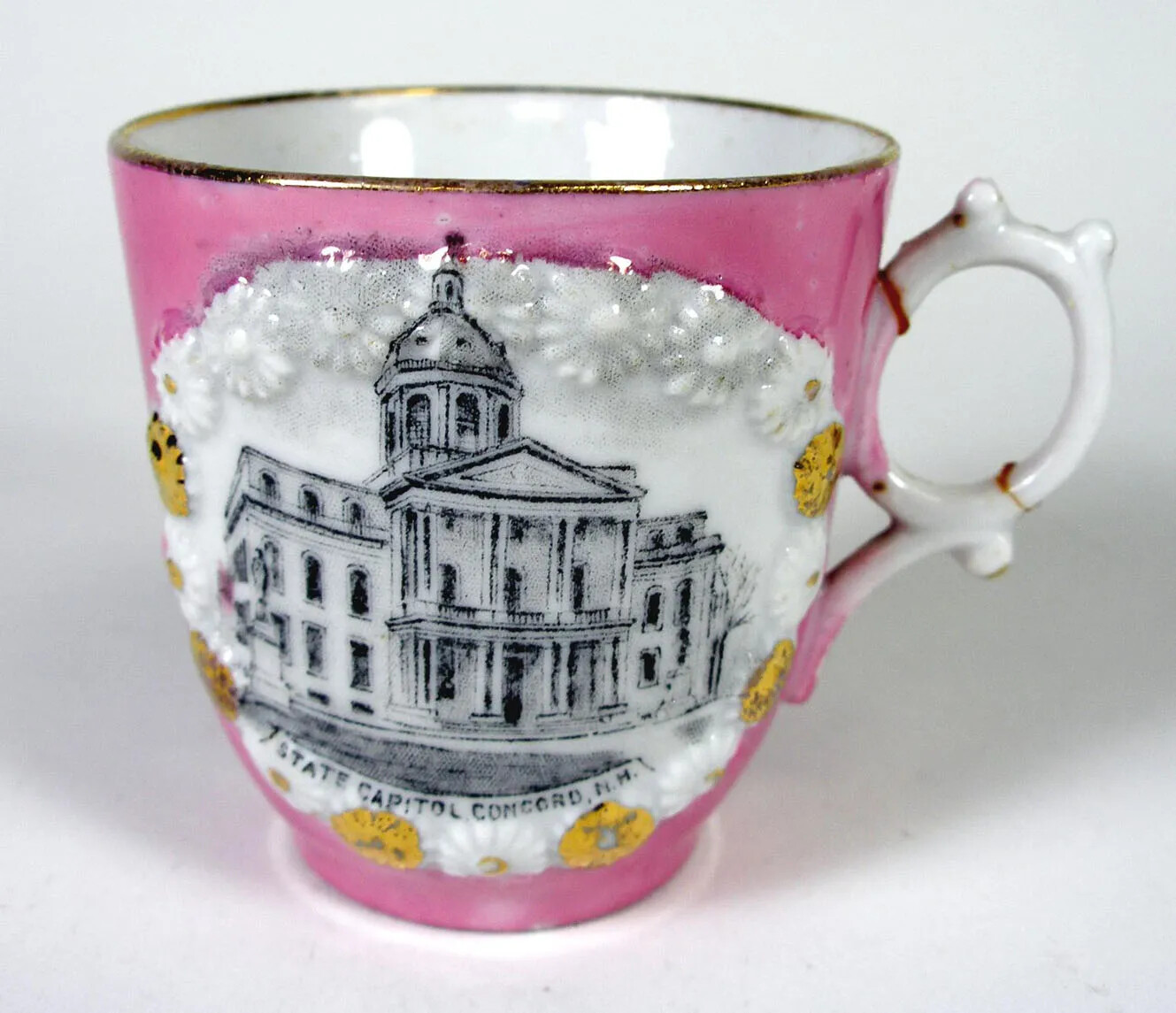
A small, pink cup with a wide top and narrow  bottom. It has a gold rim and white interior, and the handle of the cup is circular and white. In the center of the cup is a sketch, drawn in black ink on a white background, of the New Hampshire State House . Words underneath the State House read: "STATE CAPITAL CONCORD, N.H.". Above the sketch are raised white flowers in an arch, and alternating white and yellow flowers circle the rest of the image.
Tea Cup from New Hampshire State House

Photographs & Prints in this Primary Source Set:

Back Side of State House After 1909–1910 Expansion
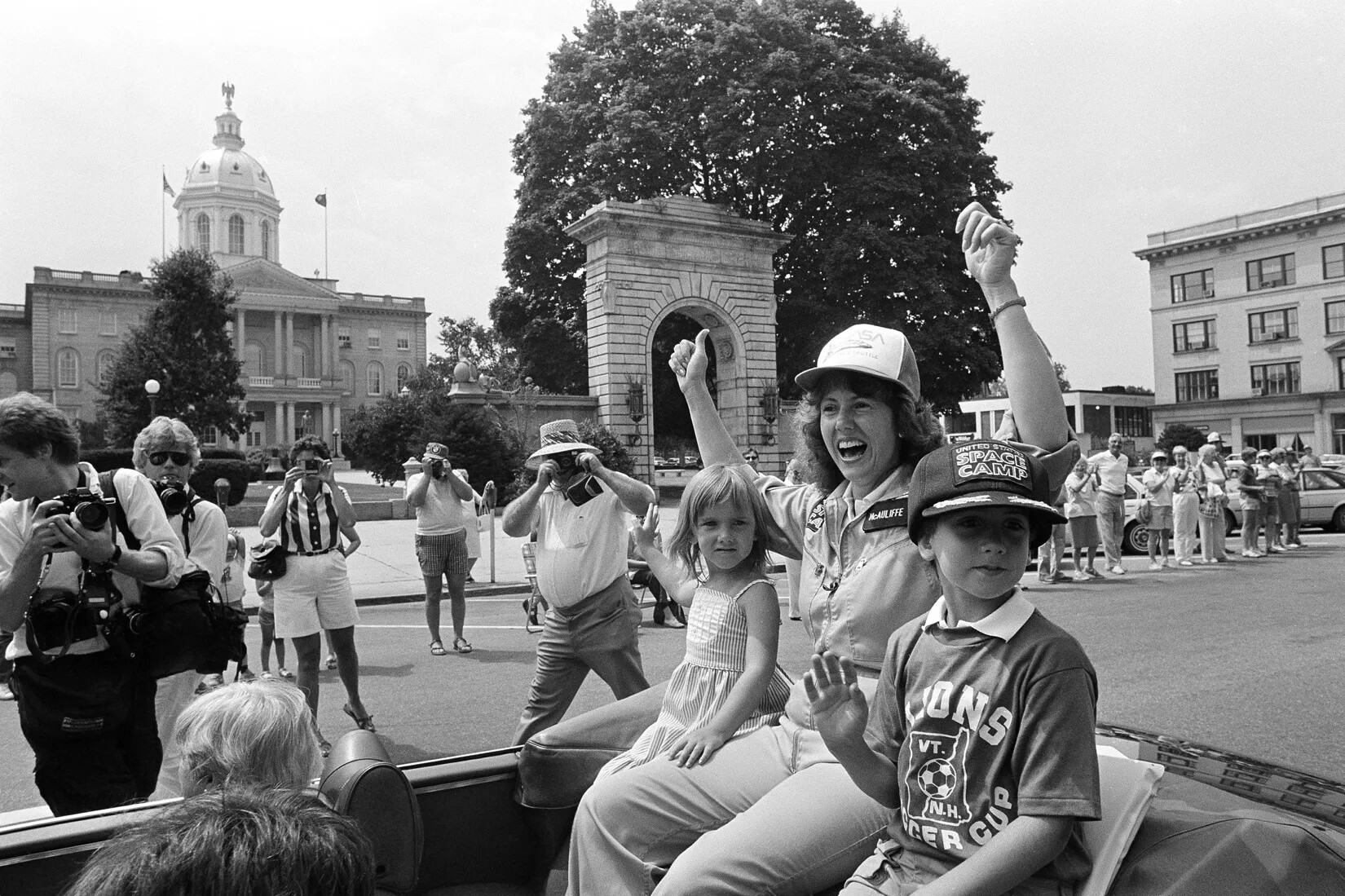
A black and white photograph of a woman and two children riding in an open-top car. The woman has both her arms raised and she is smiling. The two children, a girl to the woman's left and a boy to the woman's right, each wave with one hand. There are crowds of people watching the car pass in the background. In the background of the left-hand side of the photograph is a group of photographers with cameras of varying sizes. Behind this group of people is a large archway and a three-story building with a dome. Two levels of column-lined porches jut out from the center of the building and is crowned by a pointed roof.
Christa McAuliffe in Parade in Front of State House
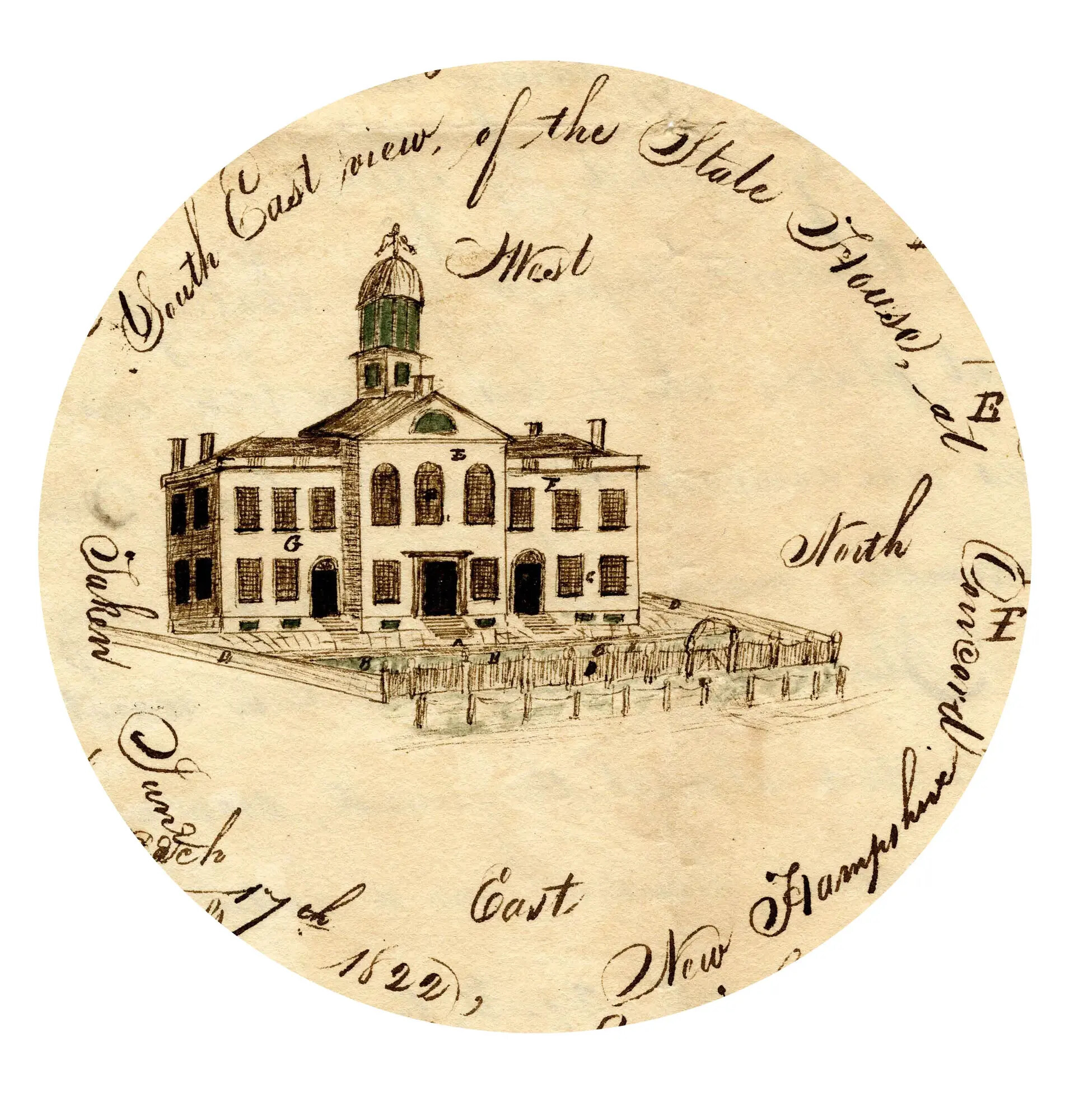
A circular black-ink drawing on white paper of a three-story building with a dome. The drawing is borded by cursive handwriting that curves along with the circle's edges.
Early State House Drawing
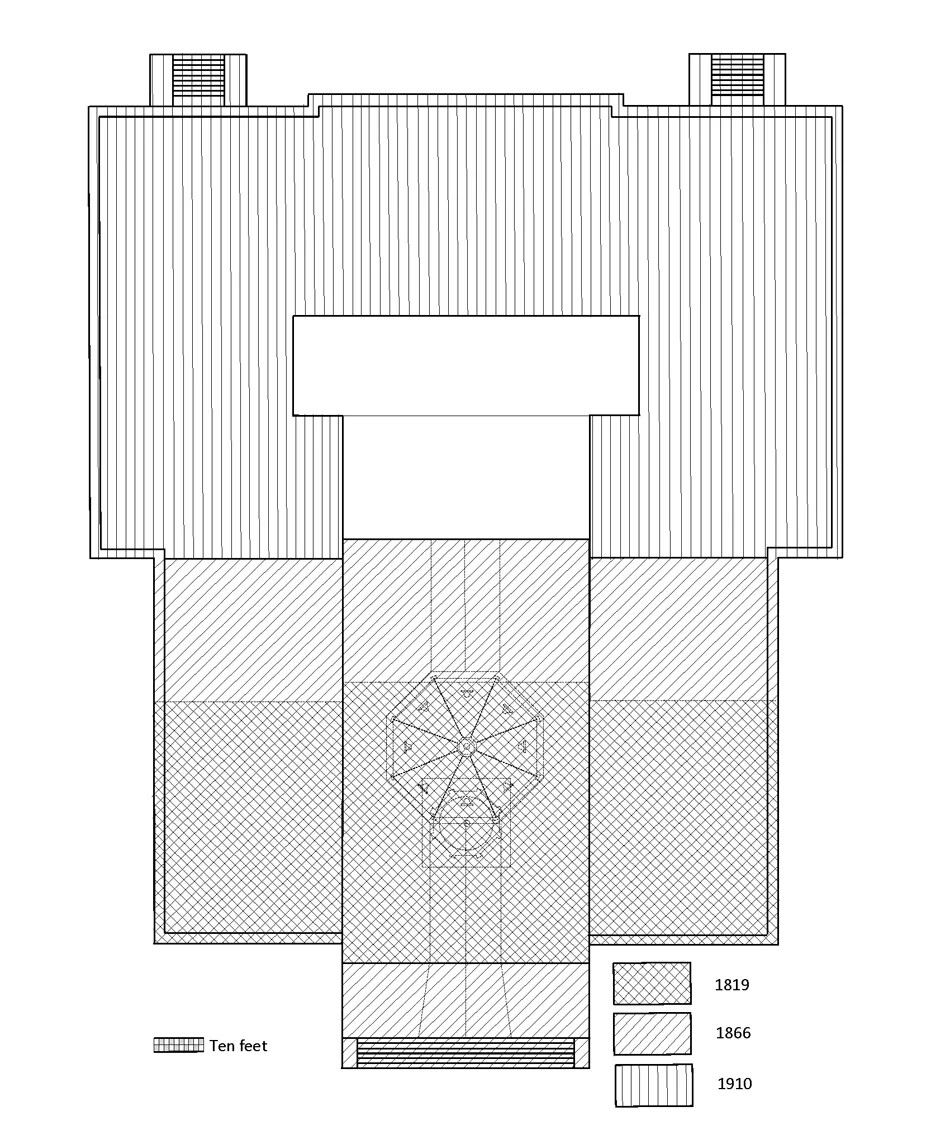
Evolution of State House Roof Plans
A colored photograph of a smiling white woman with brown hair. She wears a blue blazer with a white shirt, and a gold necklace.  The backdrop is of the American flag and the New Hampshire state flag.
Governor Ayotte
A black and white photograph shows an image of workers in a granite quarry.  The ground in the photograph is littered with white stones, large and small and generally angular.  The rocky and chiseled sides of the quarry act as the backdrop. Two men are seated in the foreground on large white blocks of stone, with mallets and pegs.  The seated men are hitting the pegs with mallets. One man stands behind them, and all three men are looking at the camera. A group of four men talk around a white block of stone in the background at the photograph’s center.
Granite Quarry Workers
A colored painting of a white woman with short brown hair, dressed in a red jacket and skirt. She stands in front of an armchair and a shiny table.
Jeanne Shaheen Portrait
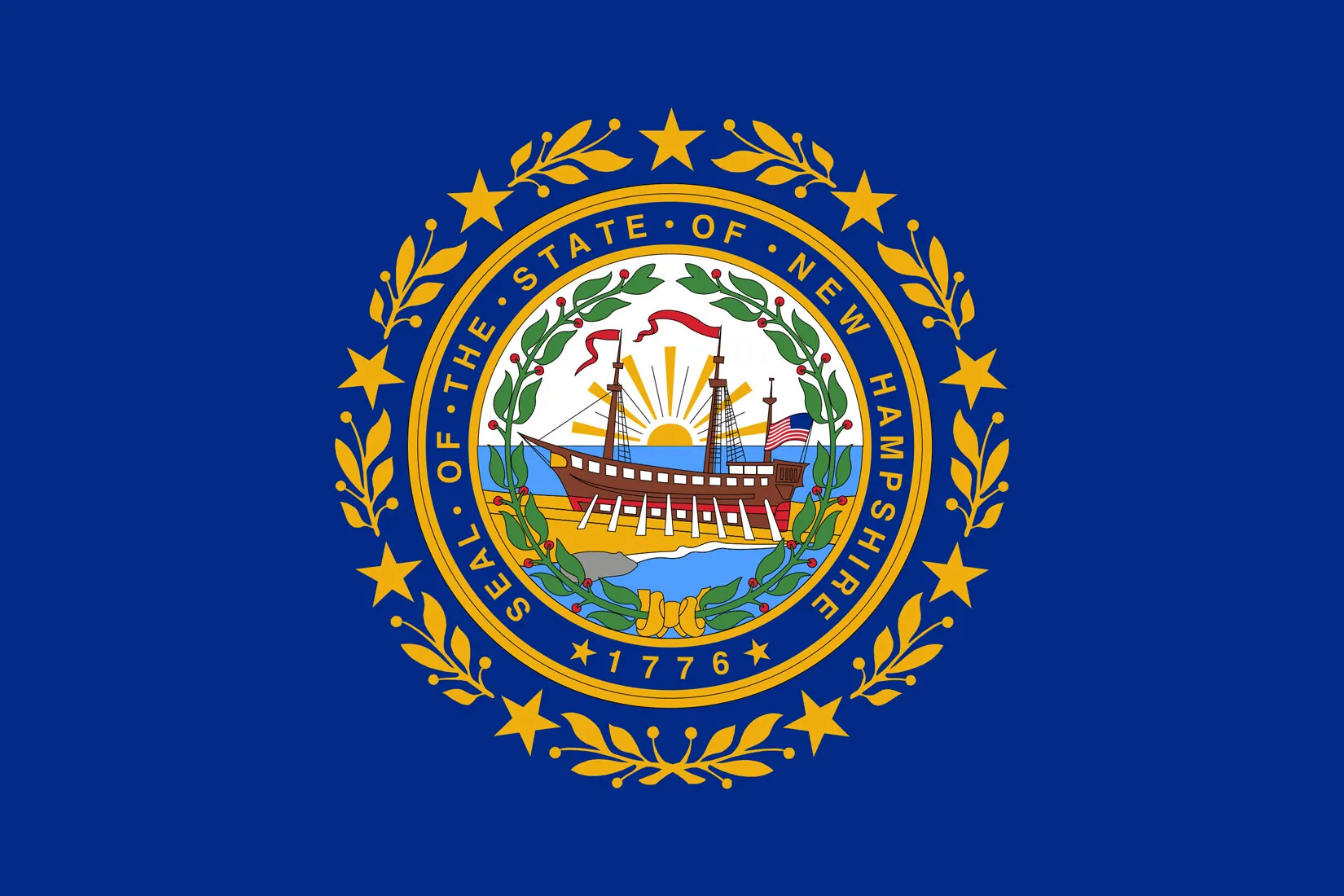
A colored print of a gold-bordered circle, surrounded by gold vines and stars on a dark blue background. The circle has the drawing of a ship with two tall masts banked on a sandy shore. In the background there is a small body of water and a rising sun. Surrounding the circle are the words "SEAL*OF*THE*STATE*OF*NEW*HAMPSHIRE*1776*" in gold text against the blue background.
New Hampshire State Flag
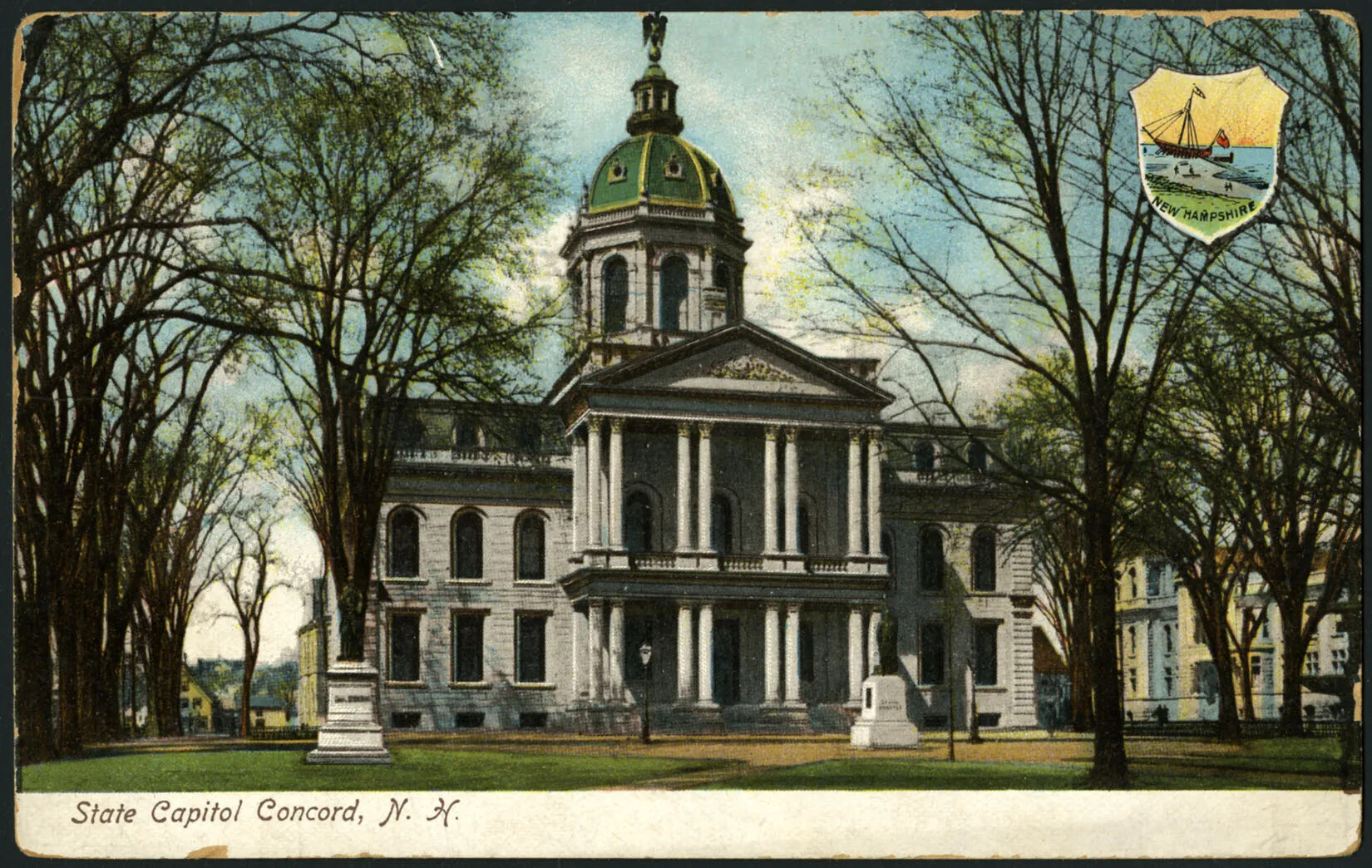
A colored postcard of a large building surrounded by tall trees. The building is two stories high, with a large dome sitting on top. The front of the building has a porch held up by several columns and has a pointed roof. The words "State Captiol Concord, N.H." are written in black text in the lower left hand corner. Sitting in the top right hand corner is a badge with a a setting sun, a large sailboat on a beach, and several people walking around. The words "NEW HAMPSHIRE" are written along the bottom of the badge.
New Hampshire State House
A colored photograph of a two-storied building, with a large dome sitting on top. The front of the building juts out from the rest of the building, and has a two-storied porch held up by several columns and has a pointed roof. There is a flag pole on either side of the dome, which both have flags on them.
New Hampshire State House
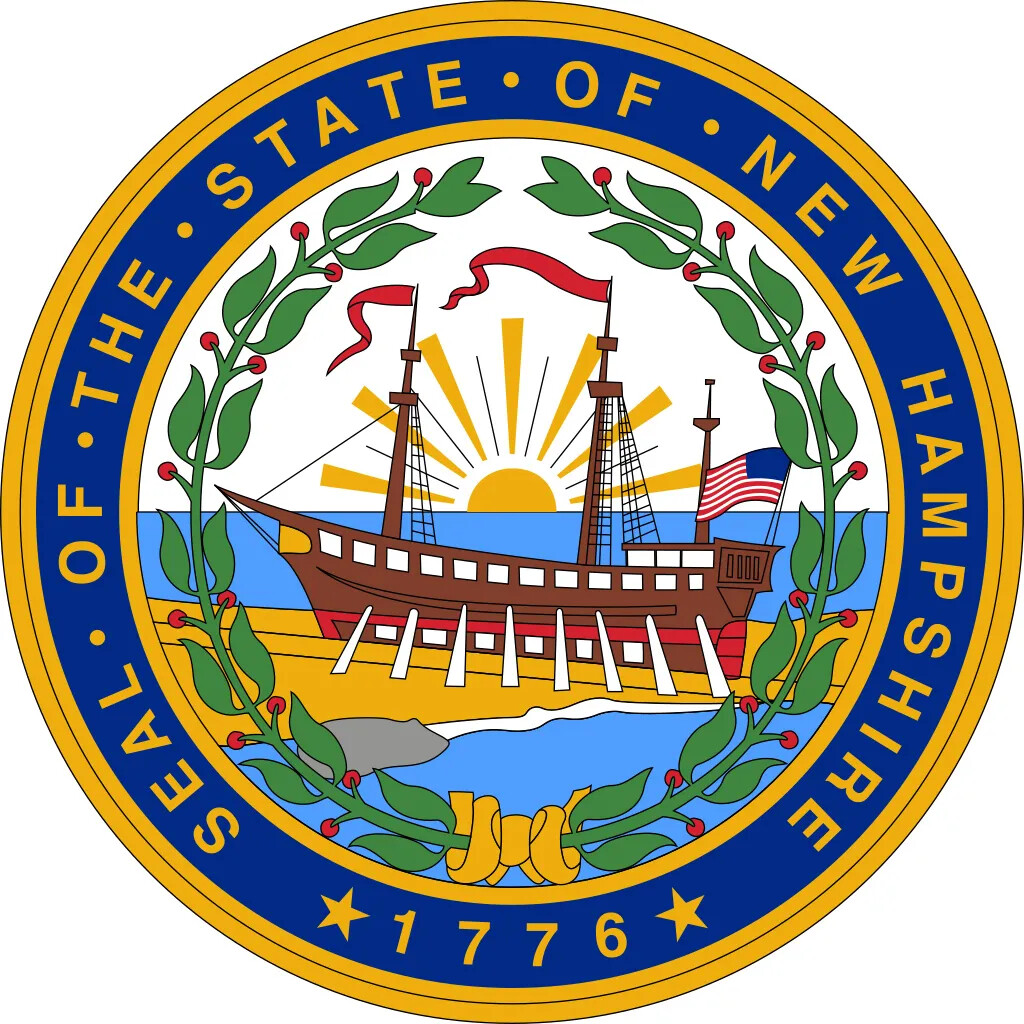
A colored print of a gold-bordered circle. The circle has the drawing of a ship with two tall masts banked on a sandy shore. In the background there is a small body of water and a rising sun. Surrounding the circle are the words "SEAL*OF*THE*STATE*OF*NEW*HAMPSHIRE*1776*" in gold text against a dark blue background.
New Hampshire State Seal
A black and white photograph of a three-story building with a dome. The building sits in front of a large grassy area, scattered throughout with trees. The lawn is borded by a fence. A three-story building sits to its left and a church sits to its right.
Original State House Photo
A colored photograph of a large auditorium-style room, taken from above. There are five sections of pitched seats in rows, all facing a large, multi-level desk at the front of the room. Behind the large desk are five large painted portraits of white men.
Representatives' Hall
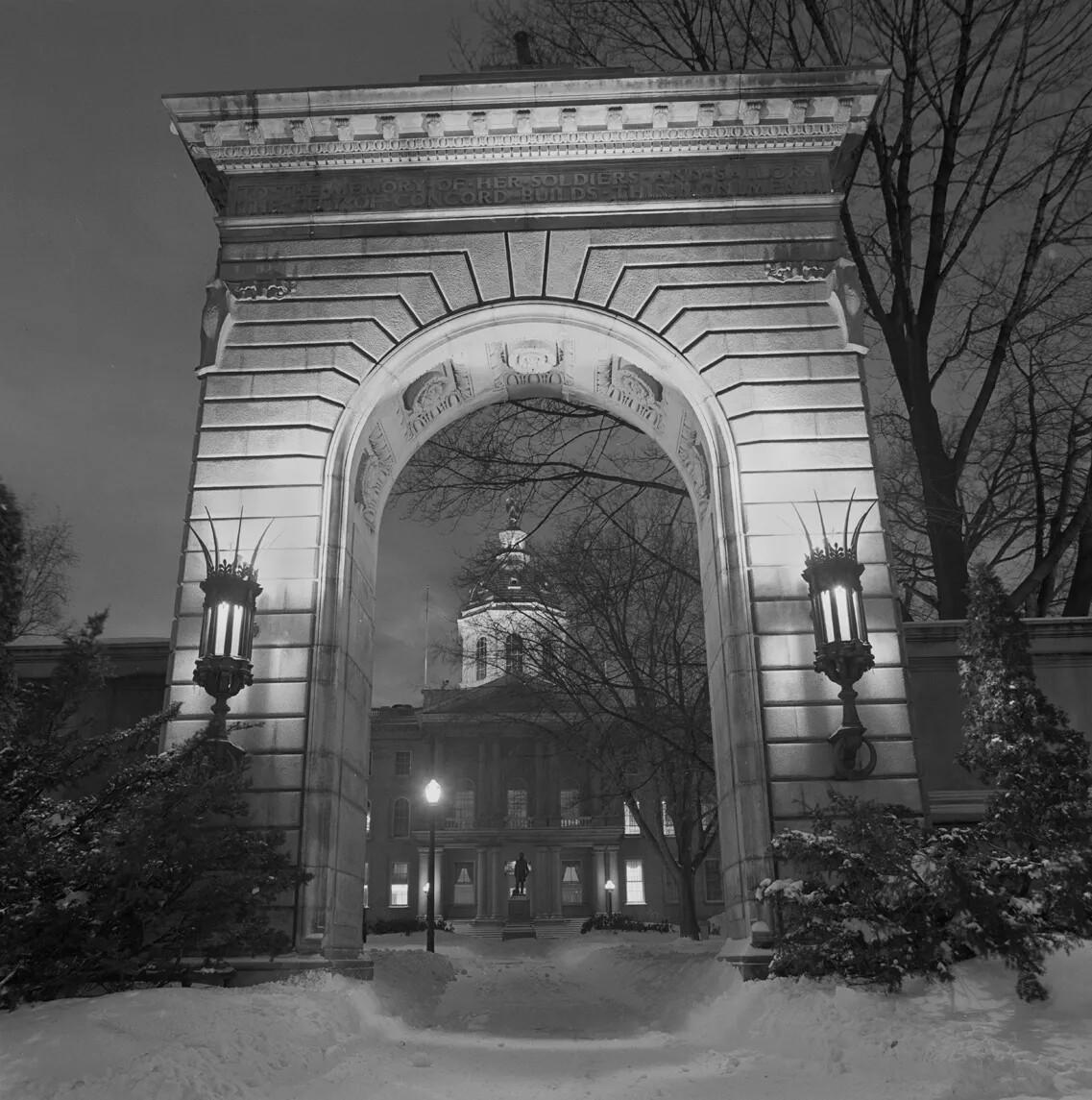
Soldiers' Memorial Arch in Winter
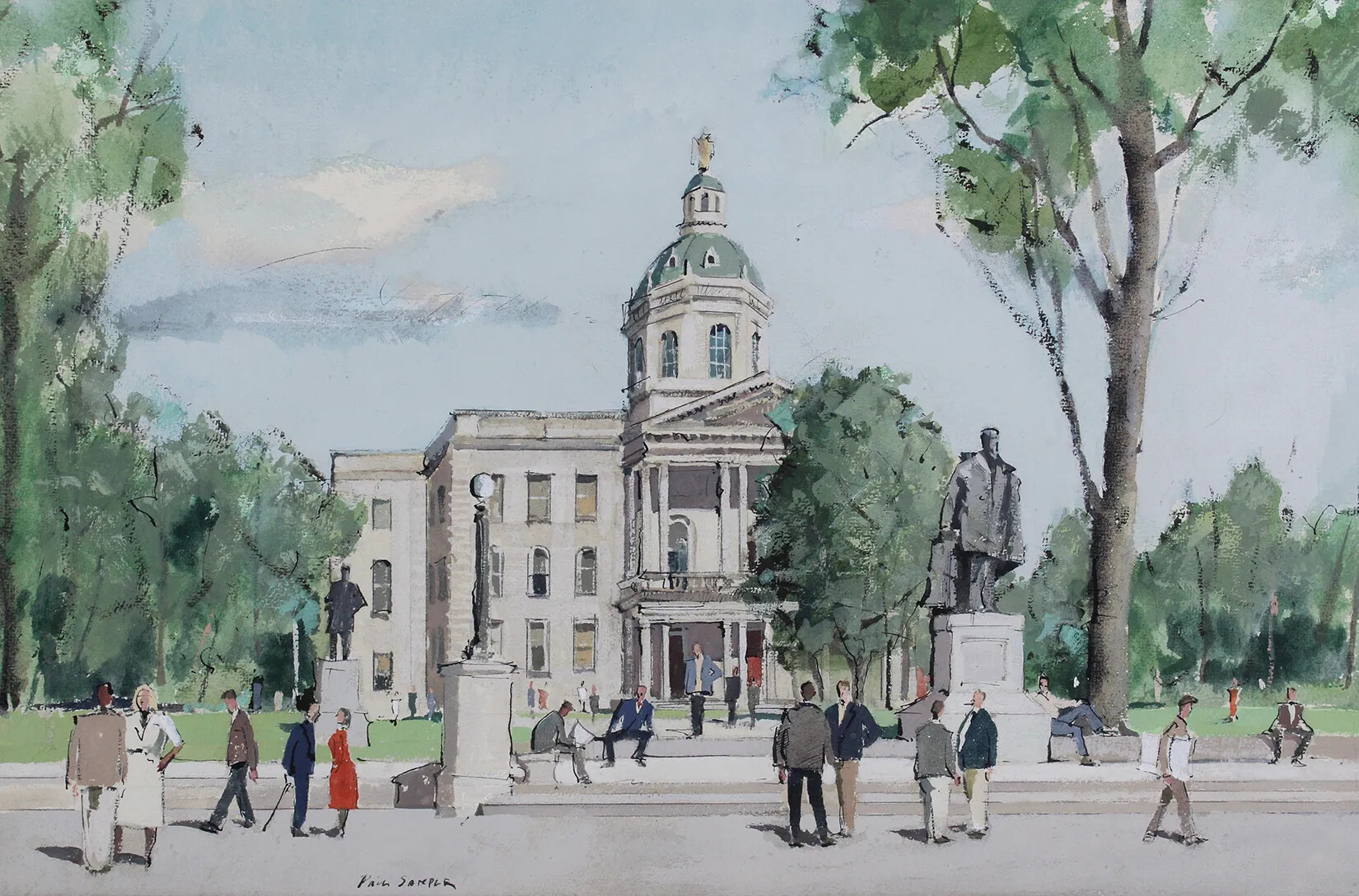
State Capitol, Concord, N.H.
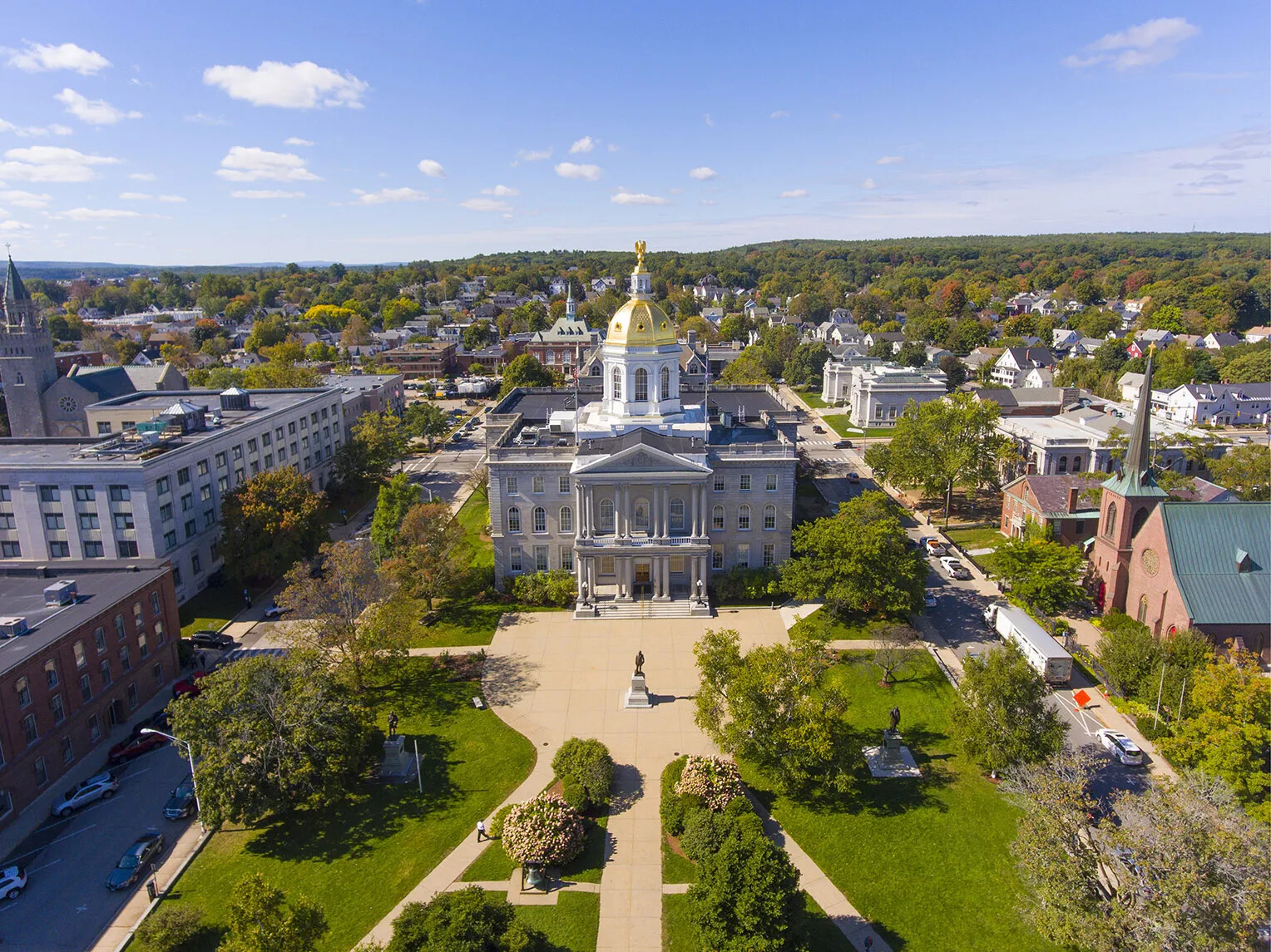
A colored photograph of a three-storied, domed building in the middle of a grassy lawn. Surrounding the lawn are multi-storied buildings. The building's dome is gold-colored and the rest of the building is gray. The front of the building juts out and is decorated with a row of columns.
State House Aerial View
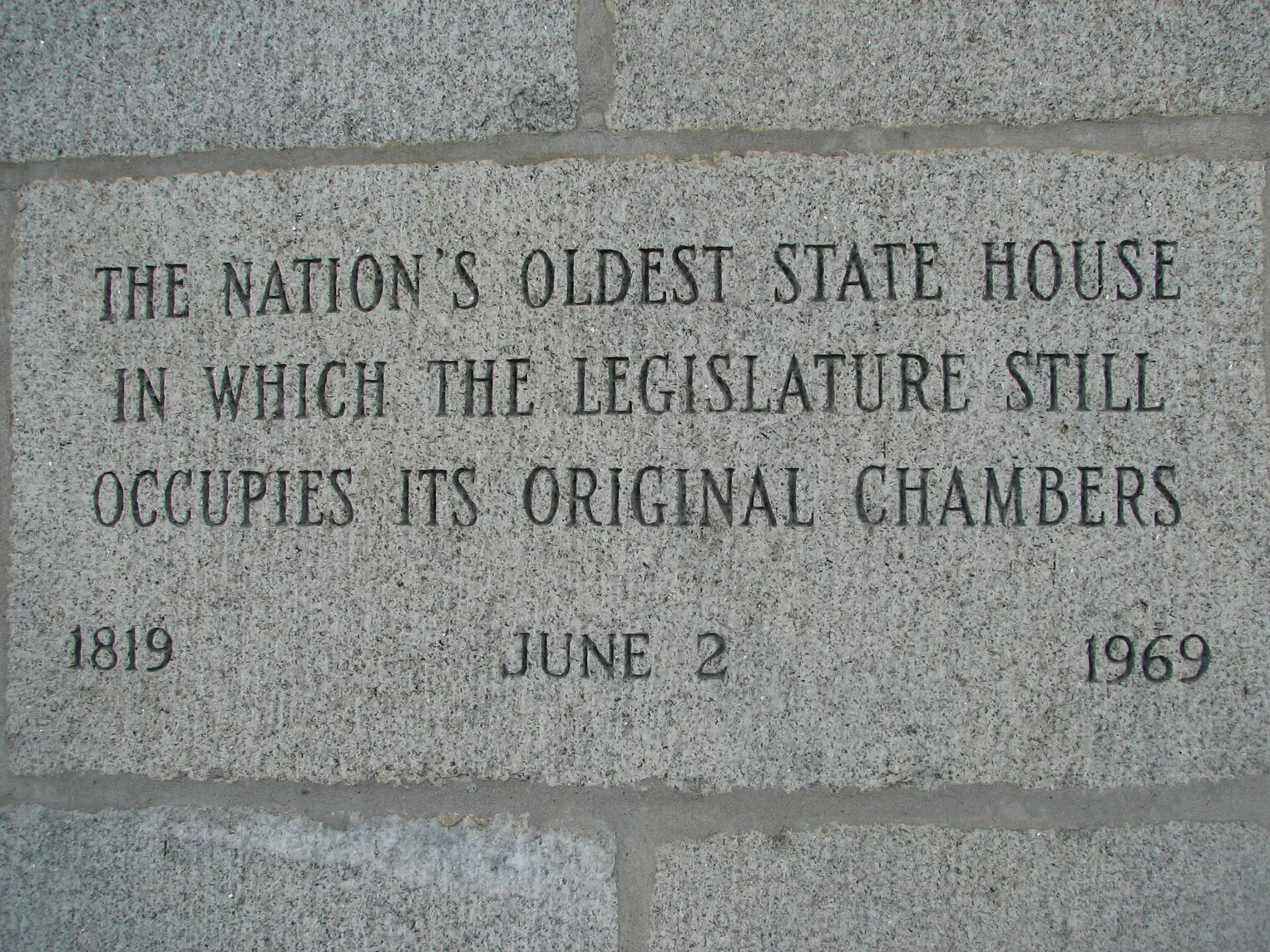
A colored photograph of a carved label in the side of a gray building. The label reads "THE NATION'S OLDEST STATE HOUSE/IN WHICH THE LEGISLATURE STILL/OCCUPIES ITS ORIGINAL CHAMBERS/ 1819 JUNE 2 1969."
State House Anniversary Inscription
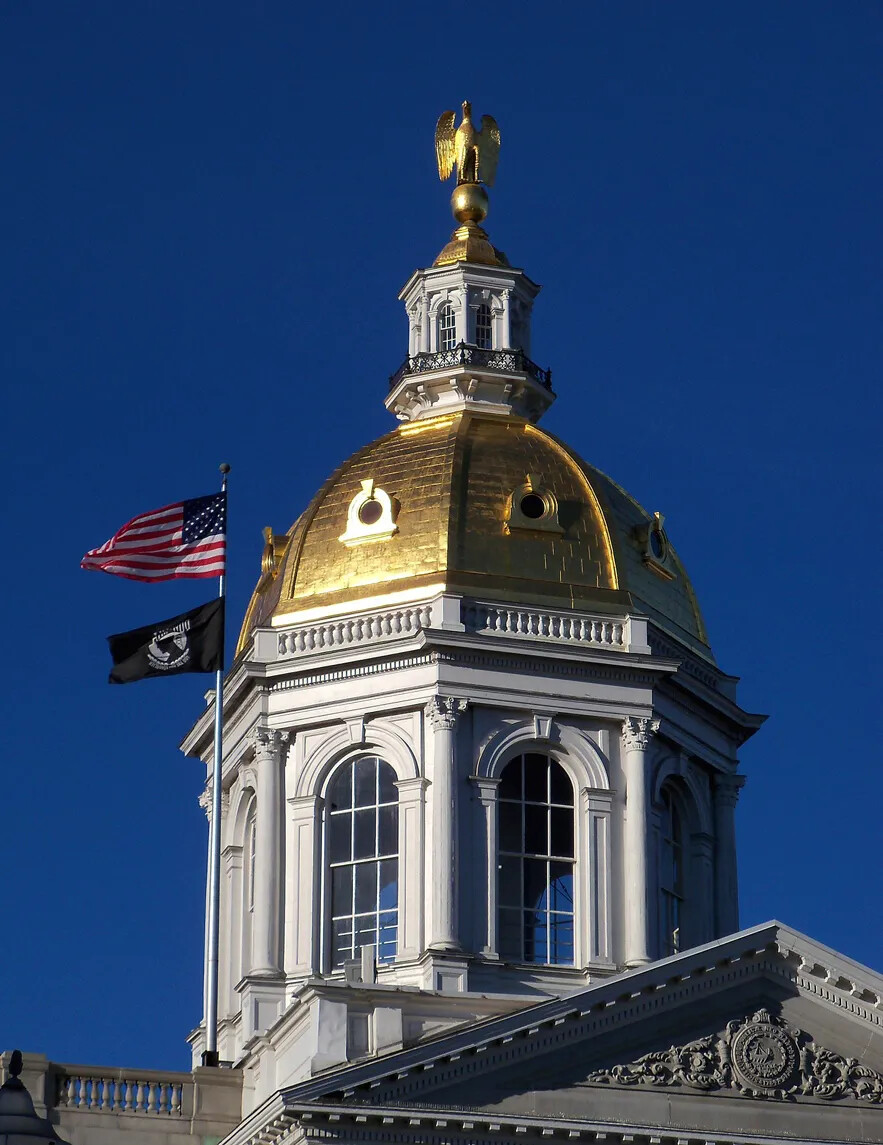
A close-up colored photograph of a gray building's dome. The sides of the dome are lined with arched white windows and the dome itself is gold-colored. Sitting on top of the dome is an eagle statue, which has its wings stretched out to its sides.
State House Dome
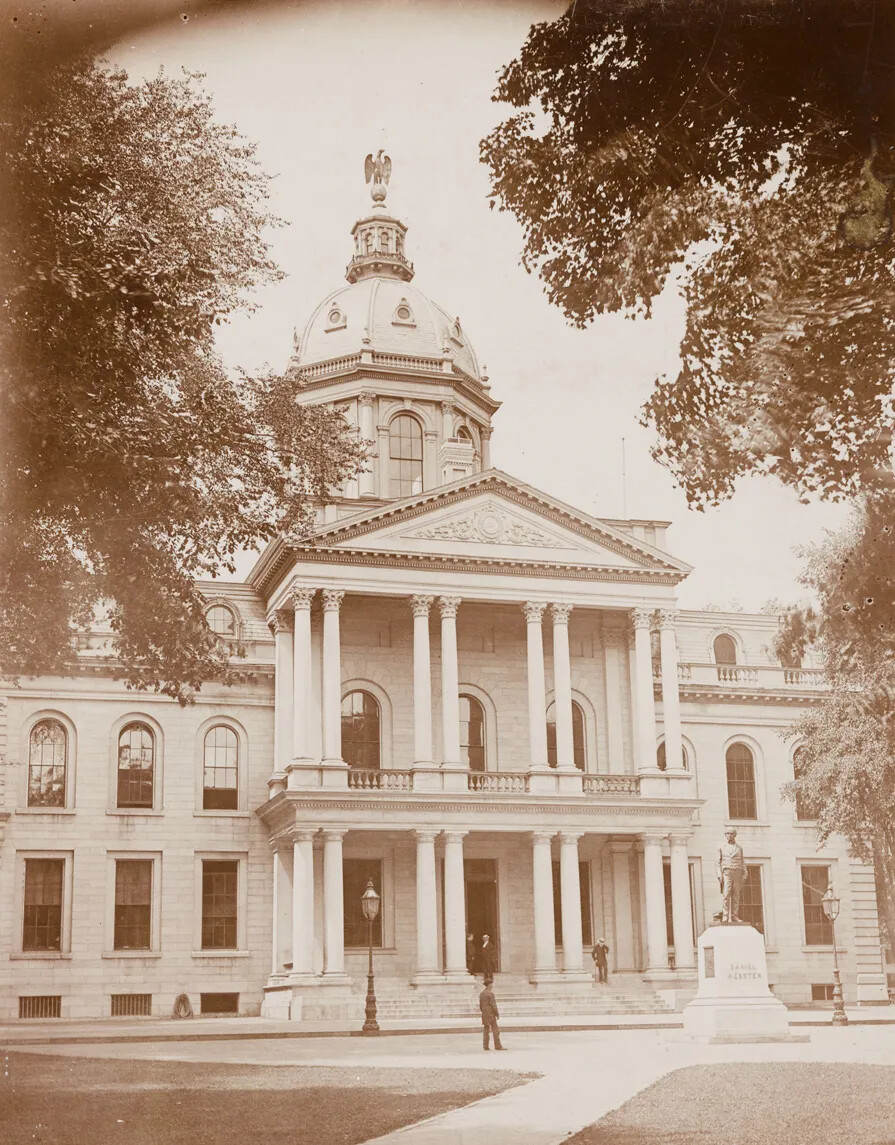
A black and white photograph of a three-story building with a dome. Two levels of column-lined porches jut out from the center of the building and is crowned by a pointed roof. The sides of the dome are lined with arched windows. Sitting on top of the dome is an eagle statue, which has its wings stretched out to its sides.
State House Expanded and Remodeled
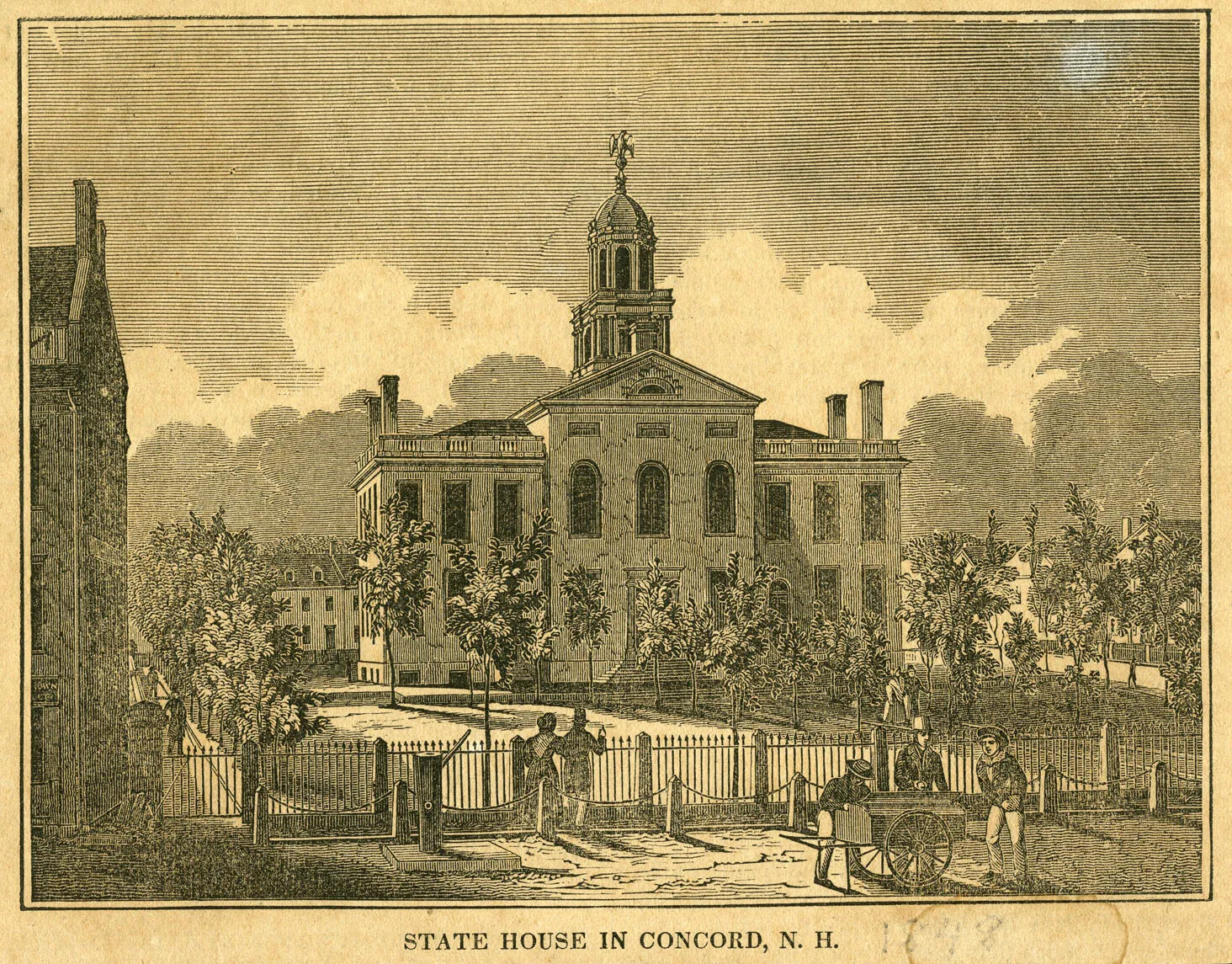
A black and white engraving of a three-story building with a dome. The building sits in front of a large grassy area, scattered throughout with trees. The lawn is borded by a fence. Several groups of people walk in front of the building. The title of the engraving, located along the bottom border, reads "STATE HOUSE IN CONCORD, N. H."
State House in Concord Engraving
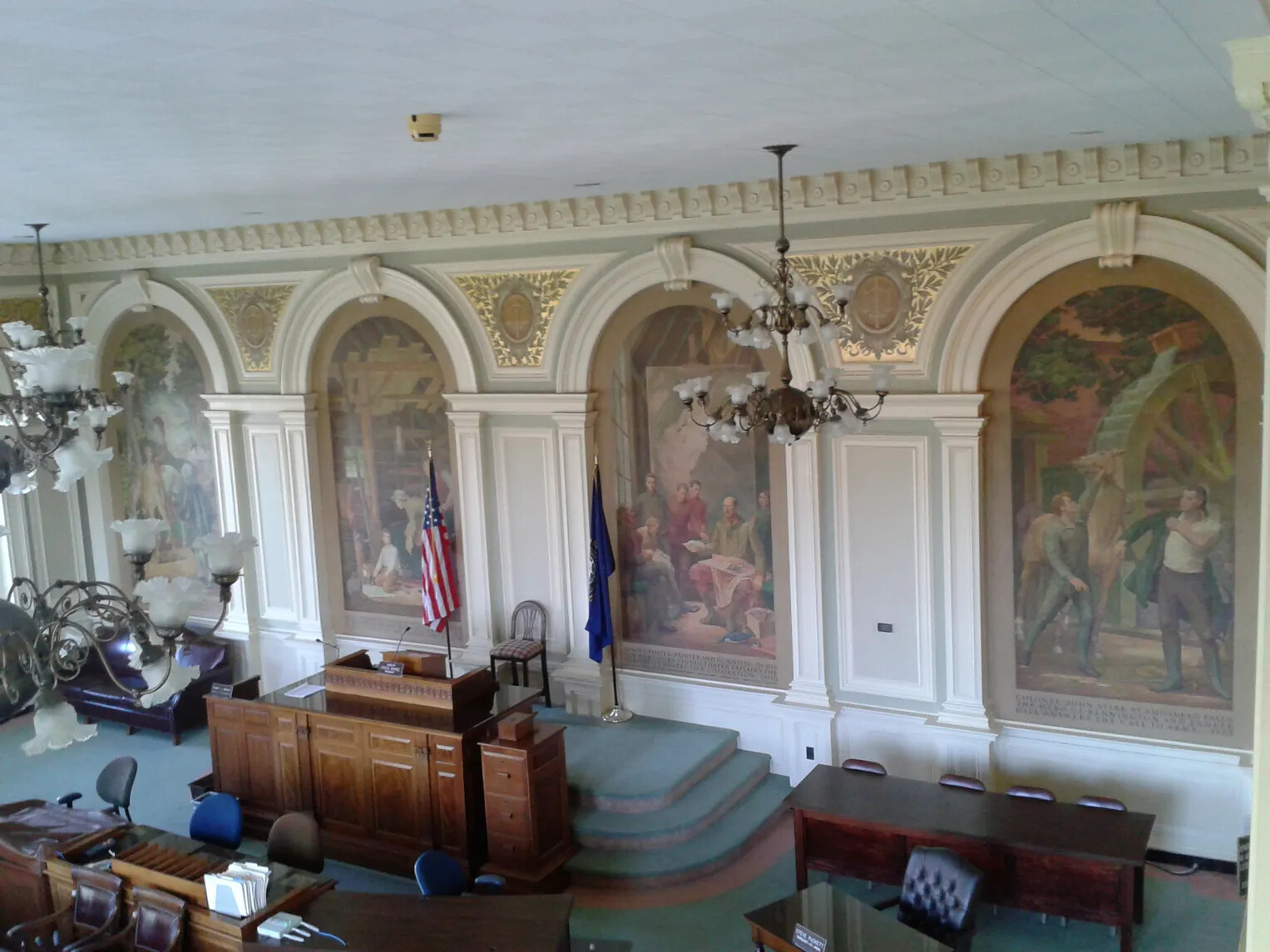
A colored photograph of the interior of a large room, taken from above. One large desk sits atop a podium, and there are several smaller desks in front of it and to its right. Behind the desks are four sets of arched wall murals, each depicting a different scene.
State House Murals
A colored photograph of a smiling woman standing in front of a large wall display of campaign buttons, signs, and other political memorabilia.
State House Primary Campaign Board
State House Renovations Overview
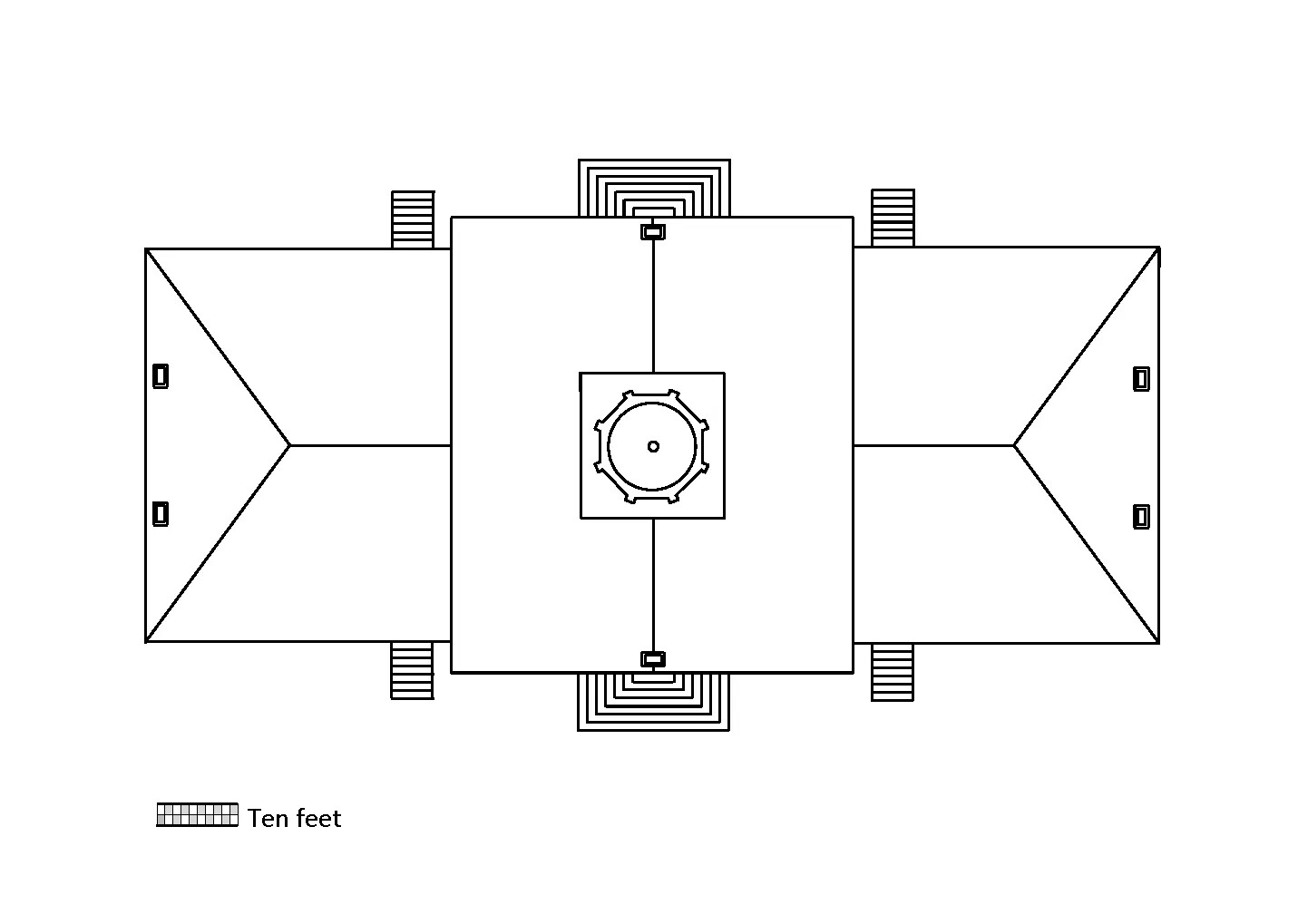
State House Roof Plan 1819
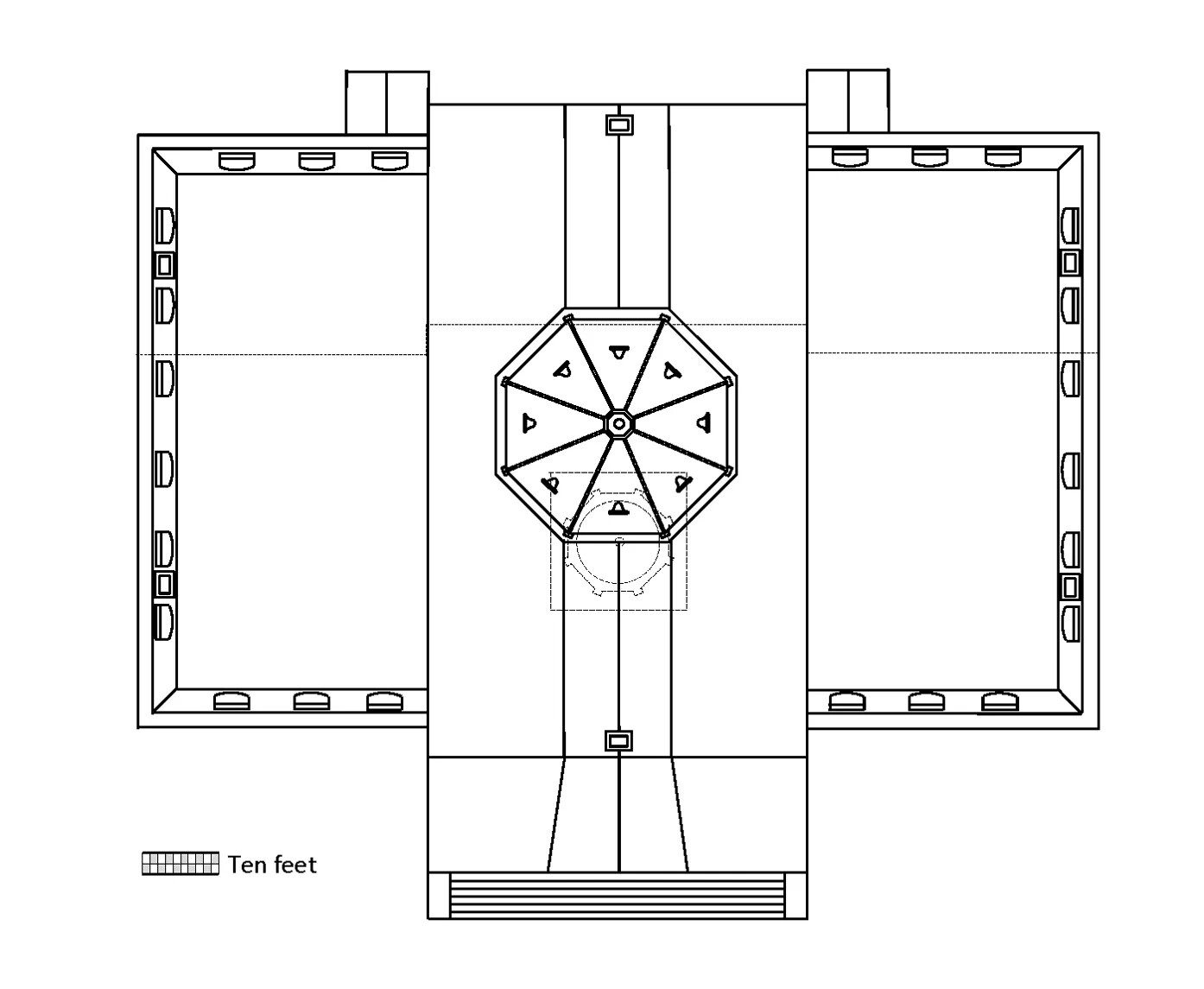
State House Roof Plan 1866
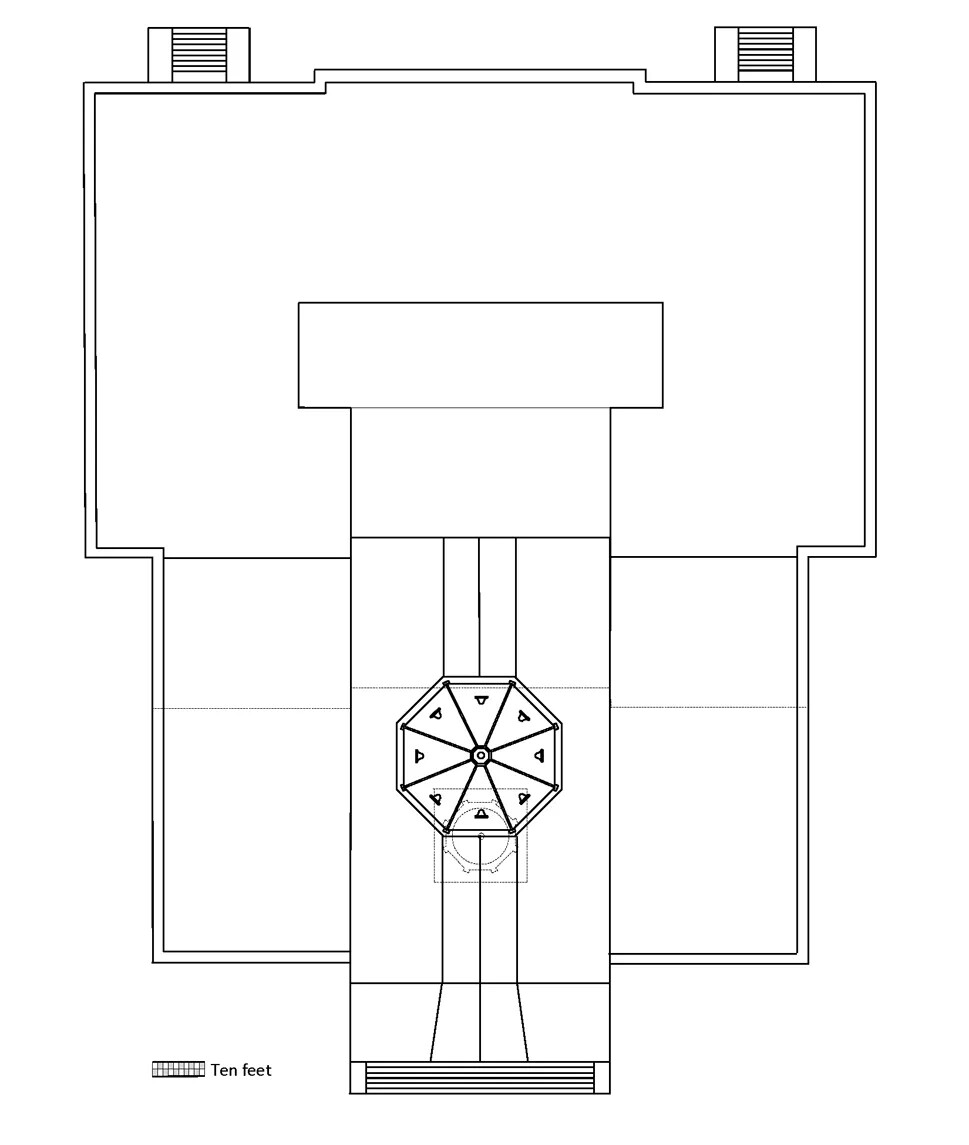
State House Roof Plan 1910
State House Yard in 1891
A black and white photograph of a group of children and an adult woman with their backs to the viewer, looking at a collection of framed documents hanging on a wall.
Viewing the N.H. Constitution